223 laureates · 1905–2025
Physics laureates
Every Jewish Nobel laureate, by the standard of Wikipedia’s list: Jews, or people with at least one Jewish parent. 5 borderline cases are included and flagged as disputed. Each profile explains the work, what it meant for humanity, what went wrong, and what the laureate faced.
- Women
- 12
- Refugees or exiles
- 50
- Profiles researched
- 223 of 223
Results
Showing 60 of 223 laureates

Physics · 1907
Albert A. Michelson
An immigrant boy from a gold-rush camp who learned to measure the world with light waves, from the metre to the size of a star.
Physics · 1908
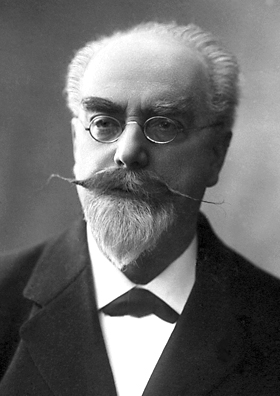
Gabriel Lippmann
He captured colour by trapping light waves in a photographic plate, and his electrometer recorded the first human electrocardiogram.

Physics · 1921
Albert Einstein
He showed that light comes in packets and that gravity is curved space and time, ideas now built into solar cells, lasers and GPS.
Refugee

Physics · 1922
Niels Bohr
His 1913 model of the atom helped launch quantum physics; he sheltered refugee scientists and pleaded for an open world after the bomb.
Refugee

Physics · 1925
Gustav Hertz
His electron-collision experiment with James Franck proved that atoms take in energy only in fixed steps, a pillar of quantum physics.
Disputed inclusion

Physics · 1925
James Franck
He helped show that atoms take in energy in fixed packets, quit his post over Nazi racial laws and warned against a surprise atomic attack.
Refugee

Physics · 1943
Otto Stern
His beams of atoms showed quantum rules at work and seeded the magnetic resonance behind MRI and the atomic clocks behind GPS.
Refugee

Physics · 1944
Isidor Isaac Rabi
He tuned radio waves to the spin of atomic nuclei, the idea behind MRI scanners, NMR chemistry and the atomic clocks that time GPS.

Physics · 1945
Wolfgang Pauli
His exclusion principle helps explain why atoms have shells, chemistry works and matter holds its shape; he also predicted the neutrino.
Refugee
Physics · 1952
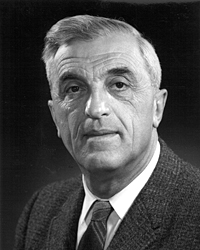
Felix Bloch
He found a way to pick up the faint magnetic signals of atomic nuclei, the physics behind NMR chemistry and hospital MRI scanners.
Refugee

Physics · 1954
Max Born
He showed that quantum physics speaks in probabilities, then fled Nazi Germany and spent his last years warning against nuclear war.
Refugee

Physics · 1958
Igor Y. Tamm
He explained the blue glow of particles outrunning light in water, a key to modern detectors, and co-proposed the tokamak for fusion.
Disputed inclusion
Physics · 1958
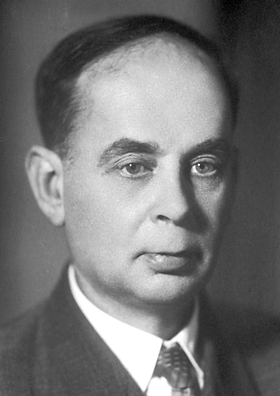
Il´ja M. Frank
He helped explain the blue glow made when particles outrun light in water, turning a faint curiosity into a tool for physics and medicine.

Physics · 1959
Emilio Segrè
A refugee from Fascist Italy's racial laws who helped find the proton's antimatter twin and an isotope used in millions of medical scans.
Refugee

Physics · 1960
Donald A. Glaser
His bubble chamber let physicists see the paths of invisible particles, and he later co-founded Cetus, often called the first biotech firm.
Physics · 1961
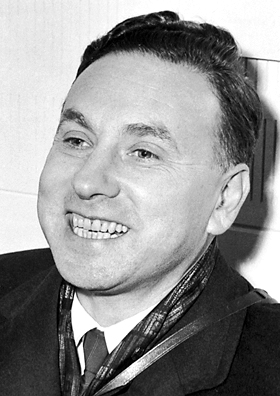
Robert Hofstadter
He bounced electrons off atomic nuclei to show that protons have size and structure; his crystal detector became nuclear medicine's eye.

Physics · 1962
Lev Landau
He explained why liquid helium flows without friction, and his ideas and textbooks became the working language of condensed-matter physics.
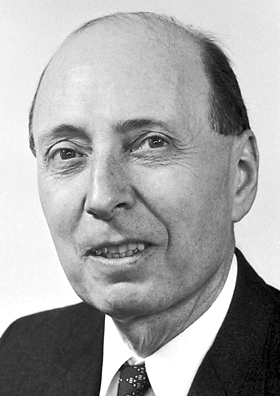
Physics · 1963
Eugene Wigner
Used the mathematics of symmetry to decode atoms and nuclei, then led the design of the first large nuclear reactors, for war and peace.
Refugee

Physics · 1965
Julian Schwinger
He tamed the infinities in the quantum theory of light and matter, chose radar over the bomb, and trained four future Nobel laureates.

Physics · 1965
Richard P. Feynman
His diagrams made the quantum physics of light and matter calculable; he also worked on the atomic bomb and showed why Challenger failed.

Physics · 1967
Hans Bethe
Explained how the Sun and stars shine, helped build the atomic bomb, then spent six decades working to rein in nuclear weapons.
Refugee

Physics · 1969
Murray Gell-Mann
He brought order to a zoo of subatomic particles and proposed quarks, the building blocks of nearly all the matter in our bodies.

Physics · 1971
Dennis Gabor
A refugee engineer who invented holography, a way to record the whole of a light wave, now used to test machines and guard money.
Refugee

Physics · 1972
Leon N. Cooper
He showed how electrons pair up, the key to current flowing with zero resistance, then turned to how the brain learns.

Physics · 1973
Brian D. Josephson
At 22 he predicted how electron pairs tunnel between superconductors, giving the world an exact volt and ultra-sensitive magnetic sensors.

Physics · 1975
Aage N. Bohr
After fleeing occupied Denmark, he showed that atomic nuclei can stretch out of round and spin, uniting rival pictures of the nucleus.
RefugeeDisputed inclusion
Physics · 1975
Ben R. Mottelson
Showed how the protons and neutrons in an atomic nucleus move both on their own and together, reshaping nuclear physics.

Physics · 1976
Burton Richter
He built the collider that caught the psi particle, proof of a fourth quark, and let its X-rays out to serve biology and materials science.
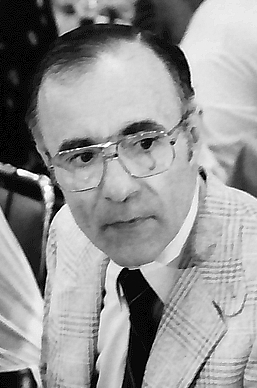
Physics · 1978
Arno Penzias
A child refugee from Nazi Germany, he found the faint afterglow of the Big Bang, key evidence that our universe had a beginning.
Refugee

Physics · 1979
Sheldon Glashow
A plumber's son, child of Jewish immigrants, who helped show that the force behind light and a force that helps the Sun shine are one.

Physics · 1979
Steven Weinberg
A stenographer's son who showed that the force carrying light and the force that helps the Sun burn are one.

Physics · 1981
Arthur L. Schawlow
He co-wrote the 1958 blueprint for the laser, then used laser light to measure atoms with new precision.

Physics · 1987
K. Alex Müller
He bet that humble ceramics could carry current with zero resistance, and opened the era of high-temperature superconductors.

Physics · 1988
Jack Steinberger
Sent out of Nazi Germany at 13, he helped turn ghostly neutrinos into a beam and showed that matter's lightest particles come in families.
Refugee

Physics · 1988
Leon M. Lederman
A laundryman's son from the Bronx, he helped prove there are two kinds of neutrino, then spent decades bringing science to schoolchildren.

Physics · 1988
Melvin Schwartz
He turned the ghostly neutrino into a beam physicists could aim, and used it to show nature has more than one kind of neutrino.

Physics · 1990
Jerome I. Friedman
He helped find the first direct evidence of quarks, showing that the protons and neutrons in every atom are built from smaller parts.

Physics · 1992
Georges Charpak
A Dachau survivor, he strung hair-thin wires into detectors that let physicists catch rare particles and doctors use gentler X-rays.
Refugee

Physics · 1995
Frederick Reines
He caught the 'undetectable' neutrino in 1956, opening a new window on stars and matter, after years spent testing nuclear weapons.
Physics · 1995
Martin L. Perl
A chemical engineer turned physicist, he found the tau, the first evidence that matter's building blocks come in three families.

Physics · 1996
David M. Lee
He helped show that rare helium-3 becomes a frictionless superfluid near absolute zero, opening a new window on quantum matter.

Physics · 1996
Douglas D. Osheroff
As a graduate student he spotted the tiny kink that revealed superfluid helium-3, a new form of quantum matter near absolute zero.

Physics · 1997
Claude Cohen-Tannoudji
He explained how laser light can chill atoms to near absolute zero, opening the way to ultra-precise clocks and new quantum physics.

Physics · 2000
Zhores Alferov
Soviet physicist who pioneered the layered semiconductor crystals behind the lasers that carry internet data through glass fibres.

Physics · 2003
Alexei Abrikosov
He showed how magnetic fields thread through superconductors in tiny whirlpools, the physics that explains today's MRI magnets.

Physics · 2003
Vitaly L. Ginzburg
Co-wrote the theory of superconductors that explains the magnets inside MRI scanners, despite Stalin-era attacks on him as a Jew.

Physics · 2004
David J. Gross
Showed why quarks are locked inside every proton and neutron, completing our theory of the force that holds matter together.

Physics · 2004
H. David Politzer
As a 23-year-old graduate student, he independently found the minus sign that explained how quarks behave inside protons and neutrons.
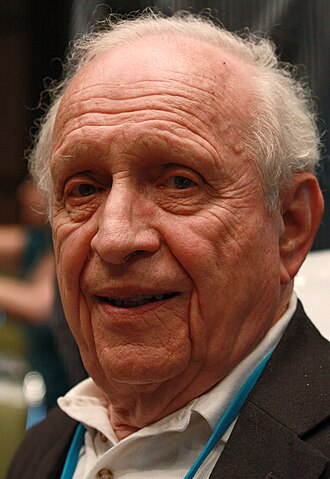
Physics · 2005
Roy J. Glauber
He wrote the quantum theory of light behind today's photon counters, quantum cryptography and the young field of quantum optics.

Physics · 2011
Adam G. Riess
He helped discover that the universe's expansion is speeding up, revealing that most of the cosmos is a mysterious dark energy.

Physics · 2011
Saul Perlmutter
He tracked exploding stars billions of light-years away and found that the universe's expansion is speeding up, not slowing down.

Physics · 2012
Serge Haroche
He trapped light in a box of mirrors and counted its photons without destroying them, turning quantum thought experiments into real ones.

Physics · 2013
François Englert
A Jewish boy hidden from the Nazis in Belgium who grew up to explain how the universe's basic particles get their mass.
Refugee

Physics · 2016
J. Michael Kosterlitz
Son of a refugee from Nazi Berlin, he used topology to explain how ultra-thin films change state, opening a new field of physics.

Physics · 2017
Barry C. Barish
He rescued a struggling gravitational-wave project and built it into the observatory that first detected black holes colliding.

Physics · 2017
Rainer Weiss
A refugee from Nazi Berlin, he designed the laser detector that first heard gravitational waves from colliding black holes.
Refugee

Physics · 2018
Arthur Ashkin
He turned laser light into tweezers that can hold a living cell or a single molecule without touching it.

Physics · 2020
Andrea Ghez
She tracked stars racing around the Milky Way's center and helped show that a black hole of four million suns sits there.

Physics · 2020
Roger Penrose
He proved that Einstein's theory predicts black holes will form, turning a mathematical oddity into something astronomers set out to find.
Disputed inclusion

Physics · 2025
Michel H. Devoret
Showed that an electric circuit you can hold obeys quantum rules, then spent 40 years turning such circuits into qubits.