.jpg)
Nobel Prize in Physics · 1978
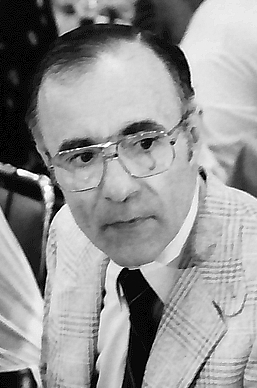
Arno Penzias
A child refugee from Nazi Germany, he found the faint afterglow of the Big Bang, key evidence that our universe had a beginning.
The Nobel citation: “for their discovery of cosmic microwave background radiation”
- Born
- April 26, 1933, Munich, Germany
- Died
- January 22, 2024, San Francisco, CA, USA
- Shared with
- Pyotr Kapitsa, Robert Woodrow Wilson
- Affiliation at the time
- Bell Laboratories, USA
Physics prize
1978
Shared with 2 other laureates.
Age that year
45years
Born in 1933.
Sources cited
22
Fact-checked September 24, 2026.
- He was born in Munich on 26 April 1933, the same day the Gestapo was founded, a coincidence he liked to point out.
- At six he and his five-year-old brother left Germany without their parents on a Kindertransport train to England, each with a suitcase and a bag of candy.
- The hiss in his antenna was the Big Bang's leftover glow. Before working that out, he and Robert Wilson had to chase two pigeons from the horn and scrub away their mess.
- Part of the static on an old analog TV tuned between channels comes from the same cosmic background radiation he discovered.
- Right after his Nobel ceremony in Stockholm he flew to Moscow to lecture to refusenik scientists barred from leaving the USSR, and later helped several of them emigrate.
The breakthrough
Discovering the cosmic microwave background, the afterglow of the Big Bang
In 1963 Penzias and his Bell Labs colleague Robert Wilson took over a 20-foot horn-shaped antenna built for early satellite communication. It came with one of the quietest radio amplifiers in the world, a maser cooled by liquid helium. They wanted to use it as a radio telescope to measure faint radio waves from our galaxy very precisely. To know exactly how much signal came from the sky, Penzias built a reference source chilled in liquid helium to 4.2 degrees above absolute zero, and Wilson built a switch to compare the antenna with it. In 1964 the antenna turned out warmer than it should have been, by about 3.5 degrees. The extra signal came from every direction, by day and by night, in every season. They ruled out New York City, the atmosphere, the Milky Way, radiation left over from nuclear tests, and a pair of pigeons whose droppings coated the horn. Then a phone call led Penzias to Robert Dicke's group at Princeton. There Jim Peebles had calculated that a universe born hot and dense should still be filled with the cooled-down glow of its beginning, stretched by cosmic expansion into microwaves. Think of a stove switched off hours ago that still gives off a little warmth: the leftover heat tells you it was once on. In 1965 the two groups published side-by-side papers, one reporting the measurement and one explaining it.[3],[4],[6],[10],[11]
“I came to the United States 39 years ago as a penniless refugee from Nazi Germany.”
What it meant for humanity
Penzias's discovery did not cure a disease or build a machine. It answered one of the oldest human questions: did the universe have a beginning? In the early 1960s astronomers were split. One camp held that the universe began in a hot, dense state and has been expanding ever since. The rival Steady State theory said it had always existed, with new matter appearing to fill the gaps. The faint microwave glow that Penzias and Wilson found in every direction was the leftover heat a hot beginning predicted. It won over most astronomers, the Steady State theory championed by Fred Hoyle lost nearly all its support, and the Big Bang became the standard picture of cosmic history. The radiation then became a tool. NASA's COBE satellite, launched in 1989, showed that it has the exact spectrum of a glowing body at 2.7 degrees above absolute zero, and found ripples of about a hundred-thousandth of a degree that mark the seeds of galaxies. The Royal Swedish Academy of Sciences said COBE marked the start of cosmology as a precise science, and later satellites such as WMAP mapped the ripples in finer detail. Penzias also helped open a second field: in 1970 he, Wilson and Keith Jefferts detected carbon monoxide in the Orion Nebula, opening the door to millimeter-wave studies of molecules in space. As Bell Labs' vice president of research he led an organization of about 1,000 PhD scientists through the breakup of the Bell System. He also used his fame for others. He lectured to Soviet refusenik scientists in Moscow straight after his Nobel, helped several of them emigrate, and served for more than 20 years as a vice president of the Committee of Concerned Scientists, which defends persecuted colleagues.
- The Royal Swedish Academy of Sciences called the discovery fundamental: it opened a way to study cosmic processes from the time the universe was created.[3]
- The radiation won over most astronomers. The rival Steady State theory, whose best-known champion was Fred Hoyle, lost nearly all its support, and the Big Bang became the standard model of cosmology.[4],[13]
- Later satellites turned the afterglow into a precision tool. COBE's measurements of its spectrum and tiny ripples won the 2006 Nobel Prize in Physics.[8]
- In 1970 Penzias, Wilson and Keith Jefferts found carbon monoxide in the Orion Nebula, opening the door to millimeter-wave studies of many molecules between the stars.[2],[10]
- He helped found the Committee of Concerned Scientists and was its vice president for over 20 years. It began by defending Soviet refusenik scientists, and Jewish refuseniks were often treated worst of all.[10],[17]
Impact in numbers
We record no quantified claims. Penzias's great contribution is knowledge: direct evidence that the universe had a hot, dense beginning. That evidence made the Big Bang the standard model of cosmology. It also turned the cosmic microwave background into a key tool for learning what the universe is made of and how galaxies formed, work later honored with Nobel Prizes in 2006 and 2019. His 1970 detection of interstellar carbon monoxide helped open millimeter-wave studies of the chemistry between the stars. He shaped technology indirectly as Bell Labs' research chief through the breakup of the Bell System, and he used his standing to defend persecuted scientists, especially Soviet refuseniks. None of this comes with a credible count of lives saved or dollars earned, so any number here would be invention rather than measurement.
Fundamental scienceSpaceHuman rights
No number is given here on purpose. Some contributions cannot be counted honestly, and we would rather describe them than invent a figure.
The double edge
No harms are documented from Penzias's work. It is basic research with no military or commercial use. The main controversy is about credit. In 1949 George Gamow's former student Ralph Alpher and his collaborator Robert Herman predicted that the universe should still glow at a few degrees above absolute zero. When Penzias called Princeton, Robert Dicke's group was already building an instrument to look for that glow, and Dicke reportedly told his colleagues they had been scooped. Penzias and Wilson did not propose the explanation themselves; the Princeton group supplied it, yet the Nobel Prize went only to the two observers. Penzias acknowledged this history openly. His Nobel lecture credited Alpher and Herman and a 1964 Soviet paper by Andrei Doroshkevich and Igor Novikov that had named the Bell Labs horn as the best instrument to detect the radiation. Princeton's James Peebles received his own Nobel Prize in 2019 for theoretical discoveries in physical cosmology.
- Minor
The theorists who predicted the radiation were not included
Alpher and Herman predicted the relic radiation in 1949, and Dicke and Peebles explained the Bell Labs signal in 1965. The 1978 prize went to the observers alone. Penzias's own Nobel lecture laid out the earlier predictions, including a 1964 Soviet paper, and Peebles was honored separately in 2019.[3],[5],[6],[9],[21]
Against the odds
Penzias was born in Munich in April 1933, three months after Hitler took power, on the very day the Gestapo was founded. His family was Jewish, with roots in Poland. In late October 1938 the Nazi regime rounded up more than 17,000 Jews with Polish citizenship and deported them to Poland, the first mass deportation of Jews from Nazi Germany. The Penzias family was put on a deportation train, but Poland stopped admitting Jews before it reached the border, and it returned to Munich. Less than two weeks later, on Kristallnacht, Nazis burned more than 1,400 synagogues and sent about 26,000 Jewish men to concentration camps. His father was ordered to leave Germany within six months. In spring 1939, six-year-old Arno and his five-year-old brother boarded a Kindertransport train to England, part of a British rescue that saved about 10,000 children. Their mother got out a few weeks before the war began, and their father was interned in a British camp for alien men. Reaching America was hard: by mid-1939, 309,000 German, Austrian and Czech Jews had applied for 27,000 US quota places. Tickets their father had bought 18 months earlier got the family to New York in January 1940. They arrived penniless. His parents worked as building superintendents in the Bronx, and later in a coat factory and a museum carpentry shop. Most Jews still in Germany when emigration was banned in 1941 were murdered in the Holocaust.
—
Discrimination
As a small boy in Munich he first learned he was different when his parents told him he could not join the Hitler Youth, which the other children around him were enjoying.[7]
1938
Persecution
In the fall of 1938 the family was arrested and put on a train for deportation to Poland as Jews of Polish origin. Poland stopped accepting Jews before the train reached the border, and it returned to Munich.[2],[11],[12],[18]
1939
Exile
In late spring 1939 his parents sent him, aged six, and his five-year-old brother to England on a Kindertransport; his mother did not know if she would see them again. US quota places were scarce.[2],[11],[19],[20]
1939
Imprisonment
His father reached England almost as soon as the boys but was held in an internment camp for alien men, which kept him apart from his sons.[2]
1940
Poverty
The family reached New York in January 1940 as penniless refugees. His parents became building superintendents to get a rent-free basement apartment and a second income.[2],[11]
Jewish background
Penzias was born in Munich to Jewish parents. His father, Karl, a leather wholesaler, was Jewish; his mother, Justine (née Eisenreich), was raised Roman Catholic and converted to Judaism in 1932, the year before he was born. The Nazis treated the family as Jews of Polish origin. In a 1980 oral history he recalled being a Jewish teenager in New York. He championed Soviet refusenik scientists. His first wife came from a long line of rabbis, and their daughter became a rabbi. In 1978 he told The New York Times that the cosmological data matched what he would have predicted from the Bible alone. We found no source on his own religious practice.[10],[11],[12],[14],[15],[16]
Key dates
April 26, 1933
Born in Munich, Germany, to Jewish parents Karl and Justine Penzias, on the day the Gestapo was founded.[1],[11],[22]
1938
The family is arrested and put on a deportation train to Poland as Jews of Polish origin; it is turned back and returns to Munich.[2],[11],[12]
1939
In late spring, aged six, he and his younger brother are sent to England on a Kindertransport. Their parents follow.[2],[11]
January 1940
After sailing on the liner Georgic, the family arrives in New York and settles in the Bronx.[2],[11]
1954
Graduates in physics from the City College of New York, then serves two years as a radar officer in the Army Signal Corps.[2],[10],[11]
1961
Having completed his Columbia PhD thesis under Charles Townes, joins Bell Labs in Holmdel, New Jersey, where he stays 37 years.[2],[10]
May 1964
With Robert Wilson, finds an unexplained excess of microwave noise coming from every direction in the sky.[6],[10]
1965
After contact with Robert Dicke's Princeton group, publishes the measurement alongside Princeton's explanation: the afterglow of the Big Bang.[5],[6],[11]
1970
With Wilson and Keith Jefferts, detects carbon monoxide in the Orion Nebula, opening the door to millimeter-wave studies of interstellar molecules.[2],[10]
October 17, 1978
Awarded a quarter of the Nobel Prize in Physics, shared with Robert Wilson; the other half goes to Pyotr Kapitsa.[1],[3]
December 1978
After the Nobel ceremony in Stockholm, flies to Moscow to lecture to refusenik scientists; he later helps several leave the Soviet Union.[11]
1981
Becomes Bell Labs' vice president of research as the Bell System is broken up, ending his own astronomy research.[2],[7]
1992
Arranges the donation of the Holmdel horn's receiver to the Deutsches Museum in Munich, as a reminder of the refugees who left and those who died.[11],[14]
January 22, 2024
Dies in San Francisco, aged 90, of complications of Alzheimer's disease.[1],[10],[11]
Sources
- 1.Arno Penzias - Facts · NobelPrize.org (Nobel Prize Outreach)
- 2.Arno Penzias - Biographical (autobiography, June 2005) · NobelPrize.org (Nobel Prize Outreach), 2005
- 3.Press release: The 1978 Nobel Prize in Physics · NobelPrize.org (Royal Swedish Academy of Sciences), 1978
- 4.The Nobel Prize in Physics 1978 - Speed read: Tuning in to Big Bang's echo · NobelPrize.org (Nobel Prize Outreach)
- 5.Arno A. Penzias - Nobel Lecture: The Origin of Elements (8 December 1978) · NobelPrize.org (The Nobel Foundation), 1978
- 6.Robert W. Wilson - Nobel Lecture: The Cosmic Microwave Background Radiation (8 December 1978) · NobelPrize.org (The Nobel Foundation), 1978
- 7.Arno Penzias - Interview (Marika Griehsel, Lindau, June 2004), with transcript · NobelPrize.org, 2004
- 8.Press release: The 2006 Nobel Prize in Physics (Mather and Smoot, COBE) · NobelPrize.org (Royal Swedish Academy of Sciences), 2006
- 9.Press release: The 2019 Nobel Prize in Physics (Peebles, Mayor and Queloz) · NobelPrize.org (Royal Swedish Academy of Sciences), 2019
- 10.Arno Allan Penzias (1933-2024): A visionary explorer of the Universe (K. I. Kellermann) · Proceedings of the National Academy of Sciences (via PubMed Central), 2024
- 11.Arno A. Penzias, 90, Dies; Nobel Physicist Confirmed Big Bang Theory (Katie Hafner) · The New York Times, 2024
- 12.Nobel laureate Arno Penzias dies at 90; helped find traces of big bang (Martin Weil) · The Washington Post, 2024
- 13.Arno Penzias, who helped confirm the Big Bang theory, dies at 90 · NPR, 2024
- 14.Jewish Life Stories: The Nobelist who confirmed the Big Bang, the 'Bagel Queen' of Atlanta · Jewish Telegraphic Agency, 2024
- 15.Clues to Universe Origin Expected · The New York Times, 1978
- 16.Oral-History: Arno Penzias (interview by Carol Lof, IEEE History Center, 1980) · Engineering and Technology History Wiki (IEEE History Center), 1980
- 17.A History of the Committee of Concerned Scientists, 1970-2006 (via Columbia University Libraries) · Committee of Concerned Scientists, 2011
- 18.Kristallnacht · United States Holocaust Memorial Museum, Holocaust Encyclopedia
- 19.Kindertransport, 1938-1940 · United States Holocaust Memorial Museum, Holocaust Encyclopedia
- 20.German Jewish Refugees, 1933-1939 · United States Holocaust Memorial Museum, Holocaust Encyclopedia
- 21.This Month in Physics History - June 1963: Discovery of the Cosmic Microwave Background (Alan Chodos, APS News, July 2002) · APS News, American Physical Society (via Internet Archive), 2002
- 22.Gestapo · Wikipedia
Fact-checked on September 24, 2026 by a separate AI fact-checking pass that re-opened the sources, with 3 corrections made. How we check
Suggest a correction