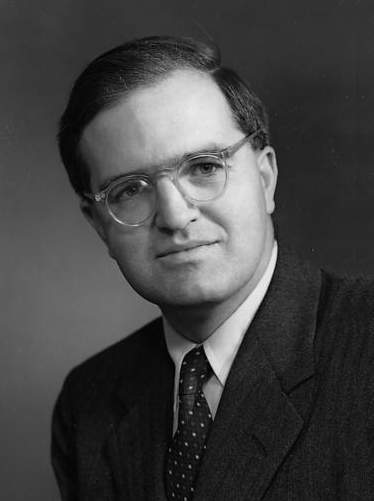

Nobel Prize in Physics · 1975
Aage N. Bohr
After fleeing occupied Denmark, he showed that atomic nuclei can stretch out of round and spin, uniting rival pictures of the nucleus.
The Nobel citation: “for the discovery of the connection between collective motion and particle motion in atomic nuclei and the development of the theory of the structure of the atomic nucleus based on this connection”
- Born
- June 19, 1922, Copenhagen, Denmark
- Died
- September 8, 2009, Copenhagen, Denmark
- Shared with
- Ben R. Mottelson, James Rainwater
- Affiliation at the time
- Niels Bohr Institute, Denmark
Disputed inclusion. Sources disagree on whether this laureate meets our standard of at least one Jewish parent. The evidence is set out under Jewish background below. We count this laureate by default, and the methodology page shows how the results change without disputed cases.
Physics prize
1975
Shared with 2 other laureates.
Age that year
53years
Born in 1922.
Sources cited
21
Fact-checked September 24, 2026.
- He and his father, Niels Bohr, both won the Nobel Prize in Physics, 53 years apart. They are one of only four father-and-son pairs to win the physics prize.
- As a boy he knew the founders of quantum physics as 'Uncle Heisenberg' and 'Uncle Pauli'; they came to work with his father at the institute where the family lived.
- At Los Alamos in the war he used the cover name James Baker; his father was Nicholas Baker.
- In 1943 the German occupiers interned his great-aunt Hanna Adler, 84, founder of the school he attended; 400 former pupils petitioned for her release.
- His doctoral thesis, on the rotation of atomic nuclei, came in 1954, after the 1950-53 papers that later won him the Nobel Prize.
The breakthrough
Nuclei that stretch and spin: uniting two pictures of the nucleus
By 1950 physicists had two clashing pictures of the atomic nucleus, the tiny core of every atom, made of protons and neutrons. One treated it as a drop of liquid, its particles crowded together like molecules. The other, the shell model, had each particle moving on its own orbit, rather like electrons in an atom. Neither could explain why some nuclei carry a lopsided electric charge, sometimes more than ten times what a single particle could produce. Working at Columbia University, Aage Bohr, like James Rainwater there, saw a way out: particles moving in partly filled orbits can pull the whole nucleus out of round, into an elongated, egg-like shape. In 1951 he worked out how ripples of the nuclear surface couple to the motion of single particles, and predicted that deformed nuclei should vibrate and rotate. The rotation is not like a spinning top. Think of a stadium wave: the shape travels around the stadium while each spectator stays near their seat. With Ben Mottelson he compared the theory with measured energy levels in 1952 and 1953, and found that certain nuclei show just the ladder of levels that a rotating body should. Later, with David Pines, they showed that the particles in a nucleus tend to pair up, so nuclear matter behaves somewhat like a superconductor.[3],[4],[5],[7]
“The constant questioning of our values and achievements is a challenge without which neither science nor society can remain healthy.”
What it meant for humanity
Aage Bohr's work did not produce a drug or a machine. Its gift was understanding. Before 1950 the nucleus seemed to follow two incompatible sets of rules. The unified picture he built with Ben Mottelson showed that the same particles can act alone and together, and it predicted rotations and vibrations that experiments confirmed with a precision rare in nuclear theory. The Royal Swedish Academy of Sciences said the work inspired intensive research on nuclear structure, and the two men set out the state of the field in a two-volume monograph, Nuclear Structure (1969 and 1975). In an obituary, Mottelson and the physicist Ole Ulfbeck wrote that the ideas fed a broader development of quantum many-body physics, including a link to superconductivity.
He also shaped how science was done. As director of the Niels Bohr Institute from 1962 to 1970, and of the Nordic institute Nordita from 1975 to 1981, he kept Copenhagen a meeting place for physicists from around the world. In the 1950s he played an important part in restoring scientific contact between the institute and physicists in the closed Soviet Union. He wrote that the institute's tradition of international cooperation mattered both for science and for mutual understanding between nations.
As a young man he was his father's right hand in the campaign for an 'open world' after the atomic bomb, in which nations would share scientific knowledge to head off a nuclear arms race. In 1969 he received the Atoms for Peace Award. In his last decades he returned to the foundations of quantum mechanics, arguing that quantum events occur without any cause.
- With Ben Mottelson, he showed in 1952-53 that certain nuclei have a rotational spectrum, a ladder of energy levels that matched experiment so well the Swedish Academy saw no doubt the theory was right.[3],[4]
- With David Pines, he and Mottelson showed that the particles in a nucleus tend to pair up, so nuclear matter behaves in some ways like a superconductor.[4],[7]
- He led the Niels Bohr Institute from 1962 to 1970 and Nordita from 1975 to 1981, keeping Copenhagen an international centre, and helped restore contact with physicists in the Soviet Union in the 1950s.[2],[7],[8]
- From 1943 to 1945 he was his father's right hand in promoting an 'open world' in which nations would share scientific knowledge to prevent a nuclear arms race.[8],[9],[21]
- He received the Atoms for Peace Award in 1969, as well as the H. C. Ørsted, Ole Rømer and Rutherford medals.[8],[11]
Impact in numbers
Aage Bohr's main contribution is knowledge: a working theory of how the atomic nucleus is built, showing that its particles move both singly and together. The Royal Swedish Academy of Sciences said this laid the foundation for the theory of collective motion in nuclei and set off intensive research worldwide, and a Danish encyclopedia notes that the predicted rotations matched experiment with rare precision. We record no benefit numbers, because any share of nuclear power or medicine credited to this theory would rest on too long and speculative a chain. His leadership of the Niels Bohr Institute and Nordita, and his part in keeping East-West scientific contact alive in the Cold War, also cannot be counted honestly. We record one small harm claim. As his father's assistant he helped review the initiator used in the Nagasaki bomb, so we credit him 0.05% of the deaths at Hiroshima and Nagasaki, using the same outcome and range as his father's profile.
Fundamental sciencePeace
Each number is the laureate’s credited share of a real-world outcome, cumulative to 2025. The whole outcome, the share of credit, and the reasoning are shown so you can check the arithmetic. Outcomes shared with other laureates are counted once on the impact page.
- HarmLow confidenceDirectSourced totalPeace
Deaths from the atomic bombings of Hiroshima and Nagasaki within two to four months
75–123
deaths caused, credited share
That is 0.05% of 150,000–246,000 deaths caused since 1945.
How this number was built
The Radiation Effects Research Foundation estimates acute deaths within two to four months at 90,000-166,000 in Hiroshima and 60,000-80,000 in Nagasaki, so 150,000-246,000 in total (the same range as the Niels Bohr, Rotblat and Bloch profiles; later cancer deaths excluded). Share 0.0005, half the Rotblat and Bloch shares: from 1943 to 1945 Aage was his father's assistant and secretary on the British team, and a Los Alamos historian credits father and son with a two-day review concluding that the implosion bomb's initiator would work; it was used at Trinity and Nagasaki. Others designed and built the initiator and the bombs, and US leaders chose to use them. Result: about 75-123 deaths credited.[2],[10],[19]
Sources: Radiation Effects Research Foundation (RERF); Los Alamos National Laboratory, National Security Research Center; NobelPrize.org (from Les Prix Nobel en 1975, Nobel Foundation, 1976)
The double edge
No harmful use of Aage Bohr's nuclear-structure theory is documented, but as a young man he served the atomic bomb project. From late 1943 to 1945 he worked as his father's assistant and secretary on the British team attached to the Manhattan Project, travelling between London, Washington and Los Alamos, where he went by the cover name James Baker. A Los Alamos historian writes that when the laboratory feared that the implosion bomb's initiator, the small device that starts the chain reaction, might fail, Niels and Aage Bohr reviewed it for two days and concluded that it would work. It did, at the Trinity test and in the bomb dropped on Nagasaki, which killed an estimated 60,000 to 80,000 people within two to four months. His part was that of an assistant reviewing a device others had developed, and political and military leaders decided to use the bombs. At the same time he helped his father warn Allied leaders of a postwar arms race.
- Moderate
Helped confirm the Nagasaki bomb's initiator would work
Los Alamos feared the initiator of the implosion bomb might not work. After two days of review, Niels and Aage Bohr concluded that it would. The same design worked at the Trinity test and in the bomb dropped on Nagasaki, which killed an estimated 60,000 to 80,000 people within two to four months.[10],[19]
- Minor
Junior member of the British bomb team
From 1943 to 1945 he was officially a junior scientific officer of Britain's Department of Scientific and Industrial Research, serving as his father's assistant and secretary on the British team in the Manhattan Project, with occasional work on the physics. He later described sharing daily in his father's work and thoughts.[2],[7],[11]
Against the odds
Denmark was one of the safest places in Europe for Jews. Danish Jews gained civic equality in 1814 and full citizenship in 1849, and Aage's great-grandfather David Adler rose high in Danish banking and politics. Aage grew up in comfort, at the heart of his father's institute. Germany occupied Denmark in April 1940, months before he entered university. For three years the Danish government shielded its Jews, but after it resigned in August 1943, German police began arresting Jews in early October. The Bohrs, with their Jewish ancestry and Niels facing arrest, fled to Sweden that autumn. In a few weeks, Danes ferried about 7,200 Jews and 680 non-Jewish relatives to Sweden; about 470 were caught and deported to the Theresienstadt ghetto. Aage's great-aunt Hanna Adler, who had founded the school he attended for twelve years, was arrested at 84 and held in the Horserød camp until 400 of her former pupils petitioned the German plenipotentiary, Werner Best; she was freed after a month. Aage followed his father to Britain and the United States and did not return home until August 1945. Back in Copenhagen he finished the studies the war had interrupted, and within eight years had done the work that won him the Nobel Prize.
1940
War
Germany occupied Denmark in April 1940, a few months before he began studying physics at the University of Copenhagen. In 1943 the war interrupted his studies.[2],[8]
1943
Persecution
When the Germans moved against Denmark's Jews in the autumn of 1943, the Bohr family, which had Jewish heritage, was in danger, and his father faced imminent arrest. The whole family escaped to Sweden.[2],[10],[13],[17],[18]
1943
Persecution
His great-aunt Hanna Adler, founder of the school he attended, was arrested at 84 and interned in the Horserød camp during the persecution of Denmark's Jews. She was released a month later after 400 former pupils petitioned for her.[8],[12]
1943
Exile
From Sweden he followed his father to England and then the United States, spending nearly two years in exile before returning to Denmark in August 1945.[2],[7]
Jewish background
Aage Bohr's only Jewish-born grandparent was his father's mother, Ellen Adler, daughter of the Jewish banker and politician David Adler. His father, Niels Bohr, counts as Jewish through his mother and is on this site, but he was christened in the Christian church; Aage's mother, Margrethe Nørlund, was not Jewish. Wikipedia's list of Jewish laureates includes Aage. Jinfo counts him only as one-quarter Jewish by descent, and Jewish law, which follows the mother, would not count him. The family's Jewish ancestry still put them in danger in 1943. We found no sign that he identified as Jewish; he visited Israel with his father in 1953.[8],[10],[13],[14],[15],[16],[20]
Key dates
June 19, 1922
Born in Copenhagen, the fourth son of the physicist Niels Bohr and Margrethe Bohr (née Nørlund).[1],[2]
1940
Finishes Sortedam Gymnasium, the school founded by his great-aunt Hanna Adler, and begins studying physics in Copenhagen, months after the German occupation.[2],[8],[12]
1943
Flees with his family to Sweden to escape Nazi arrest, then follows his father to England.[2],[10]
1943
Joins the British team in the Manhattan Project as his father's assistant, visiting Los Alamos as 'James Baker'.[2],[11]
August 1945
Returns to Denmark with his father; earns his master's degree in 1946.[2],[7]
January 1949
Begins a research post at Columbia University in New York, sharing an office with James Rainwater.[2],[7]
1950
Submits a paper on how single particles can deform the whole nucleus, about a month after Rainwater's paper on the same idea.[2],[3]
1951
Works out his theory of how surface vibrations of the nucleus couple to the motion of single particles, predicting that nuclei can rotate and vibrate.[3],[4]
1952
With Ben Mottelson, publishes three papers (1952-53) comparing the theory with experiments and showing that certain nuclei have rotational spectra.[3],[4]
1954
Earns his doctorate with a thesis on the rotational states of atomic nuclei; becomes a professor at the University of Copenhagen in 1956.[7],[8]
1962
Succeeds his late father as director of the Niels Bohr Institute, serving until 1970.[2],[7]
1969
1975
Shares the Nobel Prize in Physics with Ben Mottelson and James Rainwater; becomes director of Nordita, serving until 1981.[1],[3],[7]
September 8, 2009
Sources
- 1.Aage N. Bohr - Facts · NobelPrize.org (Nobel Prize Outreach)
- 2.Aage N. Bohr - Biographical · NobelPrize.org (from Les Prix Nobel en 1975, Nobel Foundation, 1976), 1976
- 3.The Nobel Prize in Physics 1975 - Press release · NobelPrize.org (Royal Swedish Academy of Sciences), 1975
- 4.The Nobel Prize in Physics 1975 - Award ceremony speech by Sven Johansson · NobelPrize.org, 1975
- 5.Aage N. Bohr - Nobel Lecture: Rotational Motion in Nuclei (11 December 1975) · NobelPrize.org, 1975
- 6.Aage N. Bohr - Banquet speech (10 December 1975) · NobelPrize.org, 1975
- 7.Aage Niels Bohr (obituary), by Ben Mottelson and Ole Ulfbeck, Physics Today 63(11) · Physics Today (American Institute of Physics), 2010
- 8.Aage Bohr, by Ove Nathan and Anja Skaar Jacobsen · Lex - Danmarks Nationalleksikon (Den Store Danske), 2025
- 9.Aage Bohr (1922-2009): Nobel Laureate Aage Bohr has died · Niels Bohr Archive, University of Copenhagen, 2009
- 10.Father-Son Nobel Prize-Winning Physicists, by Ellen McGehee (The Vault) · Los Alamos National Laboratory, National Security Research Center, 2022
- 11.Aage Niels Bohr · Atomic Heritage Foundation, National Museum of Nuclear Science & History
- 12.H. Adler (Hanna Adler) · Dansk Kvindebiografisk Leksikon (Lex)
- 13.Niels Henrik David Bohr, by J J O'Connor and E F Robertson · MacTutor History of Mathematics, University of St Andrews
- 14.Jewish Nobel Prize Winners in Physics (note 32: one-quarter Jewish laureates) · JINFO.ORG
- 15.List of Jewish Nobel laureates · Wikipedia
- 16.Judaism: Who Is A Jew?, by Rebecca Weiner · Jewish Virtual Library
- 17.Denmark Virtual Jewish History Tour · Jewish Virtual Library
- 18.Rescue in Denmark · United States Holocaust Memorial Museum, Holocaust Encyclopedia
- 19.Frequently Asked Questions: How many people died as a result of the atomic bombings? · Radiation Effects Research Foundation (RERF)
- 20.Margrethe Bohr · Wikipedia
- 21.Nuclear physics and war (Niels Bohr's career) · Niels Bohr Institute, University of Copenhagen, 2012
Fact-checked on September 24, 2026 by a separate AI fact-checking pass that re-opened the sources, with 7 corrections made. How we check
Suggest a correction