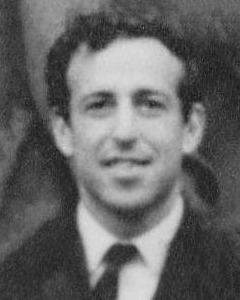

Nobel Prize in Physics · 1975
Ben R. Mottelson
Showed how the protons and neutrons in an atomic nucleus move both on their own and together, reshaping nuclear physics.
The Nobel citation: “for the discovery of the connection between collective motion and particle motion in atomic nuclei and the development of the theory of the structure of the atomic nucleus based on this connection”
- Born
- July 9, 1926, Chicago, IL, USA
- Died
- May 13, 2022
- Shared with
- Aage N. Bohr, James Rainwater
- Affiliation at the time
- Nordita, Denmark
Physics prize
1975
Shared with 2 other laureates.
Age that year
49years
Born in 1926.
Sources cited
22
Fact-checked September 24, 2026.
- He went to Copenhagen in 1950 on a one-year fellowship and stayed for the rest of his life, becoming a Danish citizen in 1971.
- He was in China when his Nobel Prize was announced, a stroke of luck for a man who avoided public attention.
- His Harvard PhD adviser, Julian Schwinger, won the Nobel Prize in Physics ten years before he did.
- At 73 he published a paper on spinning clouds of ultracold atoms that spurred a new field of research.
- When he died in 2022, aged 95, he was Denmark's last living Nobel laureate.
The breakthrough
The unified model: how a nucleus moves as single particles and as a whole
Every atomic nucleus is a tight cluster of protons and neutrons. Around 1950 physicists had two pictures of it that did not fit together. One treated the nucleus as a drop of liquid whose particles move as one. The other, the shell model, had each particle travelling on its own in fixed orbits, like electrons in an atom. Neither explained why some nuclei had lopsided electric charge. James Rainwater and Aage Bohr suggested that the outer particles can pull a nucleus out of round, into a shape more like an egg than a ball, and Bohr worked out how its surface could vibrate and rotate. Mottelson's part, with Bohr, was to test these ideas against real measurements. In three papers in 1952 and 1953 they showed that the energy levels of certain nuclei form the pattern expected from a spinning, non-spherical object. The match was so close that doubt vanished, and in 1953 they set out the full theory in a 174-page paper. Think of a stadium wave: each fan only stands up and sits down, yet a wave sweeps around the stands. A rotating nucleus works in a similar way, with a wave travelling around its surface rather than the whole body turning rigidly. In 1958, with David Pines, Bohr and Mottelson showed that protons and neutrons tend to pair up, as electrons do in a superconductor. That explained why deformed nuclei spin more easily than a solid body would.[3],[4],[5],[7],[8],[10],[11],[12]
“It is the very essence of science that it is common for all mankind.”
What it meant for humanity
Mottelson's work produced no machine or medicine. Its value is understanding. Colleagues who knew his work well say it changed how physicists picture the inside of a nucleus, and that it became a touchstone for the wider theory of systems built from many quantum particles. It set off a wave of experiments around the world to test its predictions, such as studies of the energy spectra of spinning nuclei, and it made Copenhagen a leading international centre for nuclear research. The model also linked the nucleus to other fields, such as superconductivity and the physics of neutron stars. The two-volume monograph Nuclear Structure, written with Aage Bohr and published in 1969 and 1975, is still one of the standard references for physicists who study systems of many quantum particles. Mottelson was also a gifted teacher. In the 1960s and 1970s students from many countries attended his Copenhagen lectures; for some, it was the first lecture they had ever heard in English. Later he carried the same ideas into new areas. He applied the idea of 'supershell' structure to electrons in clusters of metal atoms, and experiments at the Niels Bohr Institute observed supershells for the first time. He saw that shell structure would also appear in the 'artificial atoms' made in semiconductor labs, and his 1999 paper on spinning Bose–Einstein condensates, clouds of atoms chilled almost to absolute zero, opened up a new line of research. He also served institutions for international science: he worked in CERN's theory group while it was housed in Copenhagen, taught at and later directed Nordita, the Nordic institute for theoretical physics, and helped establish the ECT* centre for nuclear theory in Trento, Italy, which he led as founding director.
- With Aage Bohr he showed in 1952-53 that the energy levels of certain nuclei match those of a spinning, non-spherical body, a result that set off experiments around the world.[3],[4],[10]
- In 1958, with David Pines, he and Bohr showed that protons and neutrons pair up much as electrons do in a superconductor, which explained why deformed nuclei spin more easily than a rigid body.[7],[8],[12]
- Their two-volume Nuclear Structure (1969 and 1975) is still one of the standard references on the theory of systems made of many quantum particles.[7],[9]
- His 1999 paper on rotating Bose–Einstein condensates opened up a new line of research on ultracold atomic gases, and his work on pairing in such gases prepared the ground for later experiments.[7],[9],[13]
- He sat on the Bulletin of the Atomic Scientists' Board of Sponsors, a body Albert Einstein set up in 1948 whose members are consulted on setting the Doomsday Clock.[18]
- He worked in CERN's Copenhagen theory group from 1953 to 1957, taught at Nordita from 1957 and directed it in 1981-83, and was founding director of the ECT* centre in Trento, Italy, from 1993 to 1997.[7],[8]
Impact in numbers
We record no quantified impact claims for Mottelson. His achievement was a theory of how atomic nuclei are built, and it led to no single product, cure or technology whose benefits could be counted and fairly credited to him. Knowledge of nuclear structure is used widely across physics, but the chain from the Bohr–Mottelson model to any measurable human outcome is too long and too widely shared for an honest number. His impact is better described in words. He helped settle a basic question about the matter everything is made of, showed that ideas from superconductivity apply inside the nucleus, and wrote with Aage Bohr a standard reference on nuclear structure. He trained generations of physicists from around the world and later carried the same concepts into metal clusters, nanostructures and ultracold atoms. He also helped build institutions for international scientific cooperation, including Nordita and the ECT* centre in Trento.
Fundamental scienceEducation
No number is given here on purpose. Some contributions cannot be counted honestly, and we would rather describe them than invent a figure.
The double edge
We found no documented harms or controversies tied to Mottelson's work or conduct; his theory explains how atomic nuclei are structured, and none of our sources links him to weapons work.
Against the odds
Mottelson grew up in an educated Jewish family in the suburbs of Chicago, and we found no record of antisemitism aimed at him. His father was a university-trained engineer, and home was a place for open argument about science, politics and ethics. The America of his childhood still had real barriers for Jews. In the 1920s Harvard, Yale and Princeton rewrote their admissions rules to hold down Jewish enrollment; at Harvard, Jewish students had made up more than a fifth of the 1922 freshman class, and by 1933 their share was back down to 15 percent. In the 1930s the radio priest Charles Coughlin spread antisemitic lies to tens of millions of listeners. The US Holocaust Memorial Museum notes that widespread antisemitism made Americans less willing to help Europe's Jews while the Holocaust unfolded during his teenage years. Mottelson's own path shows doors that were open to him by the 1940s: the Navy sent him to college, Harvard trained him in physics, and fellowships from Harvard and the US Atomic Energy Commission took him to Copenhagen. There he joined the institute of Niels Bohr, who had fled Nazi-occupied Denmark in 1943 with his family, including Aage Bohr, to avoid arrest. Mottelson's heaviest blow was personal: his first wife, Nancy, died young in 1975, the year of his Nobel Prize.
1922
Quota
In the 1920s Harvard, Yale and Princeton reshaped admissions to limit Jewish students. Harvard's Jewish share fell from more than a fifth of freshmen in 1922 to 15 percent by 1933. We found no sign such limits affected his graduate admission to Harvard.[2],[19]
—
Discrimination
During his childhood in the 1930s, the radio priest Charles Coughlin reached tens of millions of Americans with false claims that Jews promoted communism and were disloyal, and widespread antisemitism made Americans less willing to aid Europe's Jews. We found no record of antisemitism aimed at Mottelson himself.[20],[22]
1975
Other
His first wife, Nancy Reno Mottelson, with whom he had three children, died in 1975, the same year he received the Nobel Prize.[2],[7]
Jewish background
Mottelson was born in Chicago to Goodman Mottelson, a university-trained engineer, and Georgia Mottelson (née Blum). His family was Jewish. The Encyclopaedia Judaica, as cited by jinfo.org, and the Israel Science and Technology Directory both list him among Jewish Nobel laureates in physics. We found no source describing religious practice or public statements by him about Jewish identity. His Nobel autobiography says only that his childhood home was a place where science, politics and moral questions were debated freely.[2],[14],[15],[16]
Key dates
July 9, 1926
Born in Chicago, Illinois, the second of three children of Goodman and Georgia Mottelson; grows up in La Grange, Illinois.[1],[2]
1944
Finishes high school during World War II; the US Navy sends him to Purdue University for officer training.[2],[8]
1950
Earns his Harvard PhD in nuclear physics under Julian Schwinger and moves to Copenhagen's Institute for Theoretical Physics on a traveling fellowship.[2],[7]
1951
Begins his lifelong scientific collaboration with Aage Bohr.[2],[17]
1953
With Bohr, publishes the 174-page paper setting out the collective, or unified, model of nuclear structure.[9],[10],[11]
1953
Joins the CERN Theoretical Study Group, based in Copenhagen until 1957 while CERN's Geneva site was being built.[7],[8]
1957
Becomes a professor at the newly founded Nordita, the Nordic Institute for Theoretical Atomic Physics, in Copenhagen.[2],[7]
May 15, 1958
With Aage Bohr and David Pines, proposes that nuclei show pairing like that of electrons in superconducting metals.[7],[12]
1969
Publishes Volume I of Nuclear Structure with Bohr and receives the Atoms for Peace Award.[7],[9]
1971
1975
1975
Shares the Nobel Prize in Physics with Aage Bohr and James Rainwater; Volume II of Nuclear Structure appears the same year.[1],[3],[9]
1993
Becomes founding director of ECT*, the European Centre for Theoretical Studies in Nuclear Physics and Related Areas, in Trento, Italy, serving until 1997.[7],[8]
May 13, 2022
Sources
- 1.Ben R. Mottelson – Facts · NobelPrize.org (Nobel Prize Outreach)
- 2.Ben R. Mottelson – Biographical · NobelPrize.org (Nobel Prize Outreach), 1975
- 3.The Nobel Prize in Physics 1975 – Press release · Royal Swedish Academy of Sciences / NobelPrize.org, 1975
- 4.Award ceremony speech, Nobel Prize in Physics 1975 (Sven Johansson) · NobelPrize.org (Nobel Prize Outreach), 1975
- 5.Elementary Modes of Excitation in the Nucleus (Nobel Lecture, 11 December 1975) · NobelPrize.org (Nobel Prize Outreach), 1975
- 6.Ben R. Mottelson – Banquet speech · NobelPrize.org (Nobel Prize Outreach), 1975
- 7.Ben Roy Mottelson (1927-2022), by Thomas Døssing, Jens Jørgen Gaardhøje, Chris Pethick and Stephanie M. Reimann-Wacker · Niels Bohr Institute, University of Copenhagen, 2022
- 8.Ben Roy Mottelson 1926–2022, by Jens Jørgen Gaardhøje · CERN Courier, 2022
- 9.Ben Roy Mottelson (obituary), by Stephanie M. Reimann and Ikuko Hamamoto · Physics Today (American Institute of Physics), 2022
- 10.Benjamin Mottelson (1926–2022), by Helge Kragh (Nature 606, 459) · Nature, 2022
- 11.Collective and Individual-Particle Aspects of Nuclear Structure, by Aage Bohr and Ben R. Mottelson (Dan. Mat. Fys. Medd. 27, no. 16) · Royal Danish Academy of Sciences and Letters, 1953
- 12.Possible Analogy between the Excitation Spectra of Nuclei and Those of the Superconducting Metallic State, by A. Bohr, B. R. Mottelson and D. Pines (Physical Review 110, 936) · American Physical Society, 1958
- 13.Yrast Spectra of Weakly Interacting Bose-Einstein Condensates, by B. Mottelson (Physical Review Letters 83, 2695) · American Physical Society, 1999
- 14.Ben Roy Mottelson · Wikipedia
- 15.Jewish Nobel Prize Winners in Physics (entry marked as listed in Encyclopaedia Judaica, 1997 CD-ROM edition) · JINFO.org
- 16.Jewish Nobel Prize Laureates in Physics · Israel Science and Technology Directory
- 17.Aage N. Bohr – Biographical · NobelPrize.org (Nobel Prize Outreach), 1975
- 18.Board of Sponsors (archived 11 December 2019, listing Ben Mottelson) · Bulletin of the Atomic Scientists, 2019
- 19.Getting In: The social logic of Ivy League admissions, by Malcolm Gladwell (review of Jerome Karabel, The Chosen) · The New Yorker, 2005
- 20.The Radio Priest: Charles E. Coughlin and American Antisemitism · United States Holocaust Memorial Museum (Holocaust Encyclopedia)
- 21.Dansk nobelprisvinder er død (Ritzau) · Politiken, 2022
- 22.The United States and the Holocaust · United States Holocaust Memorial Museum (Holocaust Encyclopedia)
Fact-checked on September 24, 2026 by a separate AI fact-checking pass that re-opened the sources, with 4 corrections made. How we check
Suggest a correction