223 laureates · 1905–2025
Medicine laureates
Every Jewish Nobel laureate, by the standard of Wikipedia’s list: Jews, or people with at least one Jewish parent. 5 borderline cases are included and flagged as disputed. Each profile explains the work, what it meant for humanity, what went wrong, and what the laureate faced.
- Women
- 12
- Refugees or exiles
- 50
- Profiles researched
- 223 of 223
Results
Showing 60 of 223 laureates

Medicine · 1908
Ilya Mechnikov
A zoologist who pushed thorns into starfish larvae and saw what others had missed: cells that swallow germs defend the body.

Medicine · 1908
Paul Ehrlich
He dreamed of 'magic bullets' that kill germs but spare the patient; his lab built one: Salvarsan, the first effective syphilis drug.

Medicine · 1914
Robert Bárány
He turned a dizzy patient's complaint into the ear-water test that still shows doctors whether our balance organs work.

Medicine · 1922
Otto Meyerhof
He showed how working muscles get energy from sugar and helped map how cells break it down, then twice fled the Nazis.
Refugee

Medicine · 1930
Karl Landsteiner
He discovered the human blood groups, the key to turning blood transfusion from a deadly gamble into routine, life-saving medicine.

Medicine · 1931
Otto Warburg
He found the iron enzyme that lets cells use oxygen and spotted cancer's hunger for sugar, the clue behind PET cancer scans.
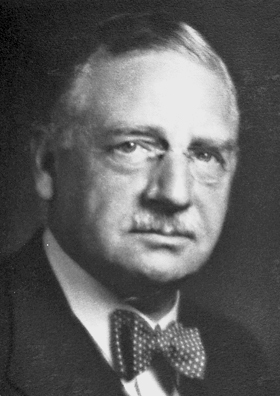
Medicine · 1936
Otto Loewi
With two frog hearts he proved that nerves signal with chemicals, a basis for many medicines, before the Nazis drove him from Austria.
Refugee
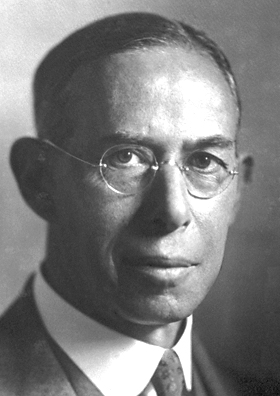
Medicine · 1944
Joseph Erlanger
He timed signals racing along nerves and found thick fibers fast and thin ones slow, a key to how we feel touch and pain.

Medicine · 1945
Ernst B. Chain
A refugee chemist who fled Nazi Berlin, he helped purify penicillin and prove it could cure deadly infections.
Refugee
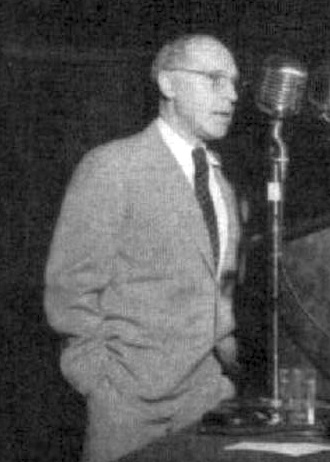
Medicine · 1946
Hermann J. Muller
He proved that X-rays can change genes, giving science mutations on demand, then warned the world to protect its genes from radiation.
Disputed inclusion

Medicine · 1947
Gerty Cori
She showed how the body stores and releases sugar, and with her husband traced a deadly childhood disease to one missing enzyme.

Medicine · 1950
Tadeus Reichstein
He helped decode the adrenal hormones behind cortisone and Addison's treatment, and found the first practical way to mass-produce vitamin C.
Refugee

Medicine · 1952
Selman A. Waksman
His systematic hunt through soil microbes produced streptomycin, the first drug that could cure tuberculosis.

Medicine · 1953
Fritz Lipmann
Pushed out of Europe by Nazism, he found coenzyme A, the molecular forklift cells use to turn food into energy and new parts.
Refugee

Medicine · 1953
Hans Krebs
Driven out of Nazi Germany, he mapped the chemical cycle that turns food into energy in almost every oxygen-breathing cell.
Refugee

Medicine · 1958
Joshua Lederberg
He showed that bacteria swap genes, opening the way to genetic engineering and to understanding how germs share drug resistance.

Medicine · 1959
Arthur Kornberg
He found DNA polymerase, the first known enzyme that copies DNA, and his lab's enzymes became tools of genetic engineering.

Medicine · 1964
Konrad Bloch
Forced out of Nazi Germany, he helped map how the body builds cholesterol, the chemistry that statin drugs later learned to block.
Refugee
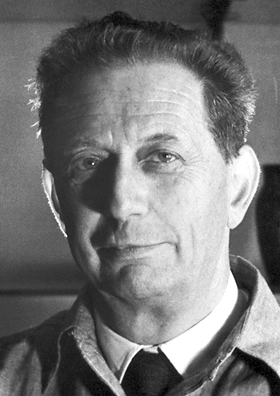
Medicine · 1965
André Lwoff
He showed that a virus can hide silently inside a cell's genes until a signal wakes it, a key to how genes are switched on and off.
Medicine · 1965
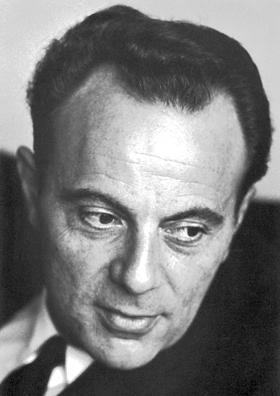
François Jacob
He showed how cells switch their genes on and off, and helped find messenger RNA, the molecule behind today's mRNA vaccines.

Medicine · 1967
George Wald
He found vitamin A at the heart of the eye's light sensor and helped show how light straightens it, the first step of seeing.

Medicine · 1968
Marshall W. Nirenberg
With a colleague, he read the first word of the genetic code, showing how cells turn the letters of their genes into proteins.

Medicine · 1969
Salvador E. Luria
A refugee from Fascist Italy, he helped prove that bacteria mutate at random, a key to understanding why germs outwit our drugs.
Refugee

Medicine · 1970
Julius Axelrod
He showed how nerve cells recycle their chemical messengers, the key to modern antidepressants, and helped bring paracetamol into medicine.

Medicine · 1970
Sir Bernard Katz
A stateless Jewish refugee from Nazi Germany who found that nerves pass their messages in tiny packets of chemical.
Refugee

Medicine · 1972
Gerald M. Edelman
He worked out the chemical structure of antibodies, the immune system's Y-shaped defenders, laying groundwork for antibody medicines.

Medicine · 1975
David Baltimore
He found the enzyme that lets viruses write RNA back into DNA, a key to understanding and treating HIV.

Medicine · 1975
Howard M. Temin
He proved some viruses copy their RNA genes into DNA, an idea once called heresy that later guided the first HIV drugs.

Medicine · 1976
Baruch S. Blumberg
He discovered the hepatitis B virus and co-invented its vaccine, the first vaccine that protects people against a cancer.

Medicine · 1977
Rosalyn Yalow
A nuclear physicist who learned to measure tiny traces of hormones in blood, changing how doctors diagnose diabetes and thyroid disease.

Medicine · 1978
Daniel Nathans
He showed that bacterial enzymes could cut DNA into exact, mappable pieces, the first step behind gene cloning, testing and sequencing.

Medicine · 1980
Baruj Benacerraf
He showed that our genes help decide which invaders our immune system can respond to, a key to transplants, vaccines and autoimmune disease.

Medicine · 1982
John R. Vane
He found how aspirin works and co-discovered prostacyclin, explaining aspirin's heart benefits and helping start a new class of heart drugs.
Medicine · 1984
César Milstein
With Georges Köhler, he found how to make unlimited pure antibodies on demand, the basis of antibody medicines and pregnancy tests.

Medicine · 1985
Joseph L. Goldstein
With Michael Brown he found the LDL receptor, the cell's doorway for cholesterol, explaining inherited heart attacks and how statins work.

Medicine · 1985
Michael S. Brown
With Joseph Goldstein he found the LDL receptor, showing how cells pull cholesterol from the blood and how statins protect hearts.

Medicine · 1986
Rita Levi-Montalcini
Barred from her university by Fascist race laws, she kept working in her bedroom and went on to discover the first growth factor.
Refugee

Medicine · 1986
Stanley Cohen
He found EGF, the signal that tells skin cells to grow, and its receptor, now the target of drugs for lung and bowel cancer.

Medicine · 1988
Gertrude B. Elion
She designed drugs that help cure childhood leukemia and made organ transplants workable, and helped create the first selective herpes drug.

Medicine · 1989
Harold E. Varmus
He showed that cancer genes are corrupted copies of our own growth genes, a key step toward drugs that target cancer.

Medicine · 1992
Edmond H. Fischer
He helped find the chemical on-off switch that controls proteins in our cells, now the target of dozens of cancer drugs.

Medicine · 1994
Alfred G. Gilman
He purified the first G-protein, the switch that carries hormone and drug signals into our cells.

Medicine · 1994
Martin Rodbell
He found that cells pass outside messages inward through a GTP-powered switch, key to how hormones, senses and many drugs work.

Medicine · 1997
Stanley B. Prusiner
He showed that a misfolded protein with no genes can spread infection in the brain, explaining mad cow disease and related dementias.

Medicine · 1998
Robert F. Furchgott
He found that the lining of blood vessels sends a signal, later shown to be nitric oxide gas, that tells arteries to relax.

Medicine · 2000
Eric Kandel
A child refugee from Nazi Vienna who used a sea snail to show how memories are stored as physical changes between nerve cells.
Refugee

Medicine · 2000
Paul Greengard
Showed how dopamine and other brain chemicals change nerve cells from the inside, guiding research on mental illness and drugs.
- RH
Medicine · 2002
H. Robert Horvitz
Found the genes that tell cells when to die, a worm discovery that changed how we understand cancer and brain disease.

Medicine · 2002
Sydney Brenner
A cobbler's son who helped crack how genes make proteins, then turned a tiny worm into a window on how animals are built.

Medicine · 2004
Richard Axel
A Brooklyn tailor's son who found the huge gene family behind the sense of smell, and helped turn cells into factories for medicines.
Medicine · 2006
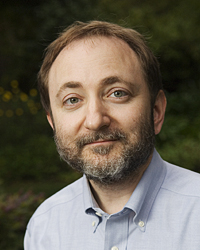
Andrew Z. Fire
He found that double-stranded RNA can switch off one chosen gene, a tool now used across biology and in new medicines.

Medicine · 2011
Bruce A. Beutler
He found how our cells sense a key bacterial molecule, and his lab invented the TNF-blocking design behind the arthritis drug Enbrel.

Medicine · 2011
Ralph M. Steinman
He discovered dendritic cells, the scouts that switch on our immune defences, changing how vaccines and immunotherapies are designed.

Medicine · 2013
James E. Rothman
He showed how protein 'zippers' let tiny bubbles inside our cells deliver insulin, nerve signals and other cargo to the right place.

Medicine · 2013
Randy W. Schekman
Using baker's yeast, he found the genes cells use to ship proteins out, work that later helped companies use yeast to make insulin.

Medicine · 2017
Michael Rosbash
The son of refugees from Nazi Germany, he helped show how genes in our cells build the 24-hour clock that times sleep and waking.
Medicine · 2020
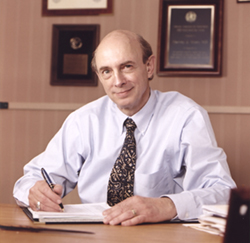
Harvey J. Alter
He tracked a hidden virus through donated blood, helping make transfusions safe from hepatitis C and opening the way to a cure.

Medicine · 2021
David Julius
A Brooklyn grandson of Jewish immigrants who used chili peppers to find the nerve sensor that feels burning heat and pain.

Medicine · 2023
Drew Weissman
With Katalin Karikó, he kept lab-made mRNA from setting off the immune alarm, a key step behind mRNA COVID-19 vaccines.

Medicine · 2024
Gary Ruvkun
He helped discover microRNAs, tiny RNA switches that fine-tune our genes, and showed that humans share them with worms.