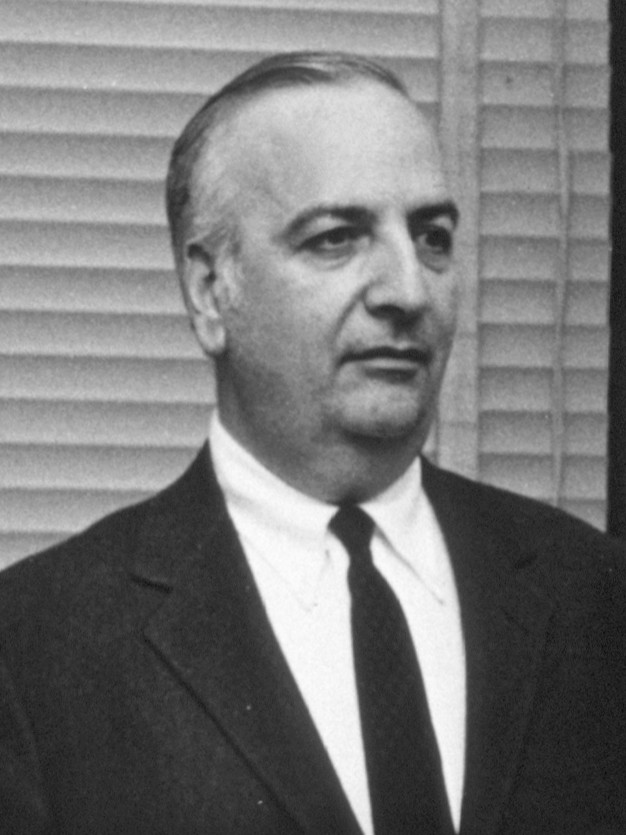

Nobel Prize in Physiology or Medicine · 1980
Baruj Benacerraf
He showed that our genes help decide which invaders our immune system can respond to, a key to transplants, vaccines and autoimmune disease.
The Nobel citation: “for their discoveries concerning genetically determined structures on the cell surface that regulate immunological reactions”
- Born
- October 29, 1920, Caracas, Venezuela
- Died
- August 2, 2011, Boston, MA, USA
- Shared with
- Jean Dausset, George D. Snell
- Affiliation at the time
- Harvard Medical School, USA
Medicine prize
1980
Shared with 2 other laureates.
Age that year
60years
Born in 1920.
Headline credited impact
13,000–21,000people benefited
Solid-organ transplant recipients worldwide, aided by the science of transplant immunology (the MHC). How it was built
Sources cited
17
Fact-checked September 24, 2026.
- When a medical student asked him how to pronounce his first name, Baruj, he reportedly replied: you don't.
- The medical schools that turned him down in 1942 reportedly included Harvard. In 1970 Harvard Medical School made him chairman of pathology.
- He gave his Nobel Prize money to launch Dana-Farber Cancer Institute's first big fund drive, which raised more than $60 million, nearly twice its goal.
- He learned English by watching double features at the movies, and in the 1950s ran a family bank in New York on Tuesdays and Thursdays while doing research the rest of the week.
- In his 1963 breeding test, 82% of the offspring of two responder guinea pigs could react to a test molecule, but none of 26 offspring of two nonresponders could.
The breakthrough
Immune response (Ir) genes: how genes decide what the immune system can see (1963)
In the early 1960s Benacerraf wanted simple, man-made antigens (molecules that trigger an immune response) to study antibodies more cleanly. He and his young colleague Bernard Levine attached a small chemical tag to a chain made of a single amino acid, lysine, and injected it into ordinary guinea pigs. Something odd happened. Only about 40 percent of the animals reacted; the rest ignored it completely. He called them responders and nonresponders. Breeding tests explained why. In 1963 his team reported that most offspring of two responder parents were responders, while none of the offspring of nonresponders were. The ability to respond was passed down by a single dominant gene, which he named an immune response, or Ir, gene. Hugh McDevitt in mice, and Benacerraf's own lab in guinea pigs, then showed that Ir genes sit inside the major histocompatibility complex (MHC), the gene cluster that decides whether transplanted tissue is accepted or rejected. His group showed that these genes work in the cells that present antigens, not in the T cells that react to them. In 1978 he proposed that MHC molecules hold up small fragments of proteins for T cells to inspect. Think of each MHC molecule as a display case: T cells can only react to what is on display, and if your version of the case cannot hold a germ's fragment, your T cells never notice it.[2],[3],[4],[6],[9],[10]
“admission to Medical School was a formidable undertaking for someone with my ethnic and foreign background in the United States of 1942”
What it meant for humanity
Benacerraf's work helped answer a basic question: how does the immune system decide what to attack? With his co-laureates' discoveries, it showed that the same gene cluster that governs transplant rejection also sets how strongly each person's T cells respond to a given germ. The Nobel Assembly said this knowledge helps explain why different people defend themselves differently against infections and why a cancer cell is destroyed in one person but grows into a tumor in another. It also noted that people with certain tissue types run a higher risk of certain diseases. The award speech said HLA tissue typing had become essential for every kind of transplant. His idea that MHC molecules display protein fragments to T cells, confirmed by others, became a core rule of modern immunology, and Dana-Farber's president said his work shaped fields from organ transplantation to AIDS treatment and cancer vaccines. Earlier, in 1959, he and Lloyd Old showed that infection with the BCG tuberculosis vaccine slowed the growth of transplanted tumors in mice. That line of research led to BCG treatment inside the bladder, which has been the standard therapy for many early bladder cancers for four decades. He also helped discover the Fc receptors that let immune cells grab antibody-coated bacteria. His impact ran through people and institutions too. He trained a generation of immunologists, built Harvard's immunology program, and in 1980 took over Dana-Farber Cancer Institute during a period of turmoil, turning a small, mostly pediatric research center into a comprehensive cancer center.
- In 1959, with Lloyd Old and Donald Clarke, he reported that BCG infection slowed transplanted tumors in mice, work later credited as a root of intravesical BCG, still the standard therapy for intermediate- and high-risk early bladder cancer.[11],[12]
- The Nobel Assembly said the genetic control of immune responses helps explain why people differ in their ability to fight infections and why cancer cells are eliminated in some people but not others.[4]
- On his death, Dana-Farber's president, Edward Benz, said his discoveries on genetic control of immunity had shaped work from organ transplantation to AIDS treatment and therapeutic cancer vaccines.[17]
- His 1978 hypothesis that MHC class II molecules form a complex with short protein fragments to stimulate T cells was later confirmed; his Harvard recruit Emil Unanue showed that these molecules bind peptides directly.[6],[10]
- As president of Dana-Farber from 1980 to 1992 he led its first major fund drive, which raised more than $60 million, and helped turn it into a comprehensive cancer center.[2],[7]
- His trainees included Steve Burakoff, Ron Germain, Mark Greene and Norman Letvin, who became a leader in research on T-cell responses to HIV. His biographer credits him with making Harvard an immunology powerhouse.[6]
Impact in numbers
Benacerraf's legacy is mostly knowledge. His immune response genes, and his proposal that MHC molecules display protein fragments to T cells, became part of the basic rulebook of immunology. That rulebook helps explain why mismatched transplants are rejected so strongly, informs the study of why certain tissue types raise the risk of autoimmune diseases, and guides the design of vaccines and immune therapies for cancer and HIV. None of those uses traces to him alone, so we record only one modeled claim: a small ripple share (0.5%) of people who have received organ transplants. We make no lives-saved claim. His early work with Lloyd Old on BCG and tumors fed into a standard bladder-cancer treatment, and his Fc-receptor work opened a field, but we found no fair way to put numbers on his part in either. His leadership of Dana-Farber and the many immunologists he trained add impact that cannot be counted.
HealthFundamental science
Each number is the laureate’s credited share of a real-world outcome, cumulative to 2025. The whole outcome, the share of credit, and the reasoning are shown so you can check the arithmetic. Outcomes shared with other laureates are counted once on the impact page.
- Low confidenceRippleModeledHealth
Solid-organ transplant recipients worldwide, aided by the science of transplant immunology (the MHC)
13,000–21,000
people benefited, credited share
That is 0.5% of 2.6–4.2 million people benefited since 1962.
How this number was built
Range reused from our Gertrude Elion profile. UNOS logged the 1 millionth US transplant in September 2022, with over 40,000 a year from 2021; about 3.3 more years at about 46,000 a year gives about 1.16 million by end-2025. The US did 48,935 of the world's 173,727 transplants in 2024 (28%); a 25-40% US share over time gives 2.9-4.6 million worldwide, minus about 10% for repeat transplants: 2.6-4.2 million recipients. Share 0.005 = 0.10 x 0.05: tissue-compatibility science gets about 10% of transplant success, alongside drugs, surgery and organ preservation. Within that, Dausset's HLA typing and Snell's H-2 genetics are the direct basis; Benacerraf's Ir-gene and alloreactivity work, which explained why T cells react so strongly to mismatched MHC, gets about 5%. He did not develop tissue typing, and his key work came after 1962.[3],[4],[5],[15],[16]
Sources: NobelPrize.org; The Nobel Assembly of Karolinska Institutet / NobelPrize.org; NobelPrize.org; United Network for Organ Sharing (UNOS); Transplantation (via PubMed Central)
The double edge
We found no documented harms flowing from Benacerraf's discoveries. The main controversy is about credit. Hugh McDevitt of Stanford, whose mouse experiments showed that immune response genes lie inside the major histocompatibility complex, was left out of the 1980 prize. Benacerraf's biographer, his former trainee William Paul, writes that this omission disappointed Benacerraf.
- Minor
A key co-discoverer was left out of the prize
Hugh McDevitt showed that mouse Ir genes are encoded in the MHC, a central step in the discovery the prize honored, but the Nobel Assembly limited the award to Benacerraf, Dausset and Snell. Benacerraf's biographer writes that Benacerraf was disappointed McDevitt did not share it.[6],[10]
Against the odds
Benacerraf grew up in comfort. His father's textile and import business prospered, and the family lived in Paris from 1925, where he attended an elite lycée. In spring 1939, as war approached, they returned to Venezuela, and in 1940 moved to New York for his education. His real obstacle came in American medicine. From the 1920s into the 1950s, US medical schools quietly limited Jewish students, often to about 10 percent of a class, and many application forms asked about religion and family background. Despite an excellent record at Columbia, Benacerraf was turned down by numerous medical schools; accounts put the number at between 10 and about 25. The Boston Globe reported that he was rejected either as a foreign citizen or because of quotas on Jewish students, and he later said the country was strongly antisemitic in the 1940s. He got in only after the father of a friend, an assistant to the president of the Medical College of Virginia, arranged an interview for one of the last two places. Later, in Paris, his lab chief told him that as a foreigner he would struggle to build an independent career in France, and in 1956 no other Paris lab would take him, so he returned to the United States.
1939
War
With the Second World War approaching, the family left Paris for Venezuela in spring 1939, just before he could sit his final school exams. In his Nobel autobiography he described his future wife, Annette Dreyfus, as also a refugee from Paris.[2],[6],[7]
1942
Quota
Despite an excellent record at Columbia, he was rejected by numerous US medical schools, at a time when many schools used quiet quotas to limit Jewish students. The Boston Globe cited his foreign citizenship or quotas on Jewish students. Accounts of how many schools refused him range from 10 to about 25; Dana-Farber and a Venezuelan wire report say Harvard was among them.[2],[6],[7],[8],[13],[14],[17]
1956
Discrimination
After six years of research in Paris, his lab chief made clear that, as a foreigner, he would face continuous difficulties establishing an independent laboratory in France, and no other Paris lab would give him a chance. He returned to the United States.[2],[6]
Jewish background
Benacerraf was born in Caracas to Sephardic Jewish parents. His father, Abraham, a self-made textile merchant, was born in Spanish Morocco; his mother, Henriette Lasry, was raised in French Algeria. In his Nobel autobiography he described his family as of Spanish-Jewish ancestry. The Encyclopaedia Judaica says he took pride in his Sephardi origins and served on the board of governors of Israel's Weizmann Institute of Science. He received a Hebrew University prize in 1974 and honorary degrees from Yeshiva University and the Weizmann Institute. We found no account of his religious practice.[2],[6],[8]
Key dates
October 29, 1920
Born in Caracas, Venezuela, to Sephardic Jewish parents: a textile merchant from Spanish Morocco and a mother raised in French Algeria.[1],[2],[6]
1925
The family moves to Paris, where he is educated in French until 1939.[2]
1940
After a year back in Venezuela, moves to New York to study at Columbia University's School of General Studies.[2],[6]
1942
Graduates from Columbia; after rejections by numerous medical schools, enters the Medical College of Virginia.[2],[7]
1943
Becomes a US citizen and marries Annette Dreyfus, a French student he met at Columbia.[2],[6]
1946
After a wartime medical degree and internship, serves as a US Army doctor in Paris and Nancy, France.[2],[7]
February 1948
Begins research in immunochemistry in Elvin Kabat's laboratory at Columbia.[2],[6]
1956
Unable to build an independent career in France as a foreigner, joins New York University School of Medicine.[2],[6]
December 1, 1963
Reports that guinea pigs' ability to respond to a synthetic antigen is inherited through a single dominant gene: the first immune response (Ir) gene.[6],[7],[9]
1968
Becomes chief of the Laboratory of Immunology at the National Institute of Allergy and Infectious Diseases.[2],[6]
1970
Becomes chairman of pathology at Harvard Medical School, a post he holds until 1991.[2],[6],[7]
October 10, 1980
Shares the Nobel Prize in Physiology or Medicine with Jean Dausset and George Snell, months after becoming president of Dana-Farber.[1],[4],[6]
1990
Receives the US National Medal of Science.[2]
August 2, 2011
Dies of pneumonia at home in Boston, aged 90, two months after the death of his wife of 68 years.[1],[6],[7]
Sources
- 1.Baruj Benacerraf - Facts · NobelPrize.org (Nobel Prize Outreach)
- 2.Baruj Benacerraf - Biographical (with 2005 addendum) · NobelPrize.org (from Les Prix Nobel, The Nobel Prizes 1980, Nobel Foundation, 1981), 1981
- 3.The Role of MHC Gene Products in Immune Regulation and Its Relevance to Alloreactivity (Nobel Lecture, 8 December 1980) · NobelPrize.org, 1980
- 4.The Nobel Prize in Physiology or Medicine 1980 - Press release · The Nobel Assembly of Karolinska Institutet / NobelPrize.org, 1980
- 5.The Nobel Prize in Physiology or Medicine 1980 - Award ceremony speech (Georg Klein) · NobelPrize.org, 1980
- 6.Baruj Benacerraf 1920-2011: A Biographical Memoir (William E. Paul) · National Academy of Sciences (archived copy, Internet Archive), 2014
- 7.Baruj Benacerraf, 90; shared 1980 Nobel Prize (Neena Satija and Mark Feeney) · The Boston Globe, 2011
- 8.Benacerraf, Baruj (Encyclopedia of World Biography; and Encyclopaedia Judaica entry by Michael Denman) · Encyclopedia.com (Gale)
- 9.Studies on artificial antigens. III. The genetic control of the immune response to hapten-poly-L-lysine conjugates in guinea pigs (Levine BB, Ojeda A, Benacerraf B), J Exp Med 118:953-957 · Journal of Experimental Medicine (via PubMed Central), 1963
- 10.Toward a molecular understanding of adaptive immunity: a chronology, part I (Kendall A. Smith), Frontiers in Immunology 3:369 · Frontiers in Immunology (via PubMed Central), 2012
- 11.Effect of Bacillus Calmette-Guerin infection on transplanted tumours in the mouse (Old LJ, Clarke DA, Benacerraf B), Nature 184:291-292 · Nature, 1959
- 12.The use of intravesical BCG in urothelial carcinoma of the bladder (Alhunaidi O, Zlotta AR), ecancermedicalscience 13:905 · ecancermedicalscience (via PubMed Central), 2019
- 13.Muere el premio Nobel de Medicina Baruj Benacerraf (EFE wire report) · El Universal (Caracas), archived by the Internet Archive, 2011
- 14.Jewish American Heritage Month: The Forgotten History of Quotas in American Medical School Admissions · The Rotation, Himmelfarb Health Sciences Library, George Washington University, 2023
- 15.U.S. reaches historic milestone of 1 million transplants · United Network for Organ Sharing (UNOS), 2022
- 16.Organ Donation and Transplantation Worldwide: The Global Observatory on Donation and Transplantation 2024 Report · Transplantation (via PubMed Central), 2026
- 17.Baruj Benacerraf remembered as visionary immunologist and Dana-Farber leader · Dana-Farber Cancer Institute, 2011
Fact-checked on September 24, 2026 by a separate AI fact-checking pass that re-opened the sources, with 7 corrections made. How we check
Suggest a correction