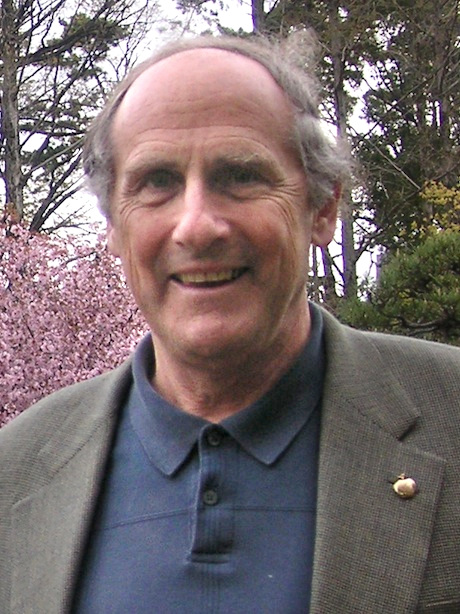

Nobel Prize in Physiology or Medicine · 2011
Ralph M. Steinman
He discovered dendritic cells, the scouts that switch on our immune defences, changing how vaccines and immunotherapies are designed.
The Nobel citation: “for his discovery of the dendritic cell and its role in adaptive immunity”
- Born
- January 14, 1943, Montreal, Canada
- Died
- September 30, 2011, New York, NY, USA
- Shared with
- Bruce A. Beutler, Jules A. Hoffmann
- Affiliation at the time
- Rockefeller University, USA
Medicine prize
2011
Shared with 2 other laureates.
Age that year
68years
Born in 1943.
Headline credited impact
3,500–4,000people benefited
Men with advanced prostate cancer treated with sipuleucel-T (Provenge) cell immunotherapy. How it was built
Sources cited
27
Fact-checked September 24, 2026.
- He first thought of calling his new cells 'claudiacytes', after his wife and ballroom-dance partner Claudia, before choosing 'dendritic', from the Greek for tree.
- He died on 30 September 2011, three days before his Nobel Prize was announced. The Nobel Foundation, which had not known, let the award stand, a first in its history.
- At his 2007 Lasker award, Joseph Goldstein noted that a 1993 Scientific American issue on immunity, by 12 leading immunologists, never mentioned dendritic cells.
- Diagnosed in 2007 with a pancreatic cancer that kills about 80% of patients within a year, he tried dendritic-cell vaccines on himself and lived four and a half more years.
- His family gave all of his Nobel prize money to charity, including $500,000 for a Rockefeller professorship and $250,000 to a family foundation for young scientists.
The breakthrough
Discovery of the dendritic cell, the starter of adaptive immunity (1973)
In the early 1970s immunologists had a puzzle. When they mixed white blood cells called lymphocytes with a germ's proteins in a dish, little happened. Some helper cell was missing, and most experts assumed it was the macrophage, a big cell that swallows germs. Working in Zanvil Cohn's lab at Rockefeller University, Steinman looked closely at cells from mouse spleens and spotted a rare, odd-looking cell that kept stretching out and pulling back long, branch-like arms. In 1973 he and Cohn described it and named it the dendritic cell, from the Greek word for tree. Over the next years he separated spleen cells into pure types and tested each one. Dendritic cells were by far the strongest at switching on T cells, the lymphocytes that direct immune attacks and kill infected cells, and they worked in tiny numbers. He and others later showed that these cells wait in tissues such as the skin, pick up pieces of invaders, mature, and travel to the lymph nodes to show those pieces to T cells. Think of them as scouts: they patrol the borders, grab a sample of any intruder, and carry it back to headquarters to brief the army. Steinman and others also found that resting dendritic cells can calm T cells instead, which helps the body avoid attacking itself. Starting attacks and keeping the peace, they link the body's quick first defences to its slower, targeted ones.[2],[3],[4],[6],[7]
“I wanted to know how immunity begins, a basic problem so little understood yet so relevant to many diseases.”
What it meant for humanity
Before Steinman, immunologists knew that T cells, the white blood cells that direct and carry out many immune attacks, needed help to get started, but not which cell gave it. His answer changed how medicine thinks about the immune system. The Nobel committee said the discoveries of Steinman and his co-laureates opened new routes to better vaccines against infections, to efforts to turn the immune system against tumours, and to clues about why the body sometimes attacks its own tissues. Because resting dendritic cells can calm the immune system as well as rouse it, researchers are also trying to use them against autoimmune disease, allergy and transplant rejection. In the early 1990s Steinman's group and others found ways to grow dendritic cells in large numbers, and the field spread to hundreds of labs. By 2007 dendritic-cell vaccines were being tested in more than 70 trials in melanoma, prostate cancer, lymphoma and kidney cancer. The first cell-based immunotherapy approved in the United States, sipuleucel-T (Provenge), is made by loading a patient's own blood antigen-presenting cells, the family that dendritic cells belong to, with a prostate-cancer protein. In its main trial it extended median survival by about four months in men with advanced prostate cancer, and its maker says nearly 40,000 men have received it. In 2010 Steinman launched the first human trial of an HIV vaccine built to deliver its cargo straight to dendritic cells. He also trained more than 100 young scientists who carried the field around the world, and in his last years he became a test case for his own ideas, treating his pancreatic cancer with dendritic-cell vaccines.
- In culture, as few as one dendritic cell for every 200 T cells was enough to drive a maximal T-cell response, a stimulating power more than 100 times that of macrophages, B cells or T cells.[7]
- In a 512-man trial, sipuleucel-T, made from patients' own antigen-presenting cells, lowered the risk of death by 22% and raised median survival from 21.7 to 25.8 months in advanced prostate cancer.[18],[23]
- Sipuleucel-T won US approval in April 2010, and its maker says nearly 40,000 men have received it.[19],[20],[21]
- In 2010 Steinman started, at Rockefeller University Hospital, the first phase I clinical trial of a dendritic-cell-targeted vaccine against HIV.[1]
- Steinman argued that dendritic cells could be harnessed both to boost immunity against infections and tumours and to silence allergy, autoimmunity and transplant rejection.[4],[24]
- He trained more than 100 postdoctoral fellows and graduate students and published some 450 papers; his methods for growing dendritic cells in bulk helped the field spread to hundreds of labs.[1],[7],[16]
Impact in numbers
Steinman's main gift was understanding. He found the cell that starts and steers adaptive immunity, and the Nobel committee noted that this knowledge now shapes work on vaccines, cancer immunotherapy and treatments for autoimmune disease. That kind of foundational impact is real but cannot honestly be turned into a count of lives saved: the classic vaccines against smallpox, polio and measles were made before dendritic cells were known, and dendritic-cell vaccines for HIV and most cancers are still in trials. We therefore count only one downstream application, developed by others: men with advanced prostate cancer treated with sipuleucel-T, a therapy made from the patient's own antigen-presenting cells. We credit Steinman with a small share, 10%, because the product is a mix of immune cells, its mechanism is debated, and its survival benefit of about four months in the main trial has been questioned. His training of more than 100 scientists, and methods that let hundreds of labs study dendritic cells, are also part of his legacy.
HealthFundamental science
Each number is the laureate’s credited share of a real-world outcome, cumulative to 2025. The whole outcome, the share of credit, and the reasoning are shown so you can check the arithmetic. Outcomes shared with other laureates are counted once on the impact page.
- Low confidenceRippleSourced totalHealth
Men with advanced prostate cancer treated with sipuleucel-T (Provenge) cell immunotherapy
3,500–4,000
people benefited, credited share
That is 10% of 35,000–40,000 people benefited since 2010.
How this number was built
Dendreon, the maker, says nearly 40,000 men have received sipuleucel-T since US approval in April 2010: high = 40,000; low = 35,000 allows for the vague 'nearly'. This counts men treated, not lives saved: in the pivotal IMPACT trial (512 men) median survival rose 4.1 months (25.8 vs 21.7) with a 22% lower risk of death, and a 2012 JNCI critique argued part of that gap may reflect harm to the placebo arm. Scope is ripple: the product was developed by others (Dendreon) building on dendritic-cell biology, not by Steinman. Share 0.1: reviewers place it within dendritic-cell-based immunotherapy, but the cells are a mix (about 46% T cells, 25% monocytes), the mechanism is unproven, and the antigen design, development and trials were others' work.[18],[19],[20],[21],[23]
Sources: Dendreon Pharmaceuticals; New England Journal of Medicine 363:411-22 (PubMed); US Food and Drug Administration; Journal of the National Cancer Institute 104(4):273-9 (PubMed); Nature Reviews Cancer 12:265-77 (PubMed Central)
The double edge
Steinman's discovery itself caused no documented harm, but the treatments built on it have so far delivered less than early hopes. Dendritic-cell cancer vaccines have proved safe and can train T cells against tumours, yet clear tumour shrinkage has been seen in only some patients. The best-known product in this family, sipuleucel-T, extended median survival by about four months in its main trial without slowing measurable tumour growth, and independent researchers argued that a problem with the placebo group could explain part of the result. In 2015 its maker gave up its European licence, citing commercial reasons. Steinman also treated his own cancer with experimental therapies, using special provisions that let him join several trials; no one can say which treatment, if any, lengthened his life. His Nobel was the first given to someone who had already died, which the Nobel Foundation accepted only because the committee had acted in good faith.
- Moderate
Disputed benefit of sipuleucel-T
In the 512-man trial behind its 2010 US approval, sipuleucel-T raised median survival from 21.7 to 25.8 months but did not delay tumour progression. A 2012 critique drawing on FDA documents found that older men in the placebo group did unusually badly and argued that removing and freezing most of their harvested cells might explain the gap.[18],[21]
- Minor
Modest results for dendritic-cell vaccines so far
After more than a decade of trials, reviewers found dendritic-cell cancer vaccines safe and able to expand tumour-fighting T cells, but objective tumour responses appeared only in some patients. Sipuleucel-T's European licence was withdrawn in May 2015 at the maker's request, for commercial reasons.[22],[23]
- Minor
A Nobel Prize awarded after death
The Nobel Assembly named Steinman a laureate without knowing he had died three days earlier. Nobel statutes bar awarding work by a person already dead, but the Nobel Foundation ruled that the decision, made in good faith, would stand.[5],[25]
Against the odds
Steinman grew up in Sherbrooke, a small Quebec city whose Jewish community of shopkeepers and merchants had its own synagogue. A historian of that community found that in its early decades Sherbrooke's newspapers printed no antisemitic slurs and that Jews there seem to have lived at peace with their neighbours. The wider picture was harsher. New waves of antisemitism erupted in the 1930s and 1940s, and in Montreal both English- and French-speaking society kept Jews at a distance well into the 1950s. McGill University, where Steinman earned his science degree in 1963, informally capped Jewish students at around 9-10% of enrolment after its dean of arts proposed a quota in 1926, and it limited Jewish admissions to its medical school by quota between 1920 and 1960. The sources we found do not say that Steinman himself was held back by these barriers; he went on to Harvard Medical School. His hardest fights were scientific and personal. For some two decades many immunologists doubted, ignored or even belittled his claim that a rare new cell starts immune responses, and he kept doing experiments until they were convinced. In 2007 he was diagnosed with pancreatic cancer, which kills most patients within a year, and he kept working for four and a half years.
1926
Quota
After McGill's dean of arts proposed a Jewish quota in 1926, the university informally capped Jewish students at around 9-10% of enrolment, and it limited Jewish admissions to its medical school by quota between 1920 and 1960.[13],[14]
—
Discrimination
A historian of Quebec's Jewish communities notes that in Montreal, where Steinman was born and studied, antisemitism came from both English and French speakers, leaving Jews hemmed in between the two groups well into the 1950s.[12]
1973
Other
For about two decades many immunologists overlooked, doubted or dismissed his dendritic-cell findings, because they clashed with the belief that macrophages started immune responses.[3],[7],[8]
2007
Other
He was diagnosed with pancreatic cancer that had already spread to his lymph nodes; about 80% of people with this cancer die within a year.[15]
Jewish background
Steinman's father, Irving, was a Jewish immigrant from Eastern Europe, and the family belonged to the small Jewish community of Sherbrooke, Quebec, where his parents ran a store. In 1961 Montreal's Canadian Jewish Review reported that his younger brother Mark had his bar mitzvah at Sherbrooke's Agudath Achim Synagogue, naming Ralph among his siblings and the Takefmans of Montreal as grandparents; his mother, Nettie, was born a Takefman. When he died, the family notice said shiva, the Jewish week of mourning, would be private. The sources we found do not describe his own religious practice or views as an adult.[1],[9],[10],[11],[26]
Key dates
January 14, 1943
Born in Montreal, the second of four children of Irving Steinman, a Jewish immigrant from Eastern Europe, and Nettie Steinman; the family later ran a store in Sherbrooke, Quebec.[1],[8]
1963
Earns a bachelor's degree with honours from McGill University in Montreal.[1]
1968
Earns his MD magna cum laude from Harvard Medical School, where cell biologist Elizabeth Hay introduced him to cell biology and the immune system.[1],[17]
1970
Joins the Rockefeller University lab of Zanvil Cohn and James Hirsch as a postdoctoral fellow; he stays at Rockefeller for his whole career.[1],[17]
May 1973
With Cohn, describes and names the dendritic cell, a rare branching cell found in the spleen and lymph nodes of mice.[2],[6]
1978
Shows with Margaret Witmer that dendritic cells are exceptionally powerful at switching on T cells.[2],[7]
1985
Shows with Gerold Schuler that Langerhans cells of the skin can mature into dendritic cells, a key step toward explaining how these cells carry news of infection to lymph nodes.[4],[7]
March 2007
Diagnosed with pancreatic cancer; alongside surgery and chemotherapy he is treated with experimental dendritic-cell vaccines, some made from his own tumour.[1],[15],[16]
2007
Receives the Albert Lasker Award for Basic Medical Research for discovering dendritic cells.[1],[7]
2010
Launches the first phase I trial of a dendritic-cell-targeted HIV vaccine at Rockefeller University Hospital.[1]
September 30, 2011
Dies in New York at 68, four and a half years after his cancer diagnosis, still working in his lab days before.[1],[15],[16]
October 3, 2011
Awarded half of the Nobel Prize in Physiology or Medicine; told of his death hours after the announcement, the Nobel Foundation lets the award stand.[2],[5]
July 2016
Sherbrooke city council approves naming a new street after him.[27]
Sources
- 1.Ralph M. Steinman - Biographical · NobelPrize.org (Nobel Prize Outreach), 2011
- 2.Press release: The Nobel Prize in Physiology or Medicine 2011 · The Nobel Assembly at Karolinska Institutet (NobelPrize.org), 2011
- 3.Popular information: The gatekeepers of the immune system · The Nobel Committee for Physiology or Medicine (NobelPrize.org), 2011
- 4.Scientific background: Activation of the immune system · The Nobel Committee for Physiology or Medicine (NobelPrize.org), 2011
- 5.Press release: Ralph Steinman remains Nobel Laureate (archived copy) · The Nobel Foundation (via Internet Archive), 2011
- 6.Identification of a novel cell type in peripheral lymphoid organs of mice. I. Morphology, quantitation, tissue distribution (Steinman RM, Cohn ZA) · Journal of Experimental Medicine 137(5):1142-62 (PubMed), 1973
- 7.2007 Albert Lasker Basic Medical Research Award: Dendritic cells (award description, presentation by Joseph Goldstein, acceptance remarks by Ralph Steinman) · Lasker Foundation, 2007
- 8.Biologist Ralph Steinman dies at 68, then wins Nobel Prize · Jewish Telegraphic Agency, 2011
- 9.Canadian Jewish Review, March 24, 1961 (bar mitzvah notice of Mark Charles Steinman, Sherbrooke) · Canadian Jewish Review, via Multicultural Canada (Internet Archive copy), 1961
- 10.Canadian Jewish Review, December 17, 1965 (notice on Mark Charles Steinman of Sherbrooke) · Canadian Jewish Review, via Multicultural Canada (Internet Archive copy), 1965
- 11.Ralph Steinman obituary notice · The Gazette (Montreal), via Legacy.com (Internet Archive copy), 2011
- 12.Ostropol on the St. Francis: The Jewish community of Sherbrooke, Quebec, a 120-year presence (Michael Benazon) · Journal of Eastern Townships Studies, No. 12 (Eastern Townships Resource Centre)
- 13.The Maccabean Circle and early Jewish life at McGill · McGill University (Bicentennial)
- 14.The history of the Jewish quota at McGill University, 1920s-1960s (Thomas Schlich) · AMS Healthcare, 2025
- 15.How Ralph Steinman raced to develop a cancer vaccine, and save his life (Katherine Harmon) · Scientific American, 2012
- 16.Nobel winner Ralph Steinman's quest to cure cancer, including his own (Brett Norman) · BBC News Magazine, 2011
- 17.A tribute to Ralph M. Steinman (Kayo Inaba) · Journal of Clinical Investigation 121(12):4568, 2011
- 18.Sipuleucel-T immunotherapy for castration-resistant prostate cancer (Kantoff PW et al., IMPACT trial) · New England Journal of Medicine 363:411-22 (PubMed), 2010
- 19.PROVENGE (sipuleucel-T) · US Food and Drug Administration
- 20.Dendreon home page (PROVENGE patient numbers) · Dendreon Pharmaceuticals
- 21.Interdisciplinary critique of sipuleucel-T as immunotherapy in castration-resistant prostate cancer (Huber ML et al.) · Journal of the National Cancer Institute 104(4):273-9 (PubMed), 2012
- 22.Provenge: withdrawn application (EPAR summary) · European Medicines Agency, 2015
- 23.Cancer immunotherapy via dendritic cells (Palucka K, Banchereau J) · Nature Reviews Cancer 12:265-77 (PubMed Central), 2012
- 24.Taking dendritic cells into medicine (Steinman RM, Banchereau J) · Nature 449:419-26 (PubMed), 2007
- 25.Montreal-born doctor gets posthumous Nobel honour · CBC News, 2011
- 26.Ralph M. Steinman · Wikipedia
- 27.Family calls new street in honour of Ralph Steinman 'a slap in the face' (Gordon Lambie) · Sherbrooke Record, 2016
Fact-checked on September 24, 2026 by a separate AI fact-checking pass that re-opened the sources, with 9 corrections made. How we check
Suggest a correction