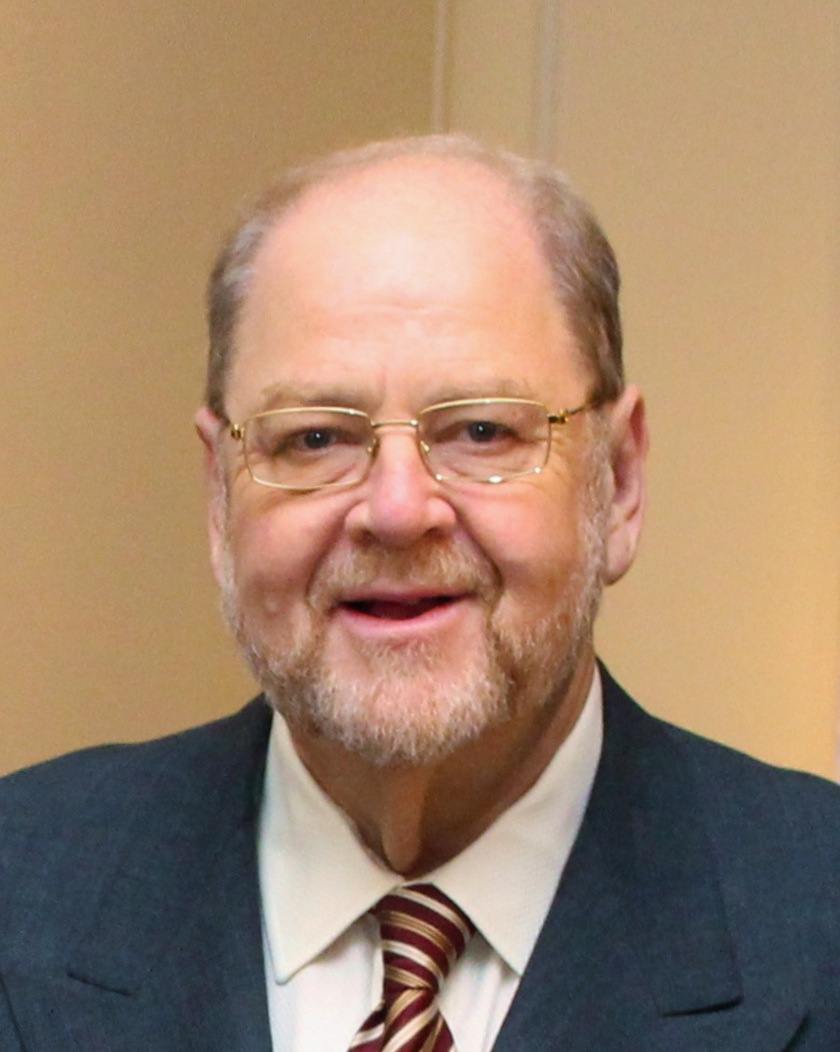

Nobel Prize in Physiology or Medicine · 2013
James E. Rothman
He showed how protein 'zippers' let tiny bubbles inside our cells deliver insulin, nerve signals and other cargo to the right place.
The Nobel citation: “for their discoveries of machinery regulating vesicle traffic, a major transport system in our cells”
- Born
- November 3, 1950, Haverhill, MA, USA
- Shared with
- Randy W. Schekman, Thomas C. Südhof
- Affiliation at the time
- Yale University, USA
Medicine prize
2013
Shared with 2 other laureates.
Age that year
63years
Born in 1950.
Sources cited
23
Fact-checked September 24, 2026.
- He finished high school a year early and entered Yale at 16, set on theoretical physics. He first tried biology at his father's urging.
- He took just one term of college chemistry and biology. Most of what he knows in science and medicine, he says, he taught himself.
- When he set out to rebuild the cell's delivery system in a test tube, he recalls, everybody told him the idea was nuts.
- On the day he won the Nobel Prize, he said in an Associated Press report that he had lost grant money for the very work the prize honored.
- He never finished medical school. He had entered Harvard's MD program to learn biology, not to practice, and left it after the basic science years.
The breakthrough
How protein 'zippers' let cell packages fuse and deliver their cargo
Every cell in your body is a busy factory. It makes hormones such as insulin, chemical messengers for nerves, and enzymes, and it ships them around in tiny membrane bubbles called vesicles. In the late 1970s nobody knew how a vesicle found the right destination, or how it merged with it to hand over its cargo. Rothman's bet, as a young professor at Stanford, was to rebuild this delivery system outside the cell. He broke cells open and mixed their contents in a test tube. In 1980 he reported that a viral protein was still transported in this cell-free mix, and by 1984 he had shown proteins moving between compartments of the Golgi, the cell's packing and sorting center. That let him fish out the working parts one at a time. First came a protein called NSF, then its helpers, the SNAPs. Using them as bait on brain tissue, in 1993 he pulled out three proteins he named SNAREs: one sits on the vesicle, the others on the target membrane. His SNARE hypothesis said that matching SNAREs grab each other like the two sides of a zipper, pulling the two membranes together until they fuse. Because each SNARE pairs only with certain partners, cargo reaches the right address. In 1998 his lab showed that SNARE proteins alone, placed in artificial membrane bubbles, are enough to make them fuse. The same machinery works in yeast and in humans.[3],[4],[18]
“The hardest thing about being a scientist is you have to be prepared to fail most of the time.”
What it meant for humanity
Rothman's work is basic science. No drug or device carries his name, and we found no study that counts lives changed by it. What changed is understanding. Vesicle fusion is how nerve cells release their chemical messengers, how the pancreas releases insulin into the blood, and how immune cells send out the molecules that coordinate a defense. The Nobel committee notes that faults in this traffic system play a part in neurological and immune disorders and in diabetes. The same proteins turned out to be the targets of some old killers. In 1992 and 1993, other research teams showed that tetanus toxin and botulinum toxins, the causes of tetanus and botulism, are enzymes that cut SNARE proteins inside nerve endings. With the fusion machinery broken, nerves cannot release their signals, and paralysis follows. Mutations in genes of the wider fusion machinery, including one SNARE and several of its partner proteins, have been found in some forms of epilepsy and in familial hemophagocytic lymphohistiocytosis, a rare inherited immune disorder that can be lethal. On prize day, the Nobel committee's secretary said the three laureates' discoveries had already helped doctors diagnose a severe form of epilepsy and immune deficiency diseases in children. His method mattered too. By rebuilding transport from broken cells and purified parts, he helped prove, in a Yale colleague's words, that biochemists could take apart and study the living processes inside a cell. A former director of the US National Institute of General Medical Sciences said the work gave scientists their framework for studying how brain cells talk to each other and how cells release hormones.
- In 1992 and 1993 other teams showed that tetanus and botulinum toxins paralyze by cutting fusion proteins (synaptobrevin, also called VAMP, and SNAP-25) inside nerve endings, so the nerves cannot release their signals.[4],[19],[20]
- Mutations in genes of the wider fusion machinery, including the SNARE syntaxin-11 and several partner proteins, have been found in some forms of epilepsy and in familial hemophagocytic lymphohistiocytosis, an inherited immune disorder that can be lethal.[4],[15]
- Randy Schekman's yeast gene sec18 turned out to encode the yeast version of Rothman's NSF, showing that yeast and mammals share this fusion machinery and that it is very old in evolution.[4]
- His Yale colleague Pietro De Camilli credits Rothman's cell-free methods, using broken cells and purified parts, with showing that the workings of a living cell could be taken apart and studied biochemically.[16]
- Jeremy Berg, former director of the US National Institute of General Medical Sciences, said the prize-winning work provides the framework scientists use to study how brain cells communicate and how cells release hormones.[15]
Impact in numbers
Rothman's legacy is knowledge rather than a product. He helped identify the protein machinery that fuses vesicles with their targets, the process behind nerve signaling, insulin release and immune defense. We make no numerical claim. His discoveries, together with those of his co-laureates and many other groups, helped explain how tetanus and botulinum toxins cause paralysis and helped doctors diagnose rare inherited disorders of the fusion machinery, but we found no published estimate of lives saved or people helped that can be traced to his work rather than to the many researchers who built on it. On prize day, the Nobel committee's secretary said scientists hoped the research could lead to medicines for more common forms of epilepsy and for diabetes; we found no source crediting such a treatment to it yet. Much of his impact lies in methods and ideas: the cell-free approach to studying traffic inside cells, the SNARE hypothesis that organized a field, and the generations of students trained in his labs at Stanford, Princeton, Sloan-Kettering, Columbia and Yale.
HealthFundamental science
No number is given here on purpose. Some contributions cannot be counted honestly, and we would rather describe them than invent a figure.
The double edge
We found no documented harms from Rothman's discoveries. One scientific debate is worth knowing about. His cell-free experiments supported a picture in which small vesicles ferry cargo forward between fixed compartments of the Golgi. That picture was widely accepted from the early 1980s to the late 1990s. A 2011 review, co-written by Benjamin Glick, who had once worked in Rothman's own lab, judged a rival idea, in which the compartments themselves mature and carry cargo forward, to be the best candidate for the core mechanism, while noting that no single model explains every observation. Credit is also shared: the three SNARE proteins had been identified earlier by other scientists, and Rothman's contribution was to show that they work together to fuse membranes.
- Minor
His model of transport through the Golgi lost ground to a rival
Rothman's cell-free work supported the idea that small vesicles carry cargo forward between stable Golgi compartments, a view widely accepted from the early 1980s until the late 1990s. A 2011 review proposed that 'cisternal maturation', in which the compartments themselves move and change, is the best candidate for the core mechanism, while noting that no single model explains every observation. The debate is not fully settled.[21]
- Minor
Shared credit for the SNARE proteins
The three SNARE proteins at the heart of his hypothesis (VAMP/synaptobrevin, SNAP-25 and syntaxin) had already been identified by other scientists, including Richard Scheller, Kimio Akagawa, Reinhard Jahn and Pietro De Camilli, though their function was largely unknown. Rothman's contribution was to show that they bind together to drive fusion. The Nobel committee also notes that his hypothesis has since been refined by several research groups.[4]
Against the odds
Rothman did not face persecution, and we found no record that antisemitism blocked his own path. He grew up in comfort in 1950s Massachusetts, the son of a doctor, and writes that his parents gave him an education free of money worries. Some of the doors he walked through had opened only recently. Yale, where he enrolled in 1967, had kept an unwritten limit of about 10 percent on Jewish students from 1923 into the early 1960s, according to historian Dan Oren's history of Jews at Yale. American medical schools had quietly capped Jewish admissions from the 1920s, and there is evidence the quotas continued until the 1950s; Yale's medical school at one point was to admit no more than five Jewish students per class. His father trained as a doctor in that era; we found no record that quotas affected him. Rothman's own obstacles were scientific. When he began trying to rebuild cell transport in a test tube, he says, colleagues told him it was nuts. On the day of his Nobel, he told reporters he had lost grant money for the work being honored and would reapply.
1923
Quota
Yale College held Jewish enrollment to about 10 percent under an unwritten quota from 1923 into the early 1960s. The quota had ended by the time Rothman entered in 1967; this is context, not something he is recorded as facing.[2],[22]
—
Quota
From the 1920s many US medical schools quietly capped Jewish admissions, with evidence the quotas continued until the 1950s. Rothman's father trained as a physician in that era; we found no record that quotas affected him.[2],[23]
—
Other
Everyone, he recalls, told him it was nuts to try to rebuild the cell's transport system in a test tube. Decades later, on the day he won the Nobel Prize, he said he had lost grant money for the prize-winning work and would reapply.[5],[15]
Jewish background
Rothman was born in Haverhill, Massachusetts, to Martin Rothman, a small-town pediatrician, and Gloria Rothman (née Hartnick). When he won the Nobel Prize, the Jewish Telegraphic Agency, the Times of Israel, the Jewish Chronicle and the JNS news service all described him as Jewish, and the Jewish Virtual Library calls him a Jewish American laureate. English Wikipedia says both of his parents were Jewish, but the article it cites says only that Rothman is Jewish. We found no statement by Rothman himself about his Jewish identity or religious life; his Nobel autobiography does not mention religion.[2],[7],[8],[9],[10],[11],[12],[13],[14]
Key dates
November 3, 1950
Born in Haverhill, Massachusetts, to Martin Rothman, a local pediatrician, and Gloria Rothman.[1],[2],[14]
1967
Graduates from Pomfret School after his junior year and enters Yale College, intent on theoretical physics.[2]
1971
Graduates from Yale summa cum laude in physics as a Scholar of the House, then enters Harvard Medical School to learn biology.[2]
1976
Earns a PhD in biological chemistry at Harvard under Eugene Kennedy, then joins Harvey Lodish's lab at MIT as a postdoctoral fellow.[2]
1978
Joins Stanford's Department of Biochemistry as an assistant professor and begins his work on transport inside cells.[2],[3]
1980
With Erik Fries, reports transport of a viral protein in a cell-free extract, a first step toward rebuilding cell traffic in a test tube.[4]
1984
Three papers in the journal Cell describe cell-free transport of protein between compartments of the Golgi.[2],[4]
1988
His lab purifies NSF, the first protein of the vesicle fusion machinery. The same year he moves to Princeton University.[2],[4]
1991
Moves to Memorial Sloan-Kettering Cancer Center in New York, where he founds and chairs a new cellular biochemistry and biophysics department.[2]
1993
Purifies SNARE proteins from brain tissue and proposes the SNARE hypothesis of how vesicles find and fuse with their targets.[4]
1998
His lab shows that SNARE proteins alone can fuse artificial membranes, naming the paired complexes 'SNAREpins'.[18]
2002
Shares the Lasker Basic Medical Research Award and Columbia's Louisa Gross Horwitz Prize with Randy Schekman.[2],[17]
2008
Returns to Yale to chair the Department of Cell Biology, the department founded by George Palade, whose work first inspired him.[2],[16]
October 7, 2013
Awarded the Nobel Prize in Physiology or Medicine with Randy Schekman and Thomas Südhof for discoveries about vesicle traffic.[1],[3]
Sources
- 1.James E. Rothman - Facts · NobelPrize.org (Nobel Prize Outreach)
- 2.James E. Rothman - Biographical (from The Nobel Prizes 2013) · NobelPrize.org, 2014
- 3.Press release: The Nobel Prize in Physiology or Medicine 2013 · NobelPrize.org (Nobel Assembly at Karolinska Institutet), 2013
- 4.Scientific Background: Machinery Regulating Vesicle Traffic, A Major Transport System in our Cells (Juleen R. Zierath and Urban Lendahl) · NobelPrize.org (Nobel Committee for Physiology or Medicine), 2013
- 5.James E. Rothman - Interview (includes telephone interview transcript, October 2013) · NobelPrize.org, 2013
- 6.James E. Rothman - Interview transcript, 6 December 2013 · NobelPrize.org, 2013
- 7.Francois Englert, Tel Aviv U. prof and Holocaust survivor, shares Nobel for physics · Jewish Telegraphic Agency, 2013
- 8.Warshel, Karplus, Levitt Share 2013 Nobel For Chemistry · New York Jewish Week (via JTA), 2013
- 9.Israelis lose out to US-German trio for Nobel medicine prize · The Times of Israel (AP and ToI staff), 2013
- 10.A remarkable week for Jewish Nobel Prize winners · The Jewish Chronicle (Wayback Machine archive), 2013
- 11.Nobel Prize awarded to two American Jews and an Israeli-American prof (JNS.org) · Jewish Ledger (Connecticut), 2013
- 12.James E. Rothman · Jewish Virtual Library (American-Israeli Cooperative Enterprise)
- 13.James Rothman · Wikipedia
- 14.Haverhill native wins Nobel Prize in medicine (Mike Labella) · The Eagle-Tribune (North Andover, Massachusetts), 2013
- 15.Haverhill native shares Nobel Prize in medicine (Karl Ritter and Malin Rising, Associated Press) · The Eagle-Tribune (Associated Press), 2013
- 16.Yale's James Rothman shares 2013 Nobel Prize in Physiology or Medicine · YaleNews, Yale University, 2013
- 17.Jim Rothman, adjunct professor at P&S, shares 2013 Nobel Prize (Wayback Machine archive) · Columbia University Medical Center Newsroom, 2013
- 18.SNAREpins: minimal machinery for membrane fusion (Weber T, ... Söllner TH, Rothman JE), Cell 92(6):759-772 · Cell (via PubMed), 1998
- 19.Tetanus and botulinum-B neurotoxins block neurotransmitter release by proteolytic cleavage of synaptobrevin (Schiavo G et al.), Nature 359:832-835 · Nature (via PubMed), 1992
- 20.Botulinum neurotoxin A selectively cleaves the synaptic protein SNAP-25 (Blasi J et al.), Nature 365:160-163 · Nature (via PubMed), 1993
- 21.Models for Golgi traffic: a critical assessment (Glick BS, Luini A), Cold Spring Harbor Perspectives in Biology 3(11):a005215 · Cold Spring Harbor Laboratory Press (via PubMed Central), 2011
- 22.Joining the Club: A History of Jews and Yale, by Dan A. Oren (review by Gideon Rose) · Commentary
- 23.Jewish American Heritage Month: The Forgotten History of Quotas in American Medical School Admissions · Himmelfarb Health Sciences Library, George Washington University, 2023
Fact-checked on September 24, 2026 by a separate AI fact-checking pass that re-opened the sources, with 10 corrections made. How we check
Suggest a correction