
Nobel Prize in Physiology or Medicine · 1975
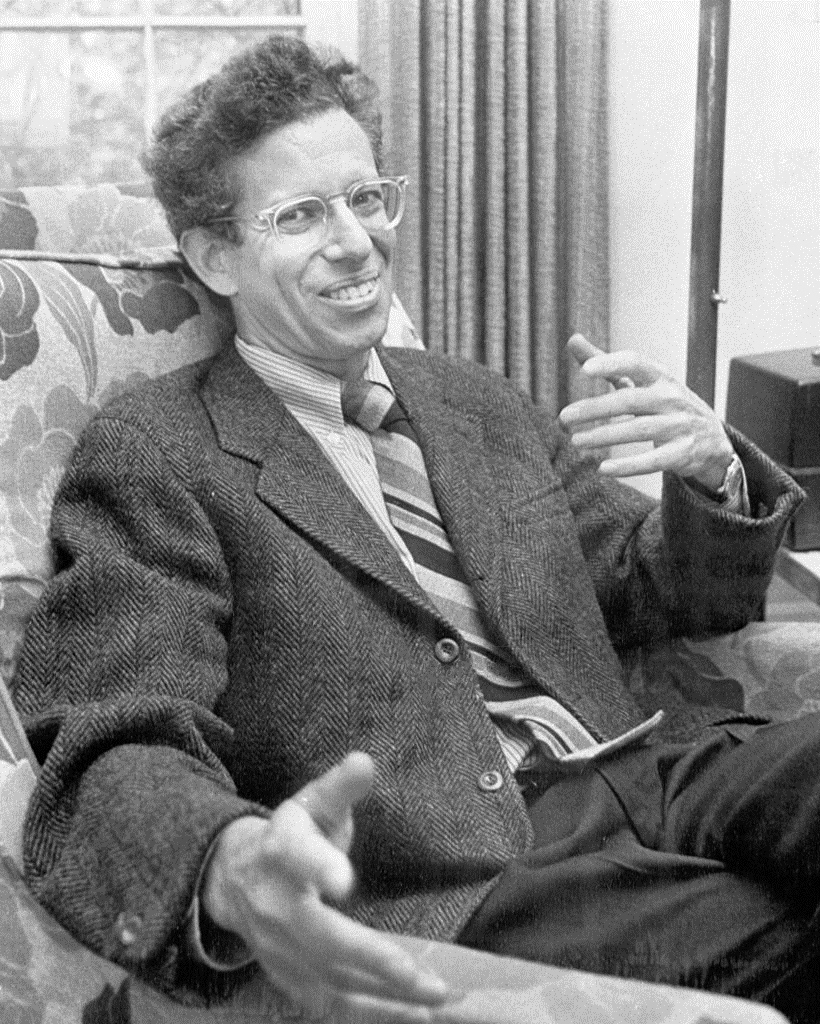
Howard M. Temin
He proved some viruses copy their RNA genes into DNA, an idea once called heresy that later guided the first HIV drugs.
The Nobel citation: “for their discoveries concerning the interaction between tumour viruses and the genetic material of the cell”
- Born
- December 10, 1934, Philadelphia, PA, USA
- Died
- February 9, 1994, Madison, WI, USA
- Shared with
- David Baltimore, Renato Dulbecco
- Affiliation at the time
- University of Wisconsin, USA
Medicine prize
1975
Shared with 2 other laureates.
Age that year
41years
Born in 1934.
Headline credited impact
538,000–568,000lives saved
AIDS deaths averted worldwide by antiretroviral therapy, whose main drug classes block reverse transcriptase. How it was built
Sources cited
29
Fact-checked September 24, 2026.
- His Nobel banquet in Stockholm, where he spoke for all three medicine laureates, fell on 10 December 1975, his 41st birthday.
- For his bar mitzvah, his family gave the money set aside for the party to a camp for displaced persons.
- He proposed in 1964 that some viruses copy RNA into DNA. For six years the idea was largely ignored, until his lab found the enzyme that does it.
- At the Nobel banquet, in a hall full of smokers, he said the laureates were outraged that more people had not quit. He never smoked, yet died of lung cancer at 59.
- About 8 percent of human DNA is left over from retrovirus infections of our distant ancestors, written into their genes by the kind of enzyme he co-discovered.
The breakthrough
Reverse transcriptase: genetic information can flow from RNA back into DNA
Cells keep their master instructions in DNA, copy working messages into RNA, and use those messages to build proteins. In the 1950s and 1960s most biologists treated this one-way flow, from DNA to RNA, as a law of life, often called the central dogma. Rous sarcoma virus, which causes cancer in chickens, did not seem to fit. Its genes are made of RNA, yet the cells it turned cancerous passed the change on to their offspring, as if the virus had become part of their DNA. Temin's experiments showed that the virus needed the cell's DNA machinery and new DNA synthesis. In 1964 he proposed that the virus copies its RNA into DNA, which he called the provirus, and that this DNA settles into the cell's own genes. Most scientists ignored or mocked the idea. In 1970 his postdoctoral fellow Satoshi Mizutani found the missing tool: an enzyme inside the virus particles that builds DNA from an RNA template. David Baltimore found the same enzyme in mouse leukemia viruses, and their papers appeared side by side in Nature. It became known as reverse transcriptase. Think of a library where books (DNA) are photocopied into handouts (RNA). Temin showed that some viruses can turn a handout back into a book and shelve it in the library for good. Viruses that work this way are now called retroviruses. HIV is one of them.[3],[5],[6],[7],[8],[14]
“outraged that the one major measure available to prevent much cancer, namely, the cessation of cigarette smoking, has not been more widely adopted”
What it meant for humanity
Few people could have guessed in 1970 how much a chicken-virus enzyme would matter to human health. When a new immune disease, later called AIDS, appeared in 1981, scientists already knew what a retrovirus looked like and how to test for one. In 1983 French researchers detected reverse transcriptase activity in cells from patients, a telltale sign of a retrovirus, and identified the virus now called HIV. Because HIV needs reverse transcriptase to copy itself, the enzyme became the first target for HIV drugs. The first, AZT, was approved in the United States in 1987, and two of today's main drug classes still work by blocking it. Combined with drugs that hit other viral enzymes, they turned HIV from a near-certain death sentence into a manageable chronic condition. UNAIDS estimated in 2025 that HIV treatment had averted 26.9 million deaths, and 32.1 million people were on treatment in 2025. Tenofovir, which blocks reverse transcriptase, is also the basis of the preventive pills (PrEP) that WHO recommends. The enzyme became a laboratory workhorse too. Scientists use it to turn RNA into DNA so they can clone genes and measure RNA viruses in patients, including HIV, hepatitis C and, during the COVID-19 pandemic, SARS-CoV-2. Temin's lab helped build retroviral vectors and helper cells, early versions of tools later used in gene therapy, and measured how fast retroviruses mutate, work that helped explain HIV's rapid variation in patients. He also put his expertise to public use. He testified to lawmakers against smoking, co-wrote a 1988 article in Science rebutting claims that HIV does not cause AIDS, and served on 12 national and international AIDS committees between 1985 and 1994.
- In 1983 Françoise Barré-Sinoussi and Luc Montagnier found reverse transcriptase activity in lymph-node cells from patients with early signs of AIDS. That enzyme is the calling card of a retrovirus, and it led them to HIV.[7],[14]
- Two main classes of HIV drugs, NRTIs and NNRTIs, block reverse transcriptase. They include AZT, approved by the US FDA in March 1987, and tenofovir, the basis of the oral preventive pills (PrEP) WHO recommends.[7],[15],[18]
- UNAIDS estimated in 2025 that HIV treatment had averted 26.9 million deaths since the epidemic began; 32.1 million people were on treatment in 2025.[16],[17]
- Reverse transcriptase-based PCR tests measure RNA viruses in patients, including HIV, hepatitis C and SARS-CoV-2. The world market for commercial reverse transcriptase was about $300 million in 2019.[7]
- His lab measured retroviral mutation rates about a thousand times higher than the error rate when mammalian cells copy DNA. That finding later helped explain why HIV varies so fast inside patients.[6]
- In 1976 he testified with Renato Dulbecco before a US Senate subcommittee for a cigarette tax of up to 50 cents a pack. In 1979 he told a Senate committee that smoking was the top preventable US health hazard.[6]
Impact in numbers
Temin's main gift was a new rule of biology: genetic information can flow from RNA back into DNA. That idea, and the enzyme that proved it, reach far beyond any single number. They explained how retroviruses such as HIV work, gave drug makers their first HIV target, and became an everyday laboratory tool for cloning genes and measuring RNA viruses, including SARS-CoV-2. They also revealed that about 8 percent of our own DNA is left over from ancient retrovirus infections, and that telomerase, the enzyme that rebuilds the ends of chromosomes, is itself a reverse transcriptase. The first claim below credits Temin with a small share of the deaths averted by HIV treatment, because two main classes of HIV drugs block reverse transcriptase. Many others were essential: David Baltimore, the discoverers of HIV, drug developers and the programs that deliver pills to tens of millions. The second gives him a very small share of sales of genetically engineered medicines, since DNA copies of messenger RNA made with his enzyme became a standard way to clone genes. Gene therapy, COVID-19 testing and his anti-smoking work are not counted.
HealthFundamental scienceEconomy
Each number is the laureate’s credited share of a real-world outcome, cumulative to 2025. The whole outcome, the share of credit, and the reasoning are shown so you can check the arithmetic. Outcomes shared with other laureates are counted once on the impact page.
- Medium confidenceRippleSourced totalHealth
AIDS deaths averted worldwide by antiretroviral therapy, whose main drug classes block reverse transcriptase
538,000–568,000
lives saved, credited share
That is 2% of 26.9–28.4 million lives saved since 1987.
How this number was built
Low: UNAIDS (2025 Global AIDS Update, data to 2024) estimates 26.9 million deaths averted by HIV treatment since the epidemic began. High adds 2025: AIDS deaths were 570,000 in 2025 versus 2.1 million at the 2004 peak, when few had treatment; assuming at least the peak toll without treatment adds ~1.5 million, so 28.4 million (likely an underestimate, with 32.1 million on treatment in 2025). From 1987, when AZT was approved. Share 0.02 (~540,000-570,000): NRTIs and NNRTIs, including AZT, tenofovir, and the efavirenz and nevirapine regimens widely used before WHO preferred dolutegravir (2019), block reverse transcriptase, and reverse transcriptase assays identified HIV as a retrovirus in 1983. But Temin shares the enzyme with Baltimore, and HIV's discoverers, the makers of RT and other drug classes (protease and integrase inhibitors), trialists and treatment programs were essential.[7],[14],[15],[16],[17],[26]
Sources: UNAIDS; UNAIDS; US National Institutes of Health; Nobel Assembly at Karolinska Institutet, via NobelPrize.org; Molecular Biology of the Cell (via PubMed Central); World Health Organization
- Low confidenceRippleModeledEconomy
Cumulative global sales of genetically engineered non-antibody protein medicines (a proxy for economic activity)
$7.5–10
billion in economic value, credited share
That is 0.5% of $1.5–2 trillion in economic value since 1982.
How this number was built
Same outcome and range as the Berg, Kornberg and Luria profiles: world sales of recombinant non-antibody protein medicines since 1982. Inputs: 2013 antibody sales (~$75B) were about half of biopharma, so non-antibody ~$75B (Ecker 2015); 2021 non-antibody originators $53.6B, biosimilars $11.1B (Walsh 2022). Low: quadratic ramp 1982-2013 ($0.81T) + linear fall to $53.6B over 2014-21 ($0.50T) + flat 2022-25 ($0.21T) = ~$1.5T. High: linear ramp ($1.2T) + same later years + half of biosimilar sales (~$0.07T) = ~$2.0T. Nominal dollars; sales measure spending, not benefit. Share 0.005 (~$7.5-10B): reverse transcriptase makes cDNA, DNA copies of messenger RNA, which became a standard way to clone genes into bacteria (from 1975) and a standard lab reagent. Temin shares it with Baltimore; restriction enzymes, ligase, vectors, expression systems and manufacturing were others' work.[3],[7],[23],[24]
Sources: Nature Biotechnology (via PubMed Central); mAbs (via PubMed Central); Molecular Biology of the Cell (via PubMed Central); NobelPrize.org
- Medium confidenceRippleSourced totalHealth
Children spared HIV by antiretroviral drugs given to their mothers, 2000-2024
62,000–128,000
people benefited, credited share
That is 2% of 3.1–6.4 million people benefited since 2000.
How this number was built
UNAIDS (Global AIDS Update 2025): programmes to prevent vertical transmission averted nearly 4.4 million [3.1-6.4 million] HIV infections in children in 2000-2024; low and high are that range (UNICEF gives the same 4.4M). Rich-country use from 1994 and 2025 excluded. Counterfactual: no drug prophylaxis. Chain: the first proof, PACTG 076 (1994), showed zidovudine, a reverse-transcriptase blocker, cut transmission from 25.5% to 8.3%; single-dose nevirapine and today's triple therapy, built on two such drugs, followed. Counts children never infected, so it is disjoint from the treatment claim, which counts deaths among people living with HIV. Share 0.02, same as Baltimore: Baltimore and Temin found the enzyme independently and at the same time (0.04 together); HIV's discoverers, drug makers, trialists and programmes did the rest.[7],[15],[16],[27],[28],[29]
Sources: UNAIDS; UNICEF; New England Journal of Medicine, via PubMed; UNAIDS; US National Institutes of Health; Molecular Biology of the Cell (via PubMed Central)
The double edge
We found no documented harm from Temin's own research, and he spent his later years fighting two public-health threats, smoking and AIDS. The risks lie downstream. Retroviruses are useful for gene therapy because they insert genes permanently into chromosomes, and Temin's lab helped develop the vectors and helper cells behind this approach. But an insertion can land next to a cancer gene and switch it on. In a French trial for X-linked severe combined immunodeficiency, a rare inherited immune disease, a vector derived from a mouse leukemia virus successfully treated 9 of 10 patients. Four of the nine later developed T-cell leukemia; chemotherapy put three into lasting remission, and one child died. The excitement around reverse transcriptase also had a cost for cancer research. In the 1970s the US government funded a large hunt for human cancer retroviruses, and nearly every reported find turned out to be a lab artifact or contamination.
- Moderate
Leukemia in retroviral gene therapy
Temin's lab helped pioneer retroviral vectors and the helper cells that package them, a first generation of gene-therapy tools. In a French gene-therapy trial for X-linked SCID that used a vector from a mouse leukemia virus, 4 of the 9 successfully treated patients developed T-cell leukemia when the vector landed near cancer genes. One child died. The vectors came from other labs, so the link to Temin is through the field he helped found.[6],[19]
- Minor
The "human rumor virus" years
After 1970, US cancer programs lavishly funded searches for human cancer retroviruses using reverse transcriptase assays. Nearly all reported finds in the next decade were artifacts or contamination, earning them the nickname "human rumor viruses." Only one human cancer is known to be caused directly by a retrovirus.[7]
Against the odds
Temin grew up in Philadelphia in a Jewish family during the Depression and the Second World War. His father was a lawyer and his mother a civic activist, and he went to the city's public schools. The America of his youth was not free of antisemitism. In the 1930s it helped make many Americans unwilling to take in Jewish refugees fleeing Nazi Germany. From the 1920s, elite private colleges held down the number of Jewish students with quotas and devices such as preferring applicants from other regions, and medical-school quotas may have lasted into the 1950s. As the war ended, New York State and the city of Philadelphia investigated these quota systems. No source we found says Temin himself was held back by discrimination. He moved from Swarthmore College to Caltech and then to a faculty post at the University of Wisconsin. At the Nobel banquet he said the laureates knew how fortunate they had been to live in a country, a time and a social class that let them realize their potential, and that many others had not had that chance. His hardest struggle was scientific. For six years after 1964 most researchers ignored or derided his provirus idea, until the 1970 enzyme discovery proved him right.
—
Discrimination
In the decades before and during Temin's youth, elite US colleges and medical schools limited Jewish admissions through quotas, and antisemitism made many Americans unwilling to aid Jews fleeing Nazi Europe. As the war ended, his home city of Philadelphia investigated quota systems. No source says quotas affected Temin's own education.[20],[21],[22]
1964
Other
Scientific rejection: he proposed the DNA provirus hypothesis in 1964, and for the next six years it was essentially ignored and often met with derision, until the 1970 discovery of reverse transcriptase confirmed it.[3],[5],[7],[25]
Jewish background
Temin was born in Philadelphia to Jewish parents: Henry Temin, a lawyer, and Annette Lehman Temin, a civic activist especially involved in education. He was raised in the tradition. For his bar mitzvah, the family donated the money meant for the party to a camp for displaced persons, a choice one writer links to the family's values of social justice and independent thinking. The sources we found say little about religious practice in his adult life. His public life centred on science, teaching, and campaigns against smoking and AIDS.[1],[9],[10],[11],[12]
Key dates
December 10, 1934
Born in Philadelphia, the second of three sons of Henry Temin, an attorney, and Annette Temin, a civic activist.[1],[2]
1949
Spends the first of four summers (1949-1952) in a research program for high school students at the Jackson Laboratory in Bar Harbor, Maine.[1]
1955
Finishes honors biology studies at Swarthmore College and begins graduate work at the California Institute of Technology.[1],[9]
1958
With Harry Rubin in Renato Dulbecco's lab, publishes a way to count Rous sarcoma virus by the clusters of cancer-like cells it forms in a dish.[3],[6]
1959
Finishes his PhD at Caltech with a thesis on Rous sarcoma virus, then stays a year as a postdoctoral fellow.[1]
1960
Joins the McArdle Laboratory for Cancer Research at the University of Wisconsin-Madison, starting in a basement lab.[1]
1962
Marries Rayla Greenberg of Brooklyn, a population geneticist; they later have two daughters.[1]
1964
Proposes the DNA provirus hypothesis at a spring meeting; for six years it is largely ignored.[3]
June 27, 1970
With Satoshi Mizutani, reports an RNA-dependent DNA polymerase in Rous sarcoma virus in Nature, alongside David Baltimore's matching paper.[6],[7],[8]
December 10, 1975
In Stockholm, receives the Nobel Prize in Physiology or Medicine with David Baltimore and Renato Dulbecco, and uses his banquet speech to condemn smoking.[2],[4]
1976
Testifies with Dulbecco before a US Senate subcommittee in favor of a cigarette tax of up to 50 cents a pack.[6]
1988
Co-writes "HIV Causes AIDS" in Science and begins chairing a national advisory panel on HIV genetic variation (1988-1994).[6]
February 9, 1994
Dies in Madison of lung adenocarcinoma at 59, despite never having smoked.[2],[9],[10],[13]
1998
The University of Wisconsin renames the path he biked to work the Howard M. Temin Lakeshore Path.[13]
Sources
- 1.Howard M. Temin – Biographical · NobelPrize.org, 1975
- 2.Howard M. Temin – Facts · NobelPrize.org
- 3.The DNA Provirus Hypothesis: The Establishment and Implications of RNA-directed DNA Synthesis (Nobel Lecture, 12 December 1975) · NobelPrize.org, 1975
- 4.Howard M. Temin – Banquet speech (10 December 1975) · NobelPrize.org, 1975
- 5.Press release: The Nobel Prize in Physiology or Medicine 1975 · Karolinska Institutet, via NobelPrize.org, 1975
- 6.Howard M. Temin, 1934-1994 (Biographical Memoirs vol. 79, by Bill Sugden) · National Academy of Sciences / National Academies Press, 2001
- 7.50th anniversary of the discovery of reverse transcriptase (Coffin JM), Molecular Biology of the Cell 32(2):91-97 · Molecular Biology of the Cell (via PubMed Central), 2021
- 8.RNA-dependent DNA polymerase in virions of Rous sarcoma virus (Temin HM, Mizutani S), Nature 226:1211-1213 · Nature, 1970
- 9.Temin, Howard Martin (The Scribner Encyclopedia of American Lives) · Gale, via Encyclopedia.com
- 10.Howard Temin · Jewish Virtual Library (American-Israeli Cooperative Enterprise)
- 11.The Beach Boys Summer V: Caltech and Tumor Viruses · The Jewish Link
- 12.Howard Martin Temin · Wikipedia
- 13.Scientist of the Day: Howard Temin (9 February 2023) · Linda Hall Library, 2023
- 14.Press release: The Nobel Prize in Physiology or Medicine 2008 · Nobel Assembly at Karolinska Institutet, via NobelPrize.org, 2008
- 15.FDA-Approved HIV Medicines (HIVinfo fact sheet) · US National Institutes of Health
- 16.Countries must urgently step up to transform their HIV responses amid an international funding crisis that risks millions of lives (2025 Global AIDS Update press release) · UNAIDS, 2025
- 17.Global HIV & AIDS statistics — Fact sheet · UNAIDS, 2026
- 18.HIV and AIDS (fact sheet) · World Health Organization
- 19.Insertional oncogenesis in 4 patients after retrovirus-mediated gene therapy of SCID-X1 (Hacein-Bey-Abina S et al.), Journal of Clinical Investigation 118(9) · Journal of Clinical Investigation, 2008
- 20.Jewish American Heritage Month: The Forgotten History of Quotas in American Medical School Admissions · Himmelfarb Health Sciences Library, George Washington University, 2023
- 21.Intellectuals at the Gate (Inside Higher Ed interview with Mark Oppenheimer on the Ivy League's Jewish quotas) · Inside Higher Ed, 2022
- 22.The United States and the Holocaust (Holocaust Encyclopedia) · United States Holocaust Memorial Museum
- 23.Biopharmaceutical benchmarks 2022 (Walsh G, Walsh E), Nature Biotechnology 40:1722-1760 · Nature Biotechnology (via PubMed Central), 2022
- 24.The therapeutic monoclonal antibody market (Ecker DM, Jones SD, Levine HL), mAbs 7(1):9-14 · mAbs (via PubMed Central), 2015
- 25.Award ceremony speech, Nobel Prize in Physiology or Medicine 1975 · NobelPrize.org, 1975
- 26.WHO recommends dolutegravir as preferred HIV treatment option in all populations (22 July 2019) · World Health Organization, 2019
- 27.AIDS, crisis and the power to transform: UNAIDS Global AIDS Update 2025 · UNAIDS, 2025
- 28.Reduction of maternal-infant transmission of human immunodeficiency virus type 1 with zidovudine treatment (Connor EM et al., PACTG 076, N Engl J Med 331:1173-1180) · New England Journal of Medicine, via PubMed, 1994
- 29.Fast Facts: World risks reversing HIV progress as children continue to face treatment gap (27 November 2025) · UNICEF, 2025
Fact-checked on September 24, 2026 by a separate AI fact-checking pass that re-opened the sources, with 11 corrections made. How we check
Suggest a correction