223 laureates · 1905–2025
Economics laureates
Every Jewish Nobel laureate, by the standard of Wikipedia’s list: Jews, or people with at least one Jewish parent. 5 borderline cases are included and flagged as disputed. Each profile explains the work, what it meant for humanity, what went wrong, and what the laureate faced.
- Women
- 12
- Refugees or exiles
- 50
- Profiles researched
- 223 of 223
Results
Showing 40 of 223 laureates
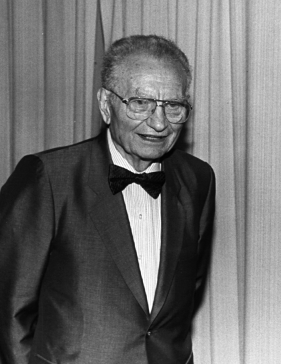
Economics · 1970
Paul A. Samuelson
He rebuilt economics on mathematics, taught it to generations of students, and helped spark the low-cost index fund.

Economics · 1971
Simon Kuznets
He taught nations to measure their own economies, building the income figures behind GDP, and warned what those numbers cannot show.

Economics · 1972
Kenneth J. Arrow
He proved when markets can balance and why no voting system is perfectly fair, then turned economics against malaria.

Economics · 1973
Wassily Leontief
He mapped how every industry feeds every other, giving nations a tool to plan, measure their economies and trace pollution.
Refugee

Economics · 1975
Leonid Vitaliyevich Kantorovich
He invented linear programming, the math of getting the most from scarce resources, and fought Soviet dogma to see it used.

Economics · 1976
Milton Friedman
He traced the Great Depression to the Fed's mistakes, reshaped how central banks fight inflation and panics, and helped end the US draft.

Economics · 1978
Herbert Simon
Showed that people and firms settle for 'good enough', then taught computers to reason, helping to found artificial intelligence.

Economics · 1980
Lawrence R. Klein
He turned economic theory into working models of whole economies, so leaders could forecast downturns and test policies before using them.

Economics · 1985
Franco Modigliani
Driven from Italy by Mussolini's racial laws, he explained how families save over a lifetime and what really sets a company's value.
Refugee

Economics · 1987
Robert M. Solow
He showed that better ideas and skills, more than extra machines, are what make nations richer over time.
- HM
Economics · 1990
Harry M. Markowitz
He turned the old advice not to put all your eggs in one basket into math that now shapes how retirement savings are invested.
- MM
Economics · 1990
Merton H. Miller
He showed that what a company does with its money matters more than how it raises it, laying the groundwork of modern corporate finance.

Economics · 1992
Gary Becker
He used economics to explain schooling, crime, prejudice and family life, and showed why investing in people pays off.

Economics · 1993
Robert W. Fogel
He used numbers to rewrite American history, from railroads and slavery to why people today grow taller and live longer.

Economics · 1994
John C. Harsanyi
He escaped deportation in 1944, then gave economists the tools to analyze deals where each side hides what it knows.
Refugee

Economics · 1994
Reinhard Selten
He gave economists a test for spotting empty threats, and helped make the laboratory a place to study how real people decide.

Economics · 1997
Myron Scholes
With Fischer Black he found how to price an option, giving firms and investors a common way to measure and shed financial risk.
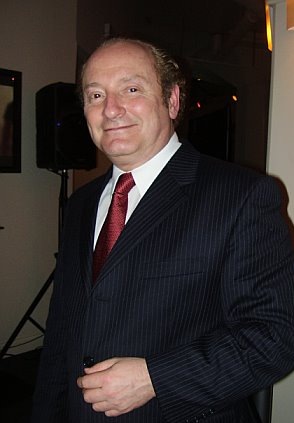
Economics · 1997
Robert C. Merton
He helped crack the pricing of options, giving banks, firms and savers a shared way to value and trade financial risk.

Economics · 2001
George A. Akerlof
Showed how hidden information can wreck a market, explaining why buyers fear lemons and why warranties, brands and fair rules matter.

Economics · 2001
Joseph E. Stiglitz
He showed how hidden information bends markets for loans, jobs and insurance, and argued that governments must help repair the damage.

Economics · 2002
Daniel Kahneman
He showed that human judgment goes wrong in predictable ways, reshaping economics and how governments help people save.
Refugee

Economics · 2005
Robert J. Aumann
A boy who fled Nazi Germany in 1938 grew up to prove, in mathematics, why long-term relationships make cooperation possible.
Refugee

Economics · 2007
Eric S. Maskin
He showed when rules can be designed so that people acting in their own interest still reach the goals a society wants.

Economics · 2007
Leonid Hurwicz
A Jewish refugee with no economics degree, he showed how to design rules that make honesty pay, from auctions to regulation.
Refugee
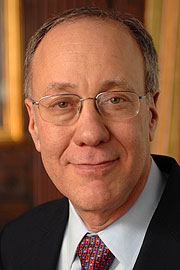
Economics · 2007
Roger B. Myerson
He showed how to write rules that make honesty pay, laying foundations for modern auctions, regulation and fairer institutions.

Economics · 2008
Paul Krugman
He explained why similar countries trade similar goods and why cities keep growing, changing how we understand globalization.

Economics · 2009
Elinor Ostrom
She showed that communities can share forests, fisheries and water without ruining them, and was the first woman to win the economics prize.

Economics · 2010
Peter A. Diamond
He explained why jobless people and unfilled jobs exist side by side, and spent decades advising on how to keep Social Security sound.

Economics · 2012
Alvin E. Roth
He turned matching theory into working systems that place doctors in residencies, students in schools and kidneys in patients.

Economics · 2016
Oliver Hart
He showed why ownership matters when contracts can't foresee everything, shaping how firms, loans and public services are designed.

Economics · 2017
Richard H. Thaler
He showed that people are predictably human with money, then helped turn that insight into plans that got millions more workers saving.

Economics · 2018
William D. Nordhaus
He built the first models linking the economy to the climate, giving governments a way to put a price on carbon pollution.

Economics · 2019
Michael Kremer
He brought randomized trials into the fight against poverty, testing what really helps poor children learn, stay healthy and survive.

Economics · 2020
Paul R. Milgrom
He co-designed the auctions governments use to sell airwaves, raising billions for the public and putting spectrum to work for phone users.

Economics · 2021
Joshua D. Angrist
He showed how lotteries and accidents of policy can reveal cause and effect, giving schools and governments evidence they can trust.

Economics · 2022
Ben Bernanke
He showed how bank collapses turned the 1930s slump into the Great Depression, then used that lesson to fight the 2008 crisis.

Economics · 2022
Douglas Diamond
He explained why banks exist and why fear alone can topple a healthy bank, giving deposit insurance a clear theoretical rationale.

Economics · 2023
Claudia Goldin
She dug 200 years of hidden women's work out of the archives and showed why women still earn less than men.

Economics · 2025
Joel Mokyr
Economic historian who showed how science and skilled hands, working together, turned short bursts of invention into lasting prosperity.

Economics · 2025
Philippe Aghion
With Peter Howitt, he modeled creative destruction, showing how new ideas replacing old ones keep lifting living standards.