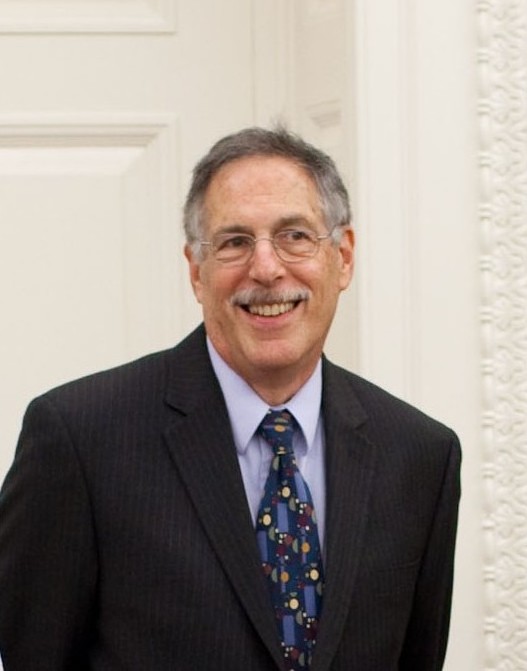
.jpg)
Sveriges Riksbank Prize in Economic Sciences · 2010
Peter A. Diamond
He explained why jobless people and unfilled jobs exist side by side, and spent decades advising on how to keep Social Security sound.
The Nobel citation: “for their analysis of markets with search frictions”
- Born
- April 29, 1940, New York, NY, USA
- Shared with
- Dale T. Mortensen, Christopher A. Pissarides
- Affiliation at the time
- Massachusetts Institute of Technology (MIT), USA
Economics prize
2010
Shared with 2 other laureates.
Age that year
70years
Born in 1940.
Sources cited
22
Fact-checked September 24, 2026.
- He came to MIT as a math graduate student. A registration officer thought economics suited him better and moved him, fellowship and all, to the economics department.
- The research that produced the "Diamond paradox" began in 1969, while he was a visiting scholar at the Hebrew University of Jerusalem.
- Eight months after winning the Nobel for work on unemployment, he withdrew from a Federal Reserve nomination that Senate Republicans had blocked.
- In 1975-76 he sat on a small panel of actuaries and economists that advised Congress on how to revise Social Security's benefit formula.
- For his 70th birthday his wife arranged for him to throw the first pitch at Boston's Fenway Park, a longtime dream. A photo of it went to the Nobel Museum.
The breakthrough
Markets where finding a deal takes time
Classic economics pictures a market where every buyer instantly knows every price, so a product sells at one competitive price and anyone who wants a job can find one. Diamond asked what happens when finding a deal takes time and effort. In a 1971 paper he imagined shoppers who can learn a price only by walking into a store. Picture a town where checking a second shop means another bus ride. Each store knows that you, already at its counter, would rather pay a little more than ride the bus again, so it nudges its price up. Every store reasons the same way, and prices climb until they reach the level a single monopoly would charge. The striking part was that any search cost, however tiny, led to this result. Economists call it the Diamond paradox. Diamond then turned to jobs. From the late 1970s he, Dale Mortensen and Christopher Pissarides built models in which workers and employers search for each other and bargain over pay. These models explain why unemployed people and unfilled job openings exist at the same time. They also show that such markets need not reach the best outcome, because each searcher ignores how their search affects others. In a 1982 paper Diamond showed that a whole economy can get stuck at low activity: if people expect others to produce little, trading is hard, so they produce little too. That gave a new reason for policies that support overall demand.[3],[4],[5],[6]
“To me, taking a model literally is not taking a model seriously.”
What it meant for humanity
Diamond's work did not produce a drug or a machine. It changed how economists and governments think about jobs, taxes, public debt and pensions. The search framework he helped found explains why unemployment and unfilled job openings exist side by side, and the Nobel committee describes the resulting Diamond-Mortensen-Pissarides model as economists' most-used tool for studying unemployment, pay and job openings. Economists use it to read the Beveridge curve, the link between job openings and joblessness, and to weigh how unemployment insurance, hiring and firing rules and job agencies affect how long people stay out of work. His 1981 paper showed that unemployment benefits can be justified not only as insurance but because they let job seekers hold out for a better match. His 1965 model of overlapping generations remains the benchmark for studying government debt and Social Security, and the Diamond-Mirrlees rule, that a government should avoid taxing the goods businesses buy from one another, shaped thinking about tax design. He also spent five decades on retirement security. He first advised Congress on Social Security in 1974, served on a 1975-76 panel that studied how to revise its benefit formula, led the National Academy of Social Insurance, and analyzed pension systems in Chile, Poland, Sweden and other countries. With Peter Orszag he proposed a mix of tax increases and benefit reductions to keep Social Security solvent, as an alternative to private accounts. After the 2008 crisis he argued, in his Nobel lecture and in public, that most of the high unemployment came from weak demand rather than a lasting mismatch of skills, so policy should keep supporting the recovery.
- The Nobel committee describes the Diamond-Mortensen-Pissarides model as the tool economists use most often to study unemployment, how wages are set and job openings.[4]
- The Nobel committee's background paper says his 1965 overlapping-generations model, which follows young and old generations living side by side, is still the standard model for studying government debt, Social Security and transfers between generations.[6],[10]
- With James Mirrlees he showed in 1971 that a government that must use distorting taxes should still keep production efficient, which implies not taxing goods used only by other businesses.[6],[10]
- He first advised Congress on Social Security in 1974, joined a 1975-76 consultant panel on its benefit formula, and later served as president of the National Academy of Social Insurance.[12],[13],[14],[15]
- In his 2010 Nobel lecture and a 2011 op-ed he argued that post-crisis US unemployment was mainly due to weak demand, not a lasting skills mismatch, so low interest rates should continue.[5],[11]
Impact in numbers
Diamond's contribution is understanding, so we record no quantified impact claim. His search models, his overlapping-generations model of debt and his tax theory are standard tools for economists and policymakers. They shape how officials read unemployment data, design unemployment insurance, and think about public debt, taxes and pensions. But no published study measures jobs, income or lives gained because of his theories rather than because of the officials who applied them and the many economists, including his co-laureates, who turned them into working models. His most direct policy work, advising Congress on Social Security from the mid-1970s and proposing reforms later, fed into decisions made by others, and its effect cannot be separated out. Counting a share of Social Security's benefits, or of unemployment-insurance payments, as his would credit him with programs that existed long before his work.
EconomyFundamental science
No number is given here on purpose. Some contributions cannot be counted honestly, and we would rather describe them than invent a figure.
The double edge
We found no documented harm from Diamond's work, so no harm is quantified. The disputes are scholarly and political. First, the search-and-matching framework he helped launch has known weak spots. In 2005 Robert Shimer showed that the textbook version cannot reproduce how sharply unemployment and job openings swing over the business cycle, and a stream of later papers has tried to repair it. Second, its lessons for unemployment insurance involve a trade-off. The Nobel committee notes that the theory predicts more generous benefits lengthen job searches and raise unemployment, while Diamond's own 1981 paper showed benefits can also improve how workers and jobs are matched. Third, his policy advice is contested. With Emmanuel Saez he argued in 2011 that the top US marginal tax rate should be about 73 percent, far above the 42.5 percent they calculated for all taxes combined at the time. That figure rests on an uncertain estimate of how strongly top earners respond to taxes, and the paper itself shows that a much stronger response would make the existing rate optimal. His defense of Social Security's structure also put him against advocates of private accounts.
- Minor
The textbook model misses the size of job-market swings
Shimer (2005) found that in US data the ratio of job openings to unemployed workers varies almost 20 times as much as labor productivity, while the standard search-and-matching model predicts similar volatility. A stream of later papers has tried to fix the model, for example by making wages stickier.[6],[19]
- Minor
Unemployment benefits cut both ways in the theory
Search theory predicts that more generous unemployment benefits raise unemployment and lengthen job searches, a result with strong empirical support according to the Nobel committee. Diamond's 1981 paper showed benefits can also make matching more efficient, so the theory is used to weigh both effects.[3],[4],[6]
- Minor
A contested 73 percent top tax rate
Diamond and Saez (2011) calculated an optimal top marginal rate of 73 percent, all taxes combined, versus about 42.5 percent then. The result depends on an assumed elasticity of 0.25; with an elasticity of 0.9 the existing rate would be optimal.[17],[18]
Against the odds
Diamond grew up in the New York area after World War II, and no source records him facing antisemitism himself. His family's story is one of immigrant striving: his grandparents arrived around 1900, and his parents finished high school and went to work, his father studying law at night while selling shoes by day. The barriers that had held back Jewish students and scholars were fading, but not gone, when he came of age. Yale, where he studied in the late 1950s, had kept an unacknowledged quota of about 10 percent for Jewish students since 1923. Its president thought he had abolished it in the early 1950s, yet according to a history of Jews at Yale the admissions office kept applying it until the early 1960s. In economics, Harvard had let Paul Samuelson leave for MIT in 1940 at a time when it was holding down Jewish numbers, and MIT became unusually open to Jewish faculty. Diamond's teachers and mentors there, Samuelson and his thesis adviser Robert Solow, were both Jewish, and MIT was his academic home for 45 years. The most public setback of his career was political. In 2010 and 2011 Senate Republicans blocked his nomination to the Federal Reserve Board, arguing that a labor and pensions economist lacked the right experience. No source ties that opposition to his background.
—
Quota
Context rather than a barrier he is recorded as meeting: Yale, which he attended in the late 1950s, held Jewish students to an unacknowledged quota of about 10 percent from 1923. Its president thought he had abolished it in the early 1950s, but admissions officers kept it alive until the early 1960s.[2],[14],[20]
1940
Discrimination
The generation that trained him met closed doors. Harvard made no effort to keep Paul Samuelson when MIT offered him a post in 1940, while it was suppressing Jewish numbers, and Robert Solow later joked that being smart, Jewish or Keynesian could disqualify someone at Harvard economics. Both built MIT's department, where Diamond trained and taught.[2],[21]
2011
Other
Senate Republicans blocked his Federal Reserve nomination in 2010-11, with Senator Richard Shelby arguing he had no experience in monetary policy or crisis management. After the Banking Committee's Republicans voted as a bloc against him, he withdrew in June 2011. No source links the opposition to his Jewish background.[11]
Jewish background
Diamond was born in New York in 1940 into a Jewish family. His grandparents came to the United States around 1900: his mother's family from Poland, and his father's parents from Russia and Romania; the Jewish Virtual Library describes both sides as Jewish immigrants. His parents were both born in New York in 1908. He grew up in Woodmere on Long Island and had his bar mitzvah at Temple Beth El in Cedarhurst. As an adult he spent the first half of 1969 as a visiting scholar at the Hebrew University of Jerusalem, which gave him an honorary doctorate in 2010. No source we found describes his religious practice as an adult.[2],[7],[8],[9],[14]
Key dates
April 29, 1940
Born in New York City. He starts school in the Bronx, and in second grade the family moves to Woodmere on Long Island.[1],[2]
1957
Graduates from Lawrence High School; earlier he had his bar mitzvah at Temple Beth El in Cedarhurst.[7]
1960
Graduates summa cum laude in mathematics from Yale, after studying general equilibrium theory with Gerard Debreu.[2],[14]
1963
Earns his PhD in economics at MIT under Robert Solow and joins the University of California, Berkeley as an assistant professor.[2],[10],[14]
December 1965
Publishes "National Debt in a Neoclassical Growth Model", his overlapping-generations model of public debt.[6],[14]
1966
Returns to MIT, where he teaches until 2011, and marries Kate (Priscilla Myrick), whom he met at Berkeley.[2],[14],[15]
1969
Begins his first search-theory paper while visiting the Hebrew University of Jerusalem.[5],[14]
1971
Publishes "A Model of Price Adjustment" (the Diamond paradox) and, with James Mirrlees, the production-efficiency papers on optimal taxation.[6],[14]
April 1975
Joins the Consultant Panel on Social Security, chaired by William Hsiao, which reports to Congress in 1976, ahead of the 1977 Social Security amendments.[12],[13],[14]
1982
Publishes "Aggregate Demand Management in Search Equilibrium", showing how search frictions can trap an economy at low activity.[6],[14]
2004
Publishes Saving Social Security: A Balanced Approach with Peter Orszag, which proposes closing Social Security's funding gap with a mix of modest benefit cuts and new revenue.[14],[16],[22]
April 2010
President Obama nominates him to the Federal Reserve Board of Governors.[11]
October 11, 2010
Awarded a third of the economics prize with Dale Mortensen and Christopher Pissarides for the analysis of markets with search frictions.[1],[3]
June 2011
Withdraws his Fed nomination in a New York Times op-ed after Senate Republicans block it.[11]
Sources
- 1.Peter A. Diamond - Facts · NobelPrize.org, 2010
- 2.Peter A. Diamond - Biographical · NobelPrize.org, 2011
- 3.Press release: The Sveriges Riksbank Prize in Economic Sciences in Memory of Alfred Nobel 2010 · Royal Swedish Academy of Sciences / NobelPrize.org, 2010
- 4.Popular information: Markets with search costs · Royal Swedish Academy of Sciences / NobelPrize.org, 2010
- 5.Unemployment, Vacancies, Wages (Nobel Prize Lecture, 8 December 2010) · NobelPrize.org, 2010
- 6.Scientific Background: Markets with Search Frictions · Economic Sciences Prize Committee of the Royal Swedish Academy of Sciences, 2010
- 7.Going to the head of the class: Lawrence native Peter Diamond awarded Nobel Prize (Jeff Bessen) · Long Island Herald (Five Towns), 2010
- 8.Peter Diamond · Jewish Virtual Library
- 9.Peter Diamond · Wikipedia
- 10.MIT economist Peter Diamond wins Nobel Prize · MIT News, 2010
- 11.When a Nobel Prize Isn't Enough (Peter A. Diamond, op-ed) · The New York Times, 2011
- 12.Consultant Panel on Social Security (1976) · Social Security Administration, Historian's Office
- 13.Report of the Consultant Panel on Social Security to the Congressional Research Service: letters of submittal and transmittal, acknowledgements · U.S. Senate Committee on Finance and House Committee on Ways and Means (via SSA), 1976
- 14.Biographical Sketch: Peter A. Diamond (CV, August 2022) · MIT Department of Economics, 2022
- 15.Peter Diamond: faculty page · MIT Department of Economics
- 16.Saving Social Security: A Balanced Approach (Peter A. Diamond and Peter R. Orszag), revised edition · Brookings Institution Press, 2005
- 17.The Case for a Progressive Tax: From Basic Research to Policy Recommendations (Diamond and Saez), Journal of Economic Perspectives 25(4) · American Economic Association, 2011
- 18.The Case for a Progressive Tax: From Basic Research to Policy Recommendations (Diamond and Saez), CESifo Working Paper 3548 · CESifo, hosted by Emmanuel Saez, UC Berkeley, 2011
- 19.The Cyclical Behavior of Equilibrium Unemployment and Vacancies (Robert Shimer), American Economic Review 95(1) · American Economic Association, 2005
- 20.Joining the Club: A History of Jews and Yale, by Dan A. Oren (review by Gideon Rose) · Commentary, 1986
- 21.Long before Hillel, Jews found a home at MIT · MIT Technology Review, 2023
- 22.Saving Social Security: The Diamond-Orszag Plan (Peter A. Diamond and Peter R. Orszag) · Brookings Institution, 2005
Fact-checked on September 24, 2026 by a separate AI fact-checking pass that re-opened the sources, with 5 corrections made. How we check
Suggest a correction