223 laureates · 1905–2025
Chemistry laureates
Every Jewish Nobel laureate, by the standard of Wikipedia’s list: Jews, or people with at least one Jewish parent. 5 borderline cases are included and flagged as disputed. Each profile explains the work, what it meant for humanity, what went wrong, and what the laureate faced.
- Women
- 12
- Refugees or exiles
- 50
- Profiles researched
- 223 of 223
Results
Showing 37 of 223 laureates

Chemistry · 1905
Adolf von Baeyer
He worked out how to build indigo in the lab, opening the way to the cheap synthetic blue that colours the world's jeans.

Chemistry · 1906
Henri Moissan
He freed fluorine, a fiercely reactive element, and built an electric furnace so hot that it opened up high-temperature chemistry.

Chemistry · 1910
Otto Wallach
He sorted out the tangled chemistry of plant scents, helping lay the scientific groundwork for today's perfume and flavor industries.

Chemistry · 1915
Richard Willstätter
He revealed what chlorophyll, the green pigment behind photosynthesis, is made of, then quit in protest at antisemitism and fled the Nazis.
Refugee

Chemistry · 1918
Fritz Haber
He found a way to turn nitrogen in the air into fertilizer that now feeds about half of humanity, and he also pioneered poison-gas warfare.
Refugee
Chemistry · 1943
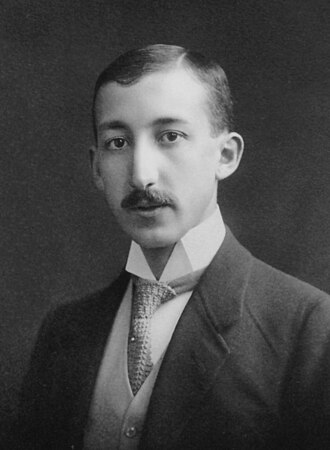
George de Hevesy
He learned to track atoms by their radiation, pioneering the tracer method behind nuclear medicine scans and treatments.
Refugee

Chemistry · 1961
Melvin Calvin
The son of a Jewish immigrant, he led the team that traced how plants turn air, water and sunlight into sugar.
Chemistry · 1962
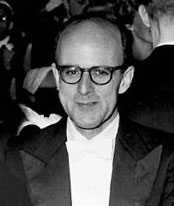
Max F. Perutz
He spent 22 years on the first 3D picture of hemoglobin, then showed how the blood protein picks up and delivers oxygen.
Refugee

Chemistry · 1972
Christian Anfinsen
He showed that a protein's chain of amino acids alone decides its shape, the rule behind today's AI protein-structure prediction.
- WS
Chemistry · 1972
William H. Stein
He helped build the tools that measure proteins' building blocks, then used them to spell out the first complete sequence of an enzyme.

Chemistry · 1977
Ilya Prigogine
He showed how a steady flow of energy can build order out of disorder, helping explain the rhythms and patterns of life.
Refugee

Chemistry · 1979
Herbert C. Brown
A Depression-era student from a struggling immigrant family, he made boron into a standard tool chemists use to build medicines.

Chemistry · 1980
Paul Berg
In 1972 he joined DNA from two species into one molecule, starting the genetic engineering behind many modern medicines.

Chemistry · 1980
Walter Gilbert
He found a chemical way to read DNA letter by letter, turning genes into text that doctors and scientists could study.

Chemistry · 1981
Roald Hoffmann
A child who hid from the Nazis in an attic grew up to show chemists how to predict which way a reaction will go.
Refugee

Chemistry · 1982
Aaron Klug
He taught electron microscopes to see in 3D, revealing how viruses and chromosomes are built, and found the DNA-gripping zinc finger.

Chemistry · 1985
Herbert A. Hauptman
A mathematician who, with Jerome Karle, cracked crystallography's phase problem so chemists could read molecular shapes from X-ray data.

Chemistry · 1985
Jerome Karle
He helped write the math that lets X-rays reveal a molecule's shape directly, turning years of crystal puzzle-solving into routine work.

Chemistry · 1986
John C. Polanyi
He read the faint infrared glow of newborn molecules to see how chemical reactions happen, and his idea led to the chemical laser.
Refugee
Chemistry · 1989
Sidney Altman
He showed that RNA, long seen as a mere messenger, can work as an enzyme, a finding that rewrote textbooks and hinted at how life began.

Chemistry · 1992
Rudolph A. Marcus
He explained why electrons hop between molecules fast or slow, the step at the heart of photosynthesis, rust and batteries.

Chemistry · 1994
George A. Olah
Hidden in Budapest as a teenager in 1944, he later used superacids to trap fleeting carbon ions, knowledge behind cleaner fuels.
Refugee

Chemistry · 1996
Sir Harold Kroto
He helped find the buckyball, a football-shaped carbon molecule that opened a new chemistry, then spent his fame teaching science.

Chemistry · 1998
Walter Kohn
Refugee from Nazi Vienna whose density-functional theory lets computers predict how molecules and materials behave.
Refugee

Chemistry · 2000
Alan Heeger
The son of a Russian Jewish immigrant, he helped show that plastic can carry electricity, opening the way to flexible electronics.

Chemistry · 2004
Aaron Ciechanover
He helped discover how cells tag unwanted proteins for destruction, knowledge that led to new drugs for a deadly blood cancer.

Chemistry · 2004
Avram Hershko
A child survivor of the Holocaust, he helped discover how cells tag unwanted proteins for destruction, work behind new cancer drugs.

Chemistry · 2004
Irwin Rose
A Brooklyn-born enzyme chemist whose lab hosted the discovery of how cells tag unwanted proteins for destruction.

Chemistry · 2006
Roger D. Kornberg
He made the first atom-by-atom pictures of the machine cells use to read their genes, showing how DNA's silent code comes to life.

Chemistry · 2008
Martin Chalfie
He got a jellyfish's green glow working inside other creatures, so scientists could watch genes and cells at work in living things.

Chemistry · 2009
Ada E. Yonath
She spent two decades mapping the cell's protein factory atom by atom, then showed where antibiotics grip it.

Chemistry · 2011
Dan Shechtman
He saw atoms in an 'impossible' pattern, stood firm through years of ridicule, and changed what science calls a crystal.

Chemistry · 2012
Robert J. Lefkowitz
He helped prove that the cell's hormone 'receivers' are real molecules and revealed the receptor family a third of all drugs act on.

Chemistry · 2013
Arieh Warshel
Kibbutz-born chemist who taught computers to model how enzymes work by joining quantum and classical physics.

Chemistry · 2013
Martin Karplus
Refugee from Nazi Vienna who taught computers to show atoms moving inside proteins, making simulation a core tool of biology.
Refugee

Chemistry · 2013
Michael Levitt
South African-born biophysicist who helped turn the computer into a chemistry lab, simulating how proteins fold, move and work.

Chemistry · 2024
David Baker
Turned the computer into a workshop for building proteins that never existed in nature, aimed at disease, pollution and energy.