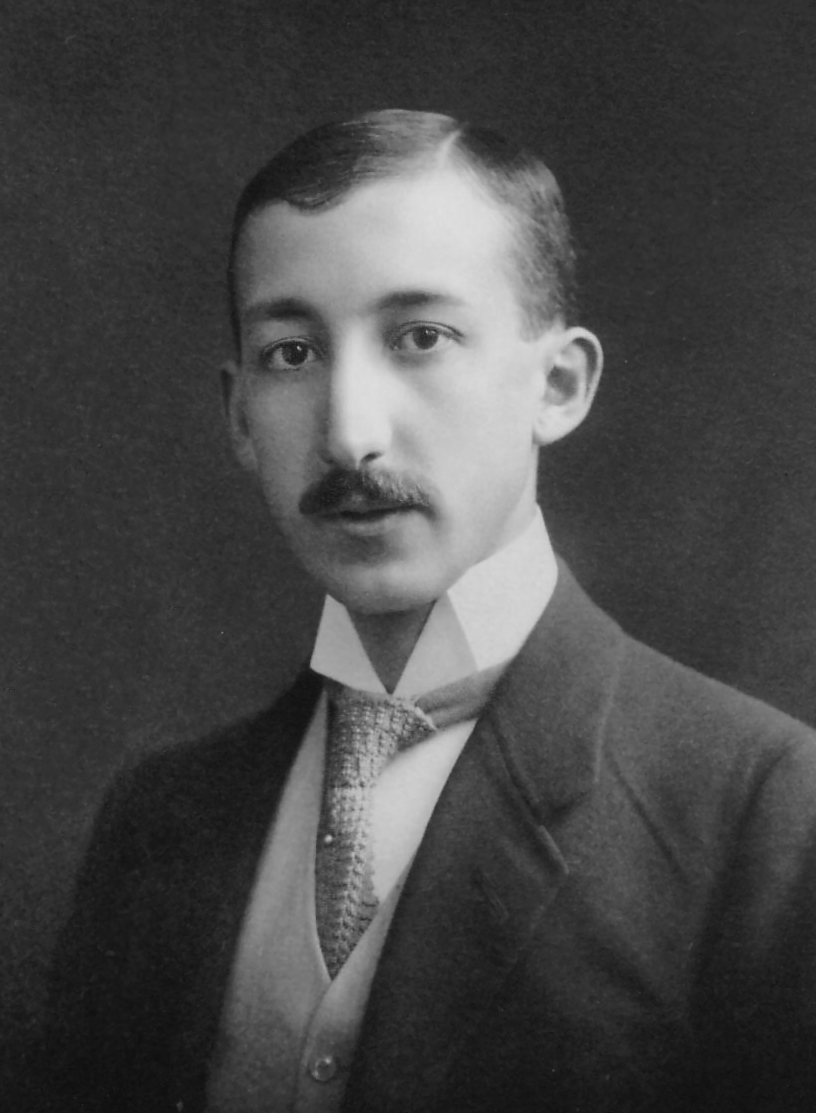

Nobel Prize in Chemistry · 1943
George de Hevesy
He learned to track atoms by their radiation, pioneering the tracer method behind nuclear medicine scans and treatments.
The Nobel citation: “for his work on the use of isotopes as tracers in the study of chemical processes”
- Born
- August 1, 1885, Budapest, Austria-Hungary (now Hungary)
- Died
- July 5, 1966, Freiburg im Breisgau, West Germany (now Germany)
- Affiliation at the time
- Stockholm University, Sweden
Chemistry prize
1943
Awarded alone.
Age that year
58years
Born in 1885.
Headline credited impact
11.6–26.6million people benefited
People given diagnostic nuclear medicine scans with technetium-99m, which rely on the tracer principle. How it was built
Sources cited
23
Fact-checked September 24, 2026.
- His method grew out of failure: after nearly two years trying to separate radium D from lead, he used the inseparable radioactive lead to track ordinary lead.
- As German troops entered Copenhagen in 1940, he dissolved the gold Nobel medals of Max von Laue and James Franck in acid. After the war the gold went into new medals.
- Hafnium, the element he found with Dirk Coster in 1923, is named after Hafnia, the Latin name for Copenhagen.
- NobelPrize.org's archive lists 32 nominations for him, the first in 1924. His 1943 chemistry prize was announced only in November 1944.
- Using water spiked with heavy water, his experiments found that an average water molecule stays in the human body for about 13.5 days.
The breakthrough
Radioactive tracers: following atoms through chemistry and living things
Every element comes in slightly different versions, called isotopes. They share the same chemistry but differ in weight, and some are radioactive. In 1911 Ernest Rutherford asked the young Hevesy to pull a radioactive substance, radium D, out of a large stock of lead. He tried for almost two years and failed, because radium D is simply a radioactive form of lead: no chemical trick can separate the two. Hevesy turned that failure into a tool. If the radioactive atoms always go wherever the ordinary lead goes, then measuring their radiation shows where the lead is, even in amounts far too small to weigh. Think of mixing a few glow-in-the-dark grains into a bag of sugar: you can follow the sugar anywhere by watching for the glow. In 1913, working with Friedrich Paneth in Vienna, he used this trick to measure how much of a nearly insoluble lead salt dissolves in water. In 1923 he measured how bean plants absorb radioactive lead through their roots, the first time radioactivity was used to measure a process in living things. When radioactive forms of common elements such as phosphorus became available in the 1930s, he tracked them through animals and people. He showed that much of the phosphorus in food ends up in the skeleton, where it keeps changing places with the phosphorus already there. He also used heavy water, a non-radioactive tracer, to measure how long water stays in the human body.[2],[3],[4],[7],[23]
“In order to make the best of this depressing situation, I decided to use radium D as an indicator of lead”
What it meant for humanity
Hevesy's idea turned radioactivity into a way of watching chemistry and life at work. Because a radioactive atom behaves like its stable twin, a trace far too small to weigh can reveal where an element goes, how fast, and what it becomes. His 1923 bean-plant study was the first time radioactivity was used to measure a process in living things, and by 1927 doctors were timing blood flow in patients with a radioactive tracer. Once radioactive forms of common elements could be made in the 1930s, the method spread quickly, and by 1944 it was in use in laboratories around the world. Hevesy himself showed that bone keeps swapping phosphorus with the rest of the body, and that even tooth enamel picks up traces of it. Rudolf Schoenheimer, who first met the method in a study of labelled lead in tumours, went on to use isotopes to study how the body handles fats and proteins. Every nuclear medicine scan and radioactive-drug treatment in use today depends on the tracer principle, which is why he is often called the father of nuclear medicine. About 40 million diagnostic nuclear medicine procedures are performed worldwide each year, from heart stress tests to bone and kidney scans, and about 80% of the drugs used carry technetium-99m. PET scans with FDG, a radioactive form of sugar, are now the leading way to diagnose many cancers and see how far they have spread. About 1.4 million treatments a year use radioactive drugs, about three-quarters of them radioiodine for thyroid disease, and newer ones treat prostate and neuroendocrine cancers. His analytical methods, X-ray fluorescence and neutron activation analysis, measure tiny amounts of elements in rocks and other materials, and hafnium, the element he co-discovered, goes into reactor control rods and microchip insulators.
- About 40 million diagnostic nuclear medicine procedures and about 1.4 million treatments with radioactive drugs are given worldwide each year, all resting on the tracer principle.[8],[17]
- Technetium-99m, the workhorse tracer for heart, bone, kidney and lung scans, is used in about 80% of nuclear medicine imaging.[17],[18]
- PET scans using FDG, a radioactive form of sugar, are now the leading way to diagnose many cancers and see how far they have spread.[17]
- His 1923 study of radioactive lead in bean plants was the first time radioactivity was used to measure a process in living things; the first diagnostic use in people followed in 1927.[7]
- Hafnium, which he co-discovered, soaks up neutrons, so it is used in reactor control rods, including in nuclear submarines; its oxide serves as an insulating layer in microchips.[16]
- He also introduced two ways to measure tiny amounts of elements: X-ray fluorescence analysis, which he applied to minerals, rocks and meteorites, and neutron activation analysis.[2],[11]
Impact in numbers
Hevesy's lasting gift is a way of seeing. Before tracers, scientists could measure what went into a plant or a body and what came out, but not what happened in between. By tagging atoms with radioactivity, he made it possible to follow single elements through living systems, and showed that even bone keeps exchanging its atoms. The same principle underlies every nuclear medicine scan and radioactive treatment given today, and in 1960 the Society of Nuclear Medicine created an award in his name that is now its most prestigious honor. The claims below credit him only a small share of those outcomes, because turning his idea into clinical medicine also took artificial isotopes, reactors and cyclotrons, cameras and scanners, drug chemists and physicians. His analytical methods and his co-discovery of hafnium add further contributions that are hard to count.
HealthFundamental scienceTechnology
Each number is the laureate’s credited share of a real-world outcome, cumulative to 2025. The whole outcome, the share of credit, and the reasoning are shown so you can check the arithmetic. Outcomes shared with other laureates are counted once on the impact page.
- Low confidenceRippleModeledHealth
People given diagnostic nuclear medicine scans with technetium-99m, which rely on the tracer principle
11.6–26.6
million people benefited, credited share
That is 2% of 580 million–1.3 billion people benefited since 1961.
How this number was built
Same whole-outcome range as the Segrè profile. UNSCEAR: world diagnostic nuclear medicine ran 24M procedures a year (1985-90), 32.5M (1991-96), 32.7M (1997-2007) and 40M (2009-18); that profile's model, from the first clinical use in 1960 (BNL), gives about 1.66 billion procedures through 2025. Tc-99m is used in about 80% today (UNSCEAR, BNL); low assumes 70% and two scans per person (0.7 x 1.66B / 2 = 580M), high 80% and one scan each (1.33B). Share 0.02: every such scan relies on Hevesy's principle that a radioactive isotope behaves like the stable element, so its radiation shows where the element goes (a 2020 JNM letter calls it the basis of all diagnostic and therapeutic nuclear medicine). But Paneth shared the first experiments, and the scans also needed artificial isotopes, Segrè's Tc-99m, Brookhaven's generator and kits, gamma cameras and clinicians. Credited: about 12M-27M.[3],[7],[8],[17],[18]
Sources: United Nations Scientific Committee on the Effects of Atomic Radiation; Brookhaven National Laboratory Newsroom; Journal of Nuclear Medicine (Society of Nuclear Medicine and Molecular Imaging); Journal of Nuclear Medicine (Society of Nuclear Medicine and Molecular Imaging); NobelPrize.org
- Low confidenceRippleModeledHealth
Cancer patients whose planned care changed after an FDG-PET scan, a tracer-principle technique
80,000–270,000
people benefited, credited share
That is 1% of 8–27 million people benefited since 1998.
How this number was built
Same whole-outcome range as the Warburg profile. UNSCEAR: about 40M diagnostic nuclear medicine procedures a year (2009-18), PET 17% of them (about 6.8M), oncology over 90% of PET, and FDG PET/CT now the main imaging method for many cancers. That profile models about 96M-132M PET scans from 1998 to 2025, 70-85% of them FDG cancer scans, at 1.5-2.5 scans per patient, then applies the National Oncologic PET Registry finding that physicians changed intended management after 36.5% of scans (30% for low): 8M-27M. Share 0.01: FDG imaging is a direct use of the tracer principle, which Sokoloff's group applied to glucose metabolism in 1975 (JNM), but it also rests on Warburg's cancer metabolism work, FDG chemistry, PET physics and scanners. Credited: about 80,000-270,000.[7],[8],[17],[19]
Sources: United Nations Scientific Committee on the Effects of Atomic Radiation; Journal of Clinical Oncology, via PubMed; Journal of Nuclear Medicine (Society of Nuclear Medicine and Molecular Imaging); Journal of Nuclear Medicine (Society of Nuclear Medicine and Molecular Imaging)
- Low confidenceRippleModeledHealth
Patients treated with radioactive drugs, mostly radioiodine for thyroid disease, since 1946
200,000–600,000
people benefited, credited share
That is 1% of 20–60 million people benefited since 1946.
How this number was built
UNSCEAR: about 0.88M radionuclide therapy treatments a year in 1997-2007 and 1.4M (+/-35%) in 2009-18; 74% are radioiodine for thyroid disease. Radioiodine therapy began in 1941 and isotopes became plentiful after WWII (JNM), so start in 1946. Treatments: 1946-2001 rising from 0 to 0.88M, linear (56 x 0.44M = 24.6M) or quadratic (56 x 0.88M / 3 = 16.4M); 2002-13, 12 x 1.14M = 13.7M; 2014-25, 12 x 1.4M = 16.8M. Totals 46.9M-55.1M; with +/-35%, 30.5M-74.4M. At 1.5 (low) or 1.2 (high) treatments per patient: 20.3M-62.0M, rounded down to 20M-60M people. Share 0.01: radioiodine works because the thyroid takes up radioactive iodine like ordinary iodine, the tracer principle (the 2020 JNM letter says it underlies therapeutic nuclear medicine too), but Saul Hertz's clinical work, reactors, cyclotrons and drug developers did the rest. Credited: 200,000-600,000.[7],[8],[17]
Sources: United Nations Scientific Committee on the Effects of Atomic Radiation; Journal of Nuclear Medicine (Society of Nuclear Medicine and Molecular Imaging); Journal of Nuclear Medicine (Society of Nuclear Medicine and Molecular Imaging)
The double edge
No harm from Hevesy's own research is documented, but others misused his method, and it carries a radiation cost. In the United States in the 1940s and early 1950s, researchers gave tracer doses of radioactive iron and calcium to people who were not properly told what they were getting, including about 820 poor pregnant women at Vanderbilt University and boys at the Fernald state school in Massachusetts. A 1995 presidential advisory committee found the Fernald studies morally troubling even though harm was extremely unlikely, and a Massachusetts task force said they violated the boys' fundamental human rights. Nuclear medicine also adds to people's radiation exposure: diagnostic scans make up about 1% of medical imaging procedures worldwide but about 7% of the collective dose from medical imaging, and a typical PET/CT scan delivers about 15 millisieverts. We attach no number to these harms because no reliable count of injuries exists.
- Moderate
Unconsented radioactive-tracer experiments in the United States
At Vanderbilt in the 1940s, about 820 poor pregnant women were given a drink containing radioactive iron, apparently without being told what it was. A 1963-64 follow-up found three childhood cancers among their children against about 0.65 expected, which its authors saw as suggesting a causal link; a later dose study could not settle the question. At the Fernald school, 17 boys got radioactive iron and 57 radioactive calcium; surviving letters to parents never mentioned radioactivity.[20],[21]
- Minor
Radiation dose from nuclear medicine
UNSCEAR estimates that diagnostic nuclear medicine accounts for about 1% of medical radiological procedures worldwide but 7.2% of their collective effective dose, and that a typical PET procedure, including its CT scan, gives about 15 millisieverts.[17]
Against the odds
Hevesy grew up rich: his family was ennobled, and his grandmother had led the Jewish women's association of Pest, though his own household was Christian. Wealth did not protect him from the turmoil after World War I. He had taken a university post under Hungary's short-lived communist government of 1919, and when Miklós Horthy's nationalist, antisemitic regime replaced it, he was stripped of his right to teach at Budapest University. In 1920 Hungary passed a numerus clausus law capping Jewish university enrollment, Europe's first postwar anti-Jewish law, and many Hungarian Jews went abroad to study and work. Hevesy settled in Copenhagen. He became a professor in Freiburg in 1926, but after Hitler came to power the Nazis made his position there untenable, and in 1934 he gave up his chair and returned to Denmark. When Germany occupied Denmark in April 1940, he dissolved two German colleagues' Nobel medals in acid. The medals bore their owners' names, and Nazi Germany treated sending gold abroad as a grave crime. By 1943 Denmark was no longer safe, and he escaped to neutral Sweden; that autumn Danish boats carried more than 7,000 Jews across the narrow strait to safety there. Back in Hungary, a 1939 law defined Jews by descent, adding about 100,000 people who did not see themselves as Jewish. He was living in Stockholm as a refugee when his prize was announced in November 1944.
1920
Dismissal
He had accepted a university post under Hungary's 1919 communist government. After it fell and Horthy's antisemitic regime took over, he lost his post and his right to lecture at Budapest University, and in 1920 he left Hungary for Copenhagen.[12],[14],[22]
1920
Quota
Hungary's 1920 numerus clausus law capped Jewish university enrollment. It was Europe's first postwar anti-Jewish law, and it pushed many Hungarian Jews to study and work abroad.[13],[14]
1934
Exile
After Hitler took power, the Nazis made his professorship at Freiburg untenable; in 1934 he gave it up and went back to Niels Bohr's institute in Copenhagen.[1],[11]
1940
War
During the German occupation of Denmark, he dissolved the Nobel medals of Max von Laue and James Franck in acid so the invaders could not find them. The medals were engraved with their owners' names, and Nazi Germany treated sending gold out of the country as a grave crime.[6]
1943
Exile
With Denmark unsafe under German occupation, he fled to neutral Sweden and made Stockholm his home for the rest of his working life.[2],[11],[15]
Jewish background
Hevesy was born György Bischitz in Budapest to a wealthy family of Jewish origin that was ennobled in 1895. His father's line went back to Rabbi Bischitz, a founder of the Jewish community of Sárbogárd, and his paternal grandmother, Johanna Bischitz, co-founded the Pest Israelite Women's Association in 1866 and led it for 25 years. His mother, Baroness Eugénia Schossberger, came from a Jewish merchant and industrialist family; in 1863 Vilmos Schossberger became the first unconverted Jew ennobled in Hungary since the Middle Ages. NobelPrize.org says he was born into a Christian family with Jewish heritage, and he went to a Catholic Piarist school.[1],[6],[9],[10],[22]
Key dates
August 1, 1885
Born György Bischitz in Budapest, Austria-Hungary, into a wealthy family of Jewish origin; the family name became Hevesy in 1906.[1],[9]
1908
Earns his doctorate at the University of Freiburg.[2]
1911
In Rutherford's Manchester lab, is asked to separate radium D from lead; after almost two years he fails.[3]
1913
With Friedrich Paneth in Vienna, carries out the first radioactive-tracer experiment.[2],[3]
1920
Dismissed from Budapest University after the fall of Hungary's communist regime, he settles at Niels Bohr's institute in Copenhagen.[2],[12]
1923
With Dirk Coster, discovers element 72, hafnium, named after the Latin name for Copenhagen.[2],[16]
1923
Publishes the first biological tracer study, measuring how bean plants absorb radioactive lead.[7],[23]
1926
Becomes professor of physical chemistry at Freiburg.[2]
1934
Leaves Nazi Germany and returns to Copenhagen, where he turns to tracer studies in plants and animals.[1],[2],[11]
1940
As Germany occupies Denmark, dissolves the Nobel medals of Max von Laue and James Franck in acid to hide them.[6]
1943
November 9, 1944
The 1943 Nobel Prize in Chemistry is announced for his use of isotopes as tracers; he gives his Nobel Lecture on 12 December.[1],[3],[4],[5]
July 5, 1966
Dies in Freiburg im Breisgau, West Germany.[1]
Sources
- 1.George de Hevesy - Facts · NobelPrize.org (Nobel Prize Outreach)
- 2.George de Hevesy - Biographical · NobelPrize.org (from Nobel Lectures, Chemistry 1942-1962, Elsevier, 1964), 1964
- 3.Some applications of isotopic indicators (Nobel Lecture, 12 December 1944) · NobelPrize.org, 1944
- 4.Award ceremony speech, Nobel Prize in Chemistry 1943 (statement by Professor A. Westgren) · NobelPrize.org, 1944
- 5.George de Hevesy - Nominations · NobelPrize.org (Nomination Archive)
- 6.A unique gold medal · NobelPrize.org (Nobel Prize Outreach)
- 7.One Hundred Years of the Tracer Principle (Hoberück, Zöphel, Pomper, Rowe and Gafita, J Nucl Med 64(12): 1998) · Journal of Nuclear Medicine (Society of Nuclear Medicine and Molecular Imaging), 2023
- 8.George de Hevesy in America (letter by W.C. Klingensmith and J.R. Osborne, J Nucl Med 61(2): 304) · Journal of Nuclear Medicine (Society of Nuclear Medicine and Molecular Imaging), 2020
- 9.Adalékok Hevesy György családtörténetéhez (Contributions to the family history of György Hevesy), by Anna Gergely, Fizikai Szemle 1999/7, p. 267 · Fizikai Szemle (Eötvös Loránd Physical Society), 1999
- 10.George de Hevesy · House of Jewish Excellences (Zsidó Kiválóságok Háza), Balatonfüred, Hungary
- 11.Hevesy, George Charles de (Encyclopaedia Judaica entry by Samuel Aaron Miller) · Encyclopaedia Judaica, via Encyclopedia.com
- 12.Heroes from Hungary (review essay by István Deák) · The New York Review of Books, 2009
- 13.Berlin junction. Patterns of Hungarian intellectual migrations, 1919-1933 (Tibor Frank, Storicamente 2, no. 26) · Storicamente (University of Bologna), 2006
- 14.The Holocaust in Hungary (Holocaust Encyclopedia) · United States Holocaust Memorial Museum
- 15.Rescue in Denmark (Holocaust Encyclopedia) · United States Holocaust Memorial Museum
- 16.Hafnium - Element information, properties and uses (Periodic Table) · Royal Society of Chemistry
- 17.UNSCEAR 2020/2021 Report, Annex A: Evaluation of medical exposure to ionizing radiation · United Nations Scientific Committee on the Effects of Atomic Radiation, 2022
- 18.Celebrating the 60th Anniversary of Technetium-99m · Brookhaven National Laboratory Newsroom, 2018
- 19.Impact of PET/CT and PET alone on expected management of patients with cancer: initial results from the National Oncologic PET Registry (Hillner et al., J Clin Oncol 26(13): 2155-2161) · Journal of Clinical Oncology, via PubMed, 2008
- 20.Final Report, Chapter 7: The Studies at the Fernald School · Advisory Committee on Human Radiation Experiments (archived by Georgetown University), 1995
- 21.Final Report, Chapter 7: Conclusion (including the Vanderbilt study) · Advisory Committee on Human Radiation Experiments (archived by Georgetown University), 1995
- 22.Hevesy György: a második Nobel-díjas magyar-zsidó (György Hevesy: the second Hungarian-Jewish Nobel laureate) · Zsido.com
- 23.The Absorption and Translocation of Lead by Plants (G. Hevesy, Biochemical Journal 17(4-5): 439-445) · Biochemical Journal, via PubMed Central, 1923
Fact-checked on September 24, 2026 by a separate AI fact-checking pass that re-opened the sources, with 9 corrections made. How we check
Suggest a correction