.jpg)
Nobel Prize in Chemistry · 1992
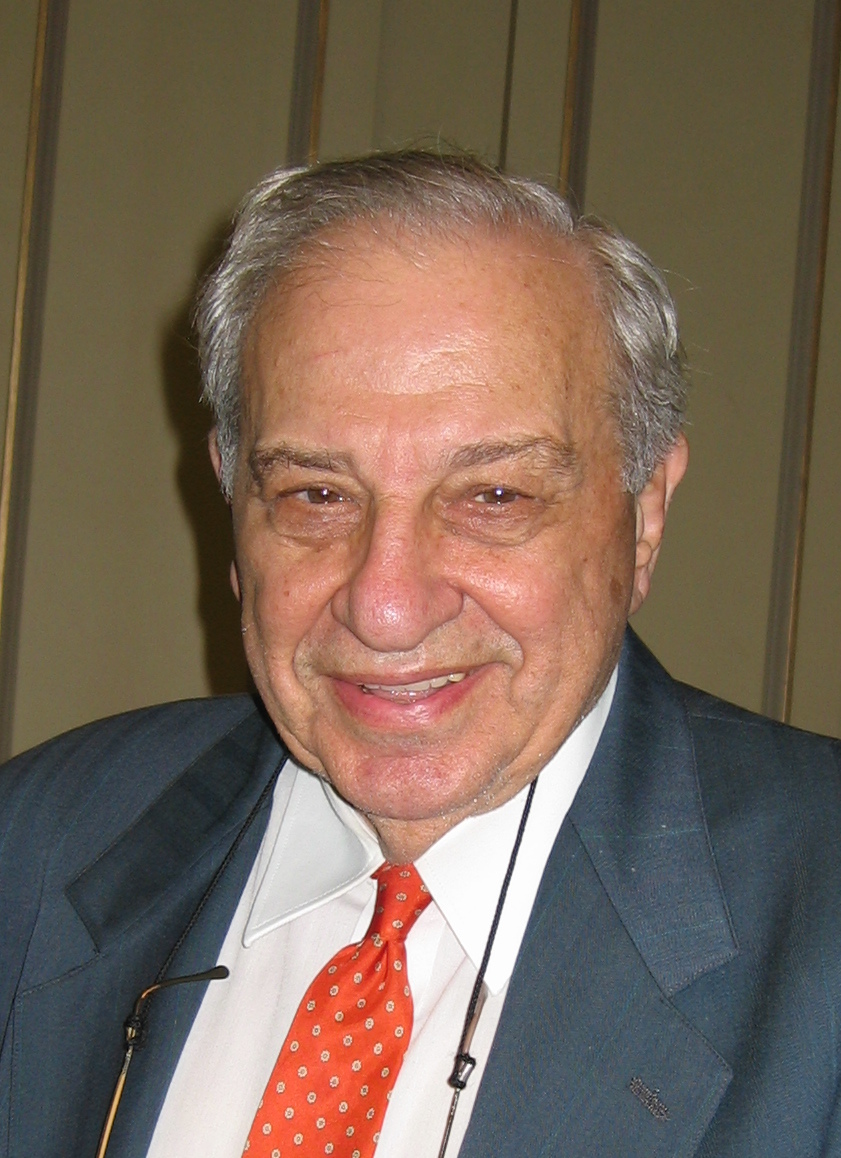
Rudolph A. Marcus
He explained why electrons hop between molecules fast or slow, the step at the heart of photosynthesis, rust and batteries.
The Nobel citation: “for his contributions to the theory of electron transfer reactions in chemical systems”
- Born
- July 21, 1923, Montreal, Canada
- Died
- July 16, 2026
- Affiliation at the time
- California Institute of Technology (Caltech), USA
Chemistry prize
1992
Awarded alone.
Age that year
69years
Born in 1923.
Sources cited
21
Fact-checked September 24, 2026.
- He recalled that Jewish applicants to McGill needed about a 75% average, close to an A. In the 1930s, other applicants needed 60%.
- After his postdoc he wrote 35 letters seeking a faculty job, with little success; not everyone even replied. A chance meeting at a conference finally got him hired.
- He worked out the core of his electron-transfer theory in about a month, which he later called the fastest thing he ever did.
- His strangest prediction, that some reactions slow down when they release more energy, waited about 25 years for convincing proof.
- He died at 102 while still working on three papers. Chemistry World called him the longest-lived chemistry Nobel laureate ever.
The breakthrough
Marcus theory of electron transfer, 1956-1965
When an electron jumps from one molecule to another, no chemical bonds break, so chemists expected such swaps to be quick. Yet after World War II, radioactive tracers showed that some, such as an electron passing between two kinds of iron ions in water, took hours. In 1952 Willard Libby suggested why: the electron moves so fast that the heavy atoms around it cannot keep up. Marcus spotted a flaw. If the electron simply leapt, the new ions would sit in the wrong surroundings, and energy would not be conserved. He reasoned that the constant thermal jiggling of nearby water molecules must first, by chance, reach an arrangement in which the electron has the same energy on either ion. Only then can it jump. Think of stepping between two rocking boats: you can cross safely only at the moment both decks are level. In 1956 he calculated the energy needed to reach that arrangement, now called the reorganization energy, from simple quantities such as the ions' sizes and charges and the properties of the solvent. Over the next decade he extended the theory to electrodes, to changes in the molecules' own bonds and to a fuller molecular picture. His equations predicted reaction rates that experiments broadly confirmed. They also predicted something strange: past a certain point, a reaction that releases more energy should run slower, not faster. Chemists doubted this 'inverted region' until experiments in 1984 convincingly showed it.[1],[3],[4],[5],[9],[11]
“Obtaining the result for the mechanism and rate of electron transfer was indeed one of the most thrilling moments of my scientific life.”
What it meant for humanity
Electrons hopping from one molecule to another drive some of the most important processes on Earth: plants capturing sunlight, proteins passing energy along inside living cells, metals rusting and batteries charging. Before Marcus, chemists could measure how fast these hops happened but could not predict them. His theory gave them a simple way to estimate those rates from quantities they could measure, and the Swedish Academy wrote that it bears on every branch of chemistry, from corrosion and 'cold light' to plastics that conduct electricity and making fuel with light. It also helped explain how photosynthesis wastes so little energy. In the reaction center of photosynthetic bacteria, the first electron hop takes about three trillionths of a second, while the wasteful backward hop is held back, and the inverted region he predicted is thought to be part of the reason. Chemists trying to copy photosynthesis to harness solar energy have used this picture as a guide. A 2021 study that observed the inverted region in quantum dots said the finding should help design materials that pull charges out efficiently while suppressing energy-wasting recombination. A 2014 study of lithium iron phosphate battery electrodes found that their charge-transfer kinetics matched a Marcus-based model rather than the usual textbook equation, and its authors argued battery models should include it. Toxicologists have applied electron-transfer theory to the way some drugs and toxic chemicals shuttle electrons to oxygen in the body. His earlier RRKM theory remains the standard way to estimate how energized molecules break apart, as in flames and the atmosphere. He wrote more than 500 publications over nearly eight decades and mentored more than 100 graduate students and postdoctoral researchers.
- The Swedish Academy said Marcus theory describes and predicts phenomena as varied as plants capturing light, making fuel with light, chemiluminescence, conducting polymers and corrosion.[4]
- In photosynthetic reaction centers, the inverted region he predicted is thought to slow the wasteful backward hop of electrons, giving captured energy time to move on to the next steps.[3],[9]
- A 2014 study found that charge transfer in lithium iron phosphate battery electrodes fit a Marcus-based model, not the standard equation, and urged its use in battery modelling.[16]
- A 2021 study observed the inverted region in quantum dots and said this should guide the design of materials that extract charge efficiently while limiting energy-wasting recombination, a goal in solar energy conversion.[17]
- According to the OpenAlex database, his 1956 paper has been cited more than 6,000 times and his 1985 review with Norman Sutin more than 8,000 times.[19],[20]
- Toxicologists have applied Marcus's electron-transfer theory to redox cycling, in which some drugs and toxic chemicals repeatedly pass electrons to oxygen, making reactive superoxide.[18]
Impact in numbers
We make no quantified claims for Marcus. His theory is a tool for understanding and prediction, used in fields from photosynthesis research to batteries, solar materials and corrosion. But it did not by itself create a product, cure or harvest, and every application depends on many later inventors and experimenters. We found no published estimate of lives saved, money earned or emissions avoided that could fairly be credited to it, and inventing one would be dishonest. His influence is better measured by use. His key papers have been cited many thousands of times, the Nobel presenter said the theory unified the understanding of electron transfer across biochemistry, photochemistry and inorganic and organic chemistry, and a former student says it still drives research in hundreds of laboratories. RRKM theory, his earlier work, is still the standard way to estimate how energized molecules fall apart in flames and in the atmosphere. His wartime explosives work was peripheral, so we record no harm claim either.
Fundamental scienceEnergyTechnology
No number is given here on purpose. Some contributions cannot be counted honestly, and we would rather describe them than invent a figure.
The double edge
No harm has been traced to Marcus's theories, which explain how reactions work rather than producing any weapon or product. His one link to weapons came early. As a McGill graduate student during World War II, he worked on a small part of Canada's research on RDX, a powerful explosive that he said went into the 'blockbuster' bombs dropped on Germany, and on a gas-mask material. He described this work as peripheral and unsophisticated. For most of his career his research was funded by the US Office of Naval Research, which he credited as a pioneer in supporting basic research, and by the National Science Foundation. We found no record that his theories were used in weapons.
- Minor
Wartime explosives research as a graduate student
His 1943-46 McGill PhD research on reaction rates was a small part of Canada's wartime program on RDX, an explosive he said was used in the 'blockbuster' bombs dropped on Germany. He also tested a gas-mask material without success. He called the work peripheral and unsophisticated.[7],[8]
Against the odds
Marcus grew up in 1930s Montreal, a city he remembered as three separate societies: French, English and Jewish. Jews were kept out of at least one suburb, the Town of Mount Royal, and his high school, Baron Byng, was almost entirely Jewish. McGill University, about a quarter Jewish in the mid-1920s, began restricting Jewish students informally in 1926. Its Faculty of Arts demanded a 70% average from Jewish applicants in 1929 and 75% in the 1930s, against 60% for everyone else, and by 1935 the Jewish share of students had fallen to 12%. Marcus recalled that Jewish students needed nearly an A average, that a close friend had to earn an extra master's degree before the medical school admitted him, and that an adviser warned him that being Jewish would make jobs in mathematics or physics harder to find. He saw no open hostility on campus but felt outside its main social world. Beyond campus, Canada's government admitted only about 5,000 Jewish refugees from Nazi Europe between 1933 and 1945. His family had little money: neither parent went to high school, and in the Depression his father was out of work for a year and a half. When he moved to North Carolina in 1949, where he no longer felt these divisions, he found it a welcome relief.
1941
Quota
McGill informally restricted Jewish students. From 1929 its Faculty of Arts required a 70% average of Jewish applicants, raised to 75% in the 1930s, while others needed 60%. Marcus, who entered in 1941, recalled that Jewish students needed nearly an A average.[7],[12],[13]
1941
Discrimination
On entering McGill, an adviser told him that being Jewish would make it harder to get a job in mathematics or physics. He recalled no Jewish chemistry professors at McGill in the early 1940s, and said he felt outside the university's main social life.[7]
—
Discrimination
Montreal was split into French, English and Jewish communities. Jews were excluded from at least one suburb, the Town of Mount Royal, and even in Ottawa in the late 1940s he played at a separate Jewish tennis club.[7]
—
Poverty
Neither parent went to high school; his mother's family could not afford the fees. In the Depression his father was out of work for a year and a half, the family moved to a poorer Detroit neighbourhood and then back to Montreal, where his mother worked as a seamstress.[7]
—
Discrimination
His father, a gifted artist who had won a scholarship to Montreal's Beaux Arts school at 13, left a newspaper apprenticeship after being blamed, apparently wrongly, for spilled ink and hearing antisemitic remarks. He spent his working life as a fruit-store clerk and manager.[7]
1939
Discrimination
Canada admitted only about 5,000 Jewish refugees from Nazi Europe in 1933-45, a record historians rank among the worst of any developed country. In 1939 it refused to let the refugee ship St. Louis land its more than 900 Jewish passengers.[14]
Jewish background
Marcus grew up in a Jewish neighbourhood of Montreal and attended Baron Byng High School, which he recalled as essentially all Jewish. His father was born in New York in 1895 to a family from Wilkomir, in what is now Lithuania, and quit a newspaper apprenticeship after antisemitic remarks; a great-uncle converted and became a theologian in Sweden. His mother was born in Manchester, England. At McGill he moved in the Jewish students' separate social circle, and in Ottawa he joined a Jewish tennis club. The Encyclopaedia Judaica has an entry on him. We found no source on his religious practice.[7],[8],[15],[21]
Key dates
July 21, 1923
Born in Montreal, the only child of parents who had not gone to high school. His father's family came from Wilkomir, in what is now Lithuania.[1],[7],[9]
1932
Around 1932, after his father has been out of work for a year and a half in the Depression, the family leaves Detroit, where it had lived since he was three, and returns to Montreal.[7]
October 1943
Earns a chemistry degree from McGill University in an accelerated wartime program, having entered in 1941 as a second-year student.[2],[7],[9]
1946
Completes a McGill PhD under Carl Winkler on reaction rates linked to wartime RDX explosives research, then starts a postdoc at the National Research Council in Ottawa.[2],[7],[8]
1949
Moves to the University of North Carolina for a theory postdoc with Oscar Rice. Within months he develops what becomes RRKM theory and marries Laura Hearne.[2],[7],[9]
1951
After 35 job letters bring little success, a chance meeting at a conference leads to a post at the Polytechnic Institute of Brooklyn. The first paper on RRKM theory, with Rice, appears the same year.[2],[7],[9]
1956
Publishes his theory of electron transfer, worked out in about a month, showing how surrounding molecules must rearrange before an electron can jump.[1],[3],[5],[11]
1960
In a paper for a Faraday Society meeting, predicts the 'inverted region', where reactions slow down as their driving force grows.[3],[4]
1978
Joins Caltech as Arthur Amos Noyes Professor of Chemistry after 14 years at the University of Illinois.[2],[9]
1984
Chemists Miller, Calcaterra and Closs publish the best evidence yet for the inverted region, almost 25 years after his prediction.[3]
May 1985
Receives the Wolf Prize in Chemistry at ceremonies in Israel.[2],[7]
December 10, 1992
Receives the unshared Nobel Prize in Chemistry. In his banquet speech he says the whole field of electron transfer is being honoured.[1],[5],[6]
2024
Caltech establishes the Rudolph A. Marcus Center for Theoretical Chemistry, endowed by two former postdoctoral scholars.[9]
July 16, 2026
Dies at 102, five days before his 103rd birthday, while still working on three scientific papers.[1],[2],[9],[10]
Sources
- 1.Rudolph A. Marcus - Facts · NobelPrize.org (Nobel Prize Outreach)
- 2.Rudolph A. Marcus - Biographical (autobiography, with 2026 addendum) · NobelPrize.org (from Les Prix Nobel, The Nobel Prizes 1992), 1993
- 3.Electron Transfer Reactions in Chemistry: Theory and Experiment (Nobel Lecture, 8 December 1992) · NobelPrize.org, 1992
- 4.Press release: The Nobel Prize in Chemistry 1992 (14 October 1992) · Royal Swedish Academy of Sciences (via NobelPrize.org), 1992
- 5.Award ceremony speech, Nobel Prize in Chemistry 1992 (Professor Lennart Eberson) · NobelPrize.org, 1992
- 6.Rudolph A. Marcus - Banquet speech (Stockholm, 10 December 1992) · NobelPrize.org, 1992
- 7.Interview with Rudolph A. Marcus by Shirley K. Cohen, December 1, 7 and 14, 1993 (oral history transcript) · California Institute of Technology Archives, 1993
- 8.Oral history interview with Rudolph A. Marcus (James J. Bohning, 20 June 1991): abstract · Science History Institute Digital Collections, 1991
- 9.Caltech Mourns the Passing of Nobel Laureate Rudy Marcus (1923-2026) · California Institute of Technology, 2026
- 10.Rudy Marcus obituary: Nobel prize-winning chemist and electron transfer theory pioneer dies aged 102 · Chemistry World (Royal Society of Chemistry), 2026
- 11.Senior Caltech Nobelist Reflects on His Prize-Winning Work (Kimm Fesenmaier) · California Institute of Technology, 2011
- 12.McGill's 1926 Jewish ban · The McGill Daily, 2018
- 13.The Maccabean Circle and early Jewish life at McGill · McGill University (Bicentennial), 2021
- 14.None Is Too Many · The Canadian Encyclopedia (Historica Canada), 2022
- 15.Marcus, Rudolph Arthur (Encyclopaedia Judaica) · Encyclopedia.com (Gale)
- 16.Charge transfer kinetics at the solid-solid interface in porous electrodes (Peng Bai and Martin Z. Bazant), Nature Communications 5:3585 · Springer Nature, 2014
- 17.Marcus inverted region of charge transfer from low-dimensional semiconductor materials (Wang, Ding, Gao, Wang, Zhou and Wu), Nature Communications · Springer Nature (via PubMed Central), 2021
- 18.Redox cycling of radical anion metabolites of toxic chemicals and drugs and the Marcus theory of electron transfer (Ronald P. Mason), Environmental Health Perspectives · US National Institute of Environmental Health Sciences (via PubMed Central), 1990
- 19.On the Theory of Oxidation-Reduction Reactions Involving Electron Transfer. I (R. A. Marcus, J. Chem. Phys. 24:966, 1956): citation record · OpenAlex, 2026
- 20.Electron transfers in chemistry and biology (R. A. Marcus and Norman Sutin, Biochim. Biophys. Acta, 1985): citation record · OpenAlex, 2026
- 21.Jewish Nobel Prize Laureates · Jewish Virtual Library (American-Israeli Cooperative Enterprise)
Fact-checked on September 24, 2026 by a separate AI fact-checking pass that re-opened the sources, with 8 corrections made. How we check
Suggest a correction