.jpg)
Nobel Prize in Literature · 1976
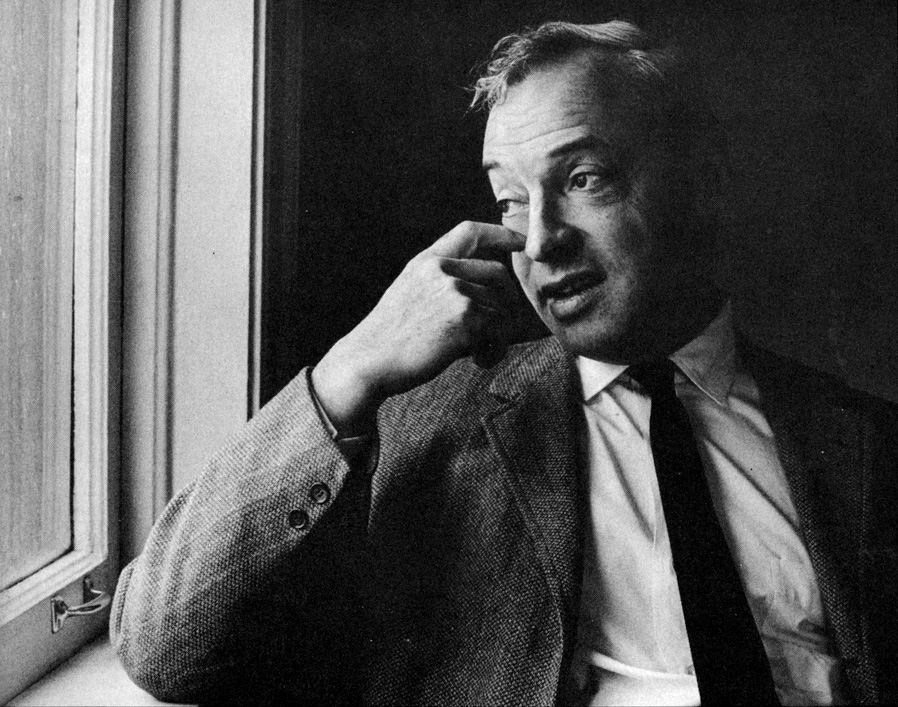
Saul Bellow
A Chicago immigrant's son whose comic, searching novels put Jewish American lives at the center of American literature.
The Nobel citation: “for the human understanding and subtle analysis of contemporary culture that are combined in his work”
- Born
- June 10, 1915, Lachine, Quebec (now Montreal), Canada
- Died
- April 5, 2005, Brookline, MA, USA
Literature prize
1976
Awarded alone.
Age that year
61years
Born in 1915.
Sources cited
22
Fact-checked September 24, 2026.
- He is still the only writer to win the National Book Award for Fiction three times: for Augie March (1954), Herzog (1965) and Mr. Sammler's Planet (1971).
- His family was smuggled from Canada into the United States in 1924 and lived in Chicago without legal status. He did not become a U.S. citizen until the early 1940s.
- His first novel, Dangling Man (1944), sold only about 1,500 copies. Twenty years later Herzog pushed John le Carré off the top of the New York Times best-seller list.
- His 1953 translation of Gimpel the Fool, made with uncredited help from Eliezer Greenberg, largely introduced Isaac Bashevis Singer, a future Nobel laureate, to American readers.
- In 1913 his father was arrested in St. Petersburg for living there without proper papers, under laws restricting where Jews could live. The family fled to Canada.
The breakthrough
Comic, thinking novels about the restless modern self (1944-2000)
Bellow wrote novels about restless modern people, usually city dwellers, trying to work out how to live. When his first novel, Dangling Man, appeared in 1944, much American fiction followed a tough, clipped 'hard-boiled' style. The Swedish Academy said that style left most things unsaid and unfelt. Bellow's early books turned inward instead, showing what went on inside a character's mind. Then, with The Adventures of Augie March (1953), he found a new voice: long, talkative, funny sentences that mix Chicago street talk, Yiddish rhythms and big ideas from philosophy. His heroes include a poor Chicago boy living by his wits, a millionaire who runs off to Africa (Henderson the Rain King), a professor who writes letters he never sends to friends, famous thinkers and the dead (Herzog), and a Holocaust survivor in New York (Mr. Sammler's Planet). The Swedish Academy saw them as men who have lost their footing and keep trying to regain it, still convinced that what makes a life worthwhile is dignity rather than success. Reading Bellow is a bit like overhearing a brilliant, funny friend think out loud on a crowded city bus: gossip, jokes and questions about the soul arrive in the same breath. In his Nobel lecture he rejected the claim that the novel about individual human character belonged to the past.[3],[4],[5],[11],[12],[13],[18]
“At the center humankind struggles with collective powers for its freedom, the individual struggles with dehumanization for the possession of his soul.”
What it meant for humanity
Bellow changed who was allowed to speak for America in its literature. When he started out, a Jewish son of Russian immigrants could be told that English was not his language. His 1953 novel The Adventures of Augie March opens with a poor boy from Chicago's Jewish immigrant world declaring himself an American, and tells his story in a voice that mixes street slang, Yiddish rhythms and high culture. Along with writers such as Bernard Malamud and Philip Roth, Bellow helped make the stories of immigrants and strivers of modest means count as fully American stories, the equal of Melville or Hemingway. Roth argued that Bellow claimed Chicago for literature the way Dickens claimed London. His books also carried Jewish history into mainstream fiction. The Victim shows how antisemitism can damage even the minds of the people it targets, and Mr. Sammler's Planet follows a Holocaust survivor through 1960s New York. His English version of Gimpel the Fool helped introduce the Yiddish writer Isaac Bashevis Singer to American readers. Bellow reached a wide public: Herzog topped the New York Times best-seller list and sold more than 100,000 copies. He also taught for decades, including 31 years at the University of Chicago's Committee on Social Thought and about a decade at Boston University. In his Nobel lecture he defended the novel as a shelter for the human spirit and urged writers to return to the big questions of who we are and what life is for.
- He is the only writer to win the National Book Award for Fiction three times, and he also won the Pulitzer Prize (1976) and the National Medal of Arts (1988).[12],[13],[14]
- Along with Bernard Malamud and Philip Roth, he helped move the stories of Jewish immigrants and their striving children from the margins to the center of American literature.[11]
- His 1953 English version of Gimpel the Fool largely introduced Isaac Bashevis Singer to American readers; scholars now argue that Eliezer Greenberg deserved credit as co-translator.[22]
- Mr. Sammler's Planet (1970) put a Holocaust survivor at the center of a major American novel and won the National Book Award.[12],[13]
- He taught at the University of Chicago's Committee on Social Thought from 1962 to 1993, then for about a decade at Boston University.[15],[17]
- In 2024 the U.S. Postal Service honored him with a stamp in its Literary Arts series, describing him as a chronicler of the immigrant experience.[13]
Impact in numbers
Bellow's impact lies in how people understand themselves and in who gets to tell America's story, and it cannot be honestly counted. His novels sold widely, Herzog alone more than 100,000 copies, and won almost every major American literary prize. More important, he helped move Jewish immigrant experience from the margins to the center of American fiction, opening space for the writers who followed. His translation helped bring Isaac Bashevis Singer's Yiddish stories to English readers, and he taught students for decades in Chicago and Boston. His reputation has also shrunk: remarks and passages many readers see as racist have kept him off many university reading lists. We therefore make no quantified impact claims; there is no credible way to count readers moved, minds changed or writers inspired.
CultureEducation
No number is given here on purpose. Some contributions cannot be counted honestly, and we would rather describe them than invent a figure.
The double edge
Bellow's work did no physical harm, but his record includes serious controversies, mostly about race and about how he portrayed real people. A 1988 remark attributed to him, asking who the Tolstoy of the Zulus was, was widely read as contempt for non-Western cultures, and his biographer says his own words helped push his books off college reading lists. Critics, including a Black journalist who admired his writing, objected to his portrayal of Black characters, above all a silent Black pickpocket in Mr. Sammler's Planet. In 2007 a Chicago alderman blocked a plan to name a Hyde Park street after him, objecting to how his writing and remarks treated Black and Latino people. His fiction also drew fire for harsh portraits of an ex-wife and for revealing, in Ravelstein, that his friend Allan Bloom was gay and had died of AIDS. His defenders, including his biographer Zachary Leader, argue that Mr. Sammler's Planet is not a racist novel, and Bellow said the Zulus remark was a misunderstanding. He also admitted later that he should have paid more attention to the Holocaust while it was happening.
- Moderate
The 'Tolstoy of the Zulus' remark
In 1988 the journalist James Atlas reported that Bellow, criticizing opposition to Western-civilization courses, had asked who the Tolstoy of the Zulus and the Proust of the Papuans were. Many read it as a racist dismissal of non-Western cultures. In a 1994 New York Times essay Bellow said he had been talking about literate and pre-literate societies. His biographer says the remark helped make him unwelcome on campuses.[6],[19]
- Moderate
Portrayals of Black Americans and a blocked street name
Mr. Sammler's Planet includes a menacing Black pickpocket who is given no dialogue. Journalist Brent Staples, who read Bellow as a Black graduate student in Hyde Park, was angered by passages he saw as voicing white fear of Black neighbors. In 2007 Alderman Toni Preckwinkle blocked a Hyde Park street name for Bellow over his treatment of Black and Latino people. Leader argues the novel is not racist; Studs Terkel judged Bellow not a racist but too fearful of Black people.[6],[18],[20]
- Minor
Harsh portraits of wives and friends
Bellow drew heavily on real people. Herzog's savage portrait of a character modeled on his second wife drew feminist criticism, and Ravelstein (2000) was criticized for revealing that his friend Allan Bloom, the model for its hero, was gay and had died of AIDS. Henderson the Rain King was also criticized for its depiction of African characters.[6],[10]
Against the odds
Bellow's parents came from the Russian Empire, where most Jews were confined to the Pale of Settlement. After 1881 a wave of pogroms swept the empire, the May Laws pushed Jews out of villages, and quotas limited how many Jewish students could attend secondary schools. To live in St. Petersburg, outside the Pale, his father bought a forged residence license. In 1913 he was arrested for not having proper papers (and possibly for dealing in forged ones), escaped from prison, and took the family to Canada, where Saul was born two years later. In Montreal the family was poor: his father failed at job after job and turned to small-scale bootlegging. At eight, after an emergency operation and serious infections, Saul spent months in hospital, where, he later said, nurses never let him forget that he was Jewish. In 1924 the family was smuggled into the United States and lived in Chicago without legal status. America was far safer than Russia, but antisemitism was open: quotas limited Jewish students at many private colleges and professional schools, and historians regard the 1930s as a high point of American antisemitism. When Bellow asked about graduate study in English at Northwestern, the department head told him English was not his language and suggested anthropology. He felt he had to fight his way into a literary world dominated by old Protestant elites.
1913
Persecution
Russian law barred most Jews from living outside the Pale of Settlement. Bellow's father lived in St. Petersburg on a forged residence license; in 1913 he was arrested for lacking proper papers (and possibly for dealing in forged ones), escaped from prison and fled with his family to Canada, two years before Saul was born.[7],[8]
1923
Poverty
In Montreal the family was poor. His father failed as a farmer, baker, junk dealer and more, and turned to small-scale bootlegging; in 1923 he was robbed, beaten and left in a ditch while trying to run whiskey to the border.[7],[10]
1923
Discrimination
At eight, Bellow spent months in a Montreal hospital after an emergency appendectomy and serious infections. He later said some of the nurses never let him forget that he was Jewish, which made him furious.[9]
1924
Other
The family was smuggled across the border from Canada and settled in Chicago without legal status. Bellow did not become a U.S. citizen until the early 1940s (1943 in most sources).[9],[10],[13]
1937
Discrimination
When he graduated from Northwestern, the head of the English department told him that English was not his language and suggested anthropology. Bellow later told the Paris Review he had been given to understand that, as a Jew and the son of Russian Jews, he could never truly feel at home in English literary tradition.[6],[11]
—
Quota
In the 1920s and 1930s informal quotas sharply limited the number of Jewish students at many private colleges and professional schools, and historians regard the 1930s as a high point of antisemitism in the United States. Bellow himself studied at the University of Chicago and Northwestern.[21]
Jewish background
Both of Bellow's parents were Russian Jews. His father had studied at a yeshiva, and his mother was Orthodox. The family spoke Yiddish at home, and Bellow was fluent in Yiddish and Hebrew. As a young man he turned from religious study to literature and radical politics, and he disliked being called a 'Jewish writer'. Yet he said his earliest awareness was of a world in which he was a Jew, and his biographer says he saw being Jewish as a permanent fact of his life. Jewish characters, antisemitism and the Holocaust run through his fiction, he wrote a book about Israel, and B'nai B'rith honored him for excellence in Jewish literature.[2],[6],[7],[8],[10],[11],[12],[13],[14],[17]
Key dates
1913
His father, arrested in St. Petersburg for living there without proper residence papers, escapes and takes the family to Canada.[7],[8]
June 10, 1915
Born Solomon Bellows in Lachine, Quebec, near Montreal, the fourth child of Russian Jewish immigrants.[1],[10],[13]
1923
Aged eight, spends months in a Montreal hospital after an emergency appendectomy; some nurses are hostile to him for being Jewish.[9]
1924
The family is smuggled into the United States and settles, without legal status, in Chicago's Humboldt Park neighborhood.[9],[10],[14]
1937
Graduates from Northwestern University with honors in sociology and anthropology. Told that English is not his language, he starts graduate study in anthropology at Wisconsin.[2],[6]
1943
Becomes a U.S. citizen (most sources give 1943; some give 1941).[9],[13]
1944
Publishes his first novel, Dangling Man; during World War II he serves in the Merchant Marine.[2],[10]
1953
Publishes The Adventures of Augie March, begun in Paris on a Guggenheim Fellowship; it wins the 1954 National Book Award. His Gimpel the Fool translation appears.[2],[12],[22]
1962
Joins the University of Chicago's Committee on Social Thought, where he teaches until 1993.[15]
1964
Herzog becomes a No. 1 best-seller and wins the 1965 National Book Award.[10],[12]
1967
Covers the Arab-Israeli war as a correspondent for Newsday.[2]
1976
Wins the Pulitzer Prize for Humboldt's Gift and the Nobel Prize in Literature; publishes To Jerusalem and Back, about his months in Israel.[1],[2],[14]
April 5, 2005
Sources
- 1.Saul Bellow - Facts · NobelPrize.org (Nobel Prize Outreach)
- 2.Saul Bellow - Biographical · NobelPrize.org (from Nobel Lectures, Literature 1968-1980), 1976
- 3.Saul Bellow - Nobel Lecture, 12 December 1976 · NobelPrize.org, 1976
- 4.The Nobel Prize in Literature 1976 - Press release · NobelPrize.org (Swedish Academy), 1976
- 5.The Nobel Prize in Literature 1976 - Award ceremony speech by Karl Ragnar Gierow · NobelPrize.org, 1976
- 6.Author Interview: Biographer Zachary Leader on Saul Bellow (interview by Robert Siegel) · Moment Magazine, 2019
- 7.The Life of Saul Bellow (excerpt from Zachary Leader, The Life of Saul Bellow: To Fame and Fortune, 1915-1964, Knopf) · Literary Hub, 2015
- 8.Saul Bellow at 100 (review of Zachary Leader's The Life of Saul Bellow, vol. 1) · Washington Free Beacon, 2015
- 9.That Somber City: In Search of Saul Bellow's Montreal · Los Angeles Review of Books, 2018
- 10.Saul Bellow biography and life timeline (American Masters) · PBS / WNET, 2022
- 11.Saul Bellow wanted Jewish stories to be seen as American stories (American Masters) · PBS / WNET, 2022
- 12.Saul Bellow (National Book Awards honors) · National Book Foundation
- 13.Literary Arts Series Spotlights Novelist Saul Bellow · United States Postal Service, 2024
- 14.Saul Bellow Biography (One Book, One Chicago) · Chicago Public Library, 2011
- 15.He seized the day · The University of Chicago Magazine, 2005
- 16.Author Saul Bellow Dies at Age 89 · NPR, 2005
- 17.Remembering Saul Bellow · BU Today, Boston University, 2005
- 18.Saul Bellow · My Jewish Learning
- 19.Saul Bellow's Unlikely Role in the Development of Ralph Ellison's Posthumous Reputation (Paul Devlin, Issue 17.2) · Literary Matters (Association of Literary Scholars, Critics, and Writers)
- 20.Exile on Bellow's street · Chicago Reader, 2007
- 21.Antisemitism at the University of Minnesota (A Campus Divided) · University of Minnesota
- 22.Isaac Bashevis Singer in a Yiddish Opera: David Schiff's Gimpel the Fool (Neil W. Levin) · YIVO Institute for Jewish Research
Fact-checked on September 24, 2026 by a separate AI fact-checking pass that re-opened the sources, with 10 corrections made. How we check
Suggest a correction