.jpg)
Nobel Prize in Literature · 2002
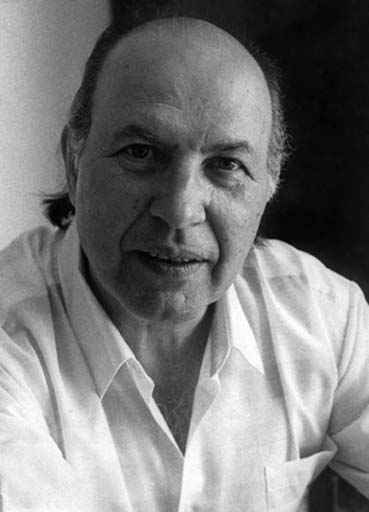
Imre Kertész
Deported to Auschwitz at 14, he wrote Fatelessness, a novel showing how ordinary people are swallowed by history.
The Nobel citation: “for writing that upholds the fragile experience of the individual against the barbaric arbitrariness of history”
- Born
- November 9, 1929, Budapest, Hungary
- Died
- March 31, 2016, Budapest, Hungary
Literature prize
2002
Awarded alone.
Age that year
73years
Born in 1929.
Sources cited
24
Fact-checked September 24, 2026.
- A Buchenwald report dated 18 February 1945 listed prisoner 64,921, Imre Kertész, as dead. He survived, and in 2002 the Buchenwald memorial mailed him a copy.
- The publisher Magvető rejected Fatelessness in 1973. When it finally appeared in 1975 it met near silence, and he later built his novel Fiasco around that experience.
- A year after his Nobel Prize, his books had sold some 500,000 copies in Hungary, about one for every 20 Hungarians.
- He was the first Hungarian to win the Nobel Prize in Literature, yet for years he paid the rent by writing musical comedies and translating Nietzsche and Freud.
The breakthrough
Fatelessness: the Holocaust told without hindsight
Kertész's most important book is Fatelessness (Sorstalanság), a novel he worked on for about 13 years and published in 1975. It follows György Köves, a teenage Budapest boy who is deported to Auschwitz, then Buchenwald and Zeitz, and survives. The boy's path mirrors much of the author's own, but Kertész insisted it was a novel, not a memoir.
What makes the book unusual is its point of view. Most Holocaust books look back with the knowledge and outrage of later years. Kertész refused that. The boy tells events in order, as they happen, without knowing what comes next and without the moral language adults supply afterward. He tries to be a good prisoner, notices small comforts, and at the end even speaks of moments of happiness between the torments. It is like watching a disaster on a security camera instead of in a documentary with a narrator: nobody tells you how to feel, so the horror lands on you directly.
Kertész said this step-by-step method forced him to fill in every minute, including the twenty minutes on the Birkenau arrival platform that survivors' accounts tend to rush past. The Swedish Academy suggested that the book's shocking credibility may come from this very lack of moral outrage, and that it shows how prisoners came to terms with Auschwitz. His later novels Fiasco and Kaddish for an Unborn Child carry the story forward.[1],[3],[4],[10],[13],[19]
“In short, I died once, so I could live. Perhaps that is my real story.”
What it meant for humanity
Fatelessness changed how many readers understand the Holocaust. Instead of treating Auschwitz as a freak event outside normal history, Kertész argued it revealed something about modern life itself: how ordinary people, perpetrators and victims alike, can be made to go along one step at a time. The Swedish Academy described his work as a defense of the fragile individual against the brutal arbitrariness of history.
His readers arrived late. In Hungary the novel was largely ignored for years, and an early East German translation also went unnoticed. Then German-speaking audiences found him. His first readings in Germany in 1992 took place while racist and antisemitic attacks were shaking the newly reunified country, and a Stuttgart newspaper argued that he had to be read precisely then. A new German translation of Fatelessness in 1996 became his breakthrough, and he turned into a central voice in debates about Holocaust memory and life under dictatorship.
Northwestern University Press brought two of his novels to English readers in 1992 and 1997, and the Nobel Prize in 2002 opened the way to many more translations. In Hungary his books had sold some 500,000 copies a year after the prize, and Fatelessness became part of the high school curriculum. In 2005 the novel became a feature film, for which he wrote the screenplay.
In essays and speeches he insisted that Auschwitz is a lesson for all of European culture, not only a chapter of Jewish suffering, and he warned against turning it into sentimental entertainment.
- The Swedish Academy said that for Kertész, Auschwitz is not a freak exception outside Western history but the final truth about how far modern life can degrade people.[4]
- A year after the 2002 prize his books had sold some 500,000 copies in Hungary, roughly one for every 20 Hungarians, and Fatelessness became part of the high school curriculum.[6],[7]
- A 1996 German translation of Fatelessness was his breakthrough; German-speaking readers made him a leading voice in debates on Holocaust memory and dictatorship.[10],[13]
- As a translator he brought Nietzsche, Freud, Wittgenstein, Schnitzler, Hofmannsthal and Canetti into Hungarian.[1],[10]
- He wrote the screenplay for Fateless, the 2005 film of his novel directed by Lajos Koltai.[10],[19]
- Northwestern University Press introduced him to English readers with Fateless in 1992 and Kaddish for a Child Not Born in 1997, a decade before the Nobel.[20]
Impact in numbers
Kertész's impact is on understanding, not on anything that can be counted. Fatelessness lets readers see the Holocaust from inside, through a boy who does not yet know what is happening to him, and it pushed Germans and Hungarians to argue about how their countries remember. His essays insisted that Auschwitz concerns all of European civilization and warned against sentimental or commercial versions of it. A few sales figures exist, such as about 500,000 copies sold in Hungary by a year after the Nobel, but there is no credible way to measure how many people's understanding changed, or what that change was worth. His work fits the shared outcome of Holocaust remembrance and education, but his share of it cannot be separated from that of teachers, museums and other writers. So we make no numerical claim.
CultureEducationHuman rights
No number is given here on purpose. Some contributions cannot be counted honestly, and we would rather describe them than invent a figure.
The double edge
No harm is attributed to his writing itself, but his outspokenness and his legacy stirred real controversy. He was a harsh critic of his own country: a 2009 interview in which he called Budapest Balkanized, said antisemites set the tone there and spoke of Hungarians' old vices caused an uproar in Hungary, though he said his words had been shortened and mistranslated. He also called Schindler's List kitsch, a judgment that drew controversy. In 2014, ill with Parkinson's disease, he accepted Hungary's highest state award on Viktor Orbán's proposal; analysts saw it as an attempt to improve the government's image, some critics said he was being used, and his wife said he accepted out of a wish for reconciliation. After his death his literary rights went to a foundation run by a historian closely tied to the Orbán government. Hungary's Petőfi Literary Museum notes that his late diaries increasingly contain simplistic and exclusionary opinions.
- Minor
2009 remarks about Budapest and Hungary
In a Die Welt interview for his 80th birthday he called himself a Berliner, called Budapest completely Balkanized, said far-right extremists and antisemites had the say there, and spoke of Hungarians' old vices of dishonesty and repression. Many Hungarian papers attacked him, and a writers' association official accused him of constantly disparaging Hungary. Kertész said his remarks had been shortened and mistranslated.[15],[19]
- Minor
Calling Schindler's List kitsch
In a 1998 Die Zeit essay prompted by the debate over Roberto Benigni's film Life Is Beautiful, later published in English as "Who Owns Auschwitz?", he called Spielberg's Schindler's List kitsch. He used that word for any portrayal of the Holocaust that misses the link between ordinary modern life and the possibility of mass murder, and he warned against sentimental, commercial versions of it.[18],[19],[24]
- Moderate
State honor from the Orbán government
On 20 August 2014, on Prime Minister Viktor Orbán's proposal, he received the Order of St. Stephen, Hungary's highest state award; before its abolition in 1946 the order had gone to Ribbentrop, Ciano and Göring. Analysts saw it as image repair after the government's troubled Holocaust Memorial Year. Some critics said an ill man was being used; his wife said he accepted out of a wish for reconciliation.[16],[23]
- Minor
Legacy placed with a government-linked foundation
Shortly before her own death, his widow gave his royalties and library to the Imre Kertész Institute, run by historian Mária Schmidt, whom Hungarian Literature Online called one of the Orbán government's chief ideologues. Her son sued, but an appeals court upheld the gift. In 2026 a new government dissolved the public foundation that controlled the institute.[17],[22],[23]
- Minor
Exclusionary views in late diaries
Hungary's Petőfi Literary Museum notes that the diaries of his final decades show an increasingly ill writer passing harsh judgments on those around him, more and more often as simplistic and exclusionary opinions.[10]
Against the odds
Kertész grew up in a country that turned against its Jews long before the Germans arrived. In 1920 Hungary passed Europe's first post-war anti-Jewish law, capping Jewish university places, and from 1938 to 1941 it added laws that pushed Jews out of jobs, defined them by race and banned marriage with non-Jews. In 1940 he started secondary school in a special class for Jewish students. After Germany occupied Hungary in March 1944, German and Hungarian authorities deported about 437,000 Jews in under two months, most to Auschwitz. That summer Kertész, 14, was made to do forced labor at the Shell plant in Csepel, and Hungarian police caught him in a roundup. He was held in a ghetto at Budakalász and deported to Auschwitz, where, on older prisoners' advice, he passed himself off as a 16-year-old worker, not a schoolboy. In Buchenwald's subcamps he grew too weak to work; fellow prisoners saved his life, and a camp report even listed him as dead. His maternal grandparents were murdered and his father did not survive. After liberation came a new dictatorship. He was fired from his newspaper in 1951, wrote for years in poverty and obscurity, and saw his novel rejected. Even his Nobel Prize drew protest letters that, he said, mostly objected to his being Jewish.
1940
Discrimination
Hungary's anti-Jewish laws of 1938 to 1941 restricted Jews' jobs, defined them by race and banned intermarriage. When Kertész entered secondary school in 1940 he was placed in a special class for Jewish students.[8],[11],[19]
1944
Persecution
In summer 1944, at 14, he was made to do forced labor at the Shell company in Csepel and was caught in a Hungarian police dragnet. He was held in the Budakalász ghetto and then deported to Auschwitz.[5],[6]
1944
Holocaust survivor
On older prisoners' advice he said he was a 16-year-old worker, not a schoolboy, so he would not be killed as a child; the false age and trade reached his Buchenwald record. He was held in Buchenwald and its subcamps, including Zeitz, and when he could no longer work, fellow prisoners saved his life. U.S. forces reached Buchenwald on 11 April 1945.[3],[5],[6],[9],[19]
—
Family killed
His maternal grandparents were murdered in the Holocaust, and his father, taken earlier for forced labor, did not survive. His paternal grandparents' lives were later wrecked when the Communist regime moved Budapest's Jewish old-age home to the country's northern border region.[3],[12]
1951
Dismissal
He lost his job at the Budapest newspaper Világosság after the paper switched to the Communist Party line.[1],[6]
1973
Censorship
In 1973 the publisher Magvető turned down Fatelessness. Under Communism the Holocaust was a subject Hungarian publishers shied away from, and censors wanted it handled as a closed chapter of the past. Another publisher issued the novel uncut in 1975, but it drew little response.[10],[11]
2002
Discrimination
He said the Nobel committee received many protest letters from Hungarians, mostly objecting that he was Jewish, and right-wing nationalists refused to accept him as truly Hungarian. A 2005 study of press coverage argued that Hungarian media, unlike German, U.S. and Canadian media, rejected the historical relevance of his work.[6],[11],[21]
Jewish background
Kertész was born in Budapest to László Kertész and Aranka Jakab, a middle-class Jewish couple. In his Nobel lecture he said his grandparents still lit Sabbath candles but took a Hungarian surname, seeing Judaism as their religion and Hungary as their homeland. His parents were secular and he grew up nonobservant. He said the camps forced a Jewish identity on him, and the Swedish Academy noted that he saw the label as one imposed by the enemy. Yet in Stockholm he described being Jewish, for him, as first and foremost a moral challenge.[3],[4],[6],[19]
Key dates
November 9, 1929
Born in Budapest, Hungary, to a middle-class Jewish family.[2],[19]
1940
Starts secondary school in a special class for Jewish students.[11],[19]
1944
Aged 14, deported to Auschwitz, then to Buchenwald and its subcamps.[1],[5]
February 18, 1945
A Buchenwald daily report wrongly records prisoner 64,921, Imre Kertész, as dead.[3]
April 11, 1945
U.S. troops reach Buchenwald, where he is freed. He returns to Budapest later that year.[1],[9]
1951
Dismissed from the newspaper Világosság after it switches to the Communist Party line.[1]
1953
After two years of military service, becomes a freelance writer, living on musical comedies and, later, translations.[1],[10],[19]
1975
Fatelessness is published after about 13 years of work and a 1973 rejection. It is barely noticed.[10]
1990
Publishes Kaddish for an Unborn Child, completing a trilogy with Fatelessness and Fiasco.[1]
1996
A new German translation of Fatelessness makes him widely read in the German-speaking world.[10],[13]
October 10, 2002
Awarded the Nobel Prize in Literature, the first Hungarian to win it.[4],[7]
November 2012
Ill with Parkinson's disease, returns to Budapest after about a decade in Berlin.[14]
August 20, 2014
On Prime Minister Viktor Orbán's proposal, receives the Order of St. Stephen, Hungary's highest state award.[16],[23]
March 31, 2016
Sources
- 1.Imre Kertész – Biographical · NobelPrize.org (Nobel Prize Outreach), 2002
- 2.Imre Kertész – Facts · NobelPrize.org (Nobel Prize Outreach)
- 3.Imre Kertész – Nobel Lecture: Heureka! · NobelPrize.org (Nobel Foundation), 2002
- 4.The Nobel Prize in Literature 2002 – Press release · The Swedish Academy / NobelPrize.org, 2002
- 5.Imre Kertész (biography) · Buchenwald Memorial
- 6.Imre Kertesz, Nobel Laureate Who Survived Holocaust, Dies at 86 (New York Times obituary, reprinted) · International March of the Living / The New York Times, 2016
- 7.Author Imre Kertesz, Holocaust survivor and Nobel laureate, dies at 86 · Jewish Telegraphic Agency, 2016
- 8.The Holocaust in Hungary · United States Holocaust Memorial Museum, Holocaust Encyclopedia
- 9.Buchenwald · United States Holocaust Memorial Museum, Holocaust Encyclopedia
- 10.Kertész Imre: Életrajz (biography, in Hungarian) · Petőfi Literary Museum (PIM)
- 11.Kertész, Imre (Gale Contextual Encyclopedia of World Literature) · Encyclopedia.com / Gale
- 12.Imre Kertész (Research Starters biography) · EBSCO
- 13.Katharina Raabe: How Imre Kertész Found His German Readership · Hungarian Literature Online (hlo.hu), 2026
- 14.Kertész interviews: "I was a Holocaust clown" · Hungarian Literature Online (hlo.hu), 2013
- 15.'Anti-Semites have the say in Budapest' · Ynetnews, 2009
- 16.Renowned Hungarians receive controversial award · Diplomacy & Trade, 2014
- 17.Magvető's Royalties for Kertész Legacy Expire · Hungarian Literature Online (hlo.hu), 2020
- 18.Who Owns Auschwitz? (trans. John MacKay), The Yale Journal of Criticism 14(1): 267-272 · Yale University / Johns Hopkins University Press (Project MUSE), 2001
- 19.Imre Kertész · Wikipedia
- 20.Remembering Imre Kertesz · Northwestern University Press, 2016
- 21.Imre Kertész's Nobel Prize, Public Discourse, and the Media (Steven Tötösy de Zepetnek), CLCWeb 7.4 · Purdue University Press, 2005
- 22.New government inherits gifts and landmines after abolishing Orbán-era public trust foundations · Átlátszó, 2026
- 23.Imre Kertész received Hungary's highest award · Hungarian Literature Online (hlo.hu), 2014
- 24.Wem gehört Auschwitz? (original German publication of the essay) · Die Zeit, no. 48/1998, 1998
Fact-checked on September 24, 2026 by a separate AI fact-checking pass that re-opened the sources, with 13 corrections made. How we check
Suggest a correction